1. What is a sealing machine?
After a product is loaded into a packaging container, the container must be sealed to preserve the product, maintain quality, and prevent loss. A sealing machine is a machine that closes containers already filled with product.
A typical sealing machine consists of a frame, a speed-reducing and adjustable transmission mechanism, a sealing and printing mechanism, a conveying device, and an electrical and electronic control system.
2. Types of sealing machines
2.1 Classification by mechanical properties of packaging materials
(1) Flexible container sealing
Flexible containers are bag-type containers made from flexible materials such as paper, plastic film, and composite film. Sealing of such containers is usually integrated with bag making and filling into a combined machine, and is rarely used independently. Because materials differ, the sealing devices also differ. They include paper bag sealing devices, plastic film bag and composite film bag sealing devices, and cup-type container sealing devices.
(2) Fully automatic filling and sealing machines
These are mainly used for filling plastic cups, plastic boxes, and plastic bottles, and for sealing with corresponding composite film. They are suitable for products such as jelly, fruit juice, milk, yogurt, beverages, and fast food. They can handle liquid and paste fillings of different viscosities, and adapt to packaging containers of different shapes and capacities.
2.2 Classification by sealing method
(1) Screw capping machine
The cap is pre-formed with internal threads, which may be single-start or multi-start. Medicine bottles often use single-start threads, while jar lids often use multi-start threads. The machine rotates the cap and presses it tightly onto the container mouth.
(2) Roll-on capping machine
The cap is usually made of aluminum and has no pre-formed threads. Rollers press the aluminum cap to form threads exactly matching the bottle neck profile, thereby sealing the container. When opened, the cap breaks along a pre-scored line around the skirt and cannot be restored, so it is also called a "tamper-evident cap." This type is often used for high-end liquor and beverage packaging.
(3) Edge rolling sealing machine
A cylindrical metal cap is first placed over the bottle mouth. Rollers then press the bottom edge of the cap inward so that it deforms and grips the flange of the bottle mouth, creating a seal. This machine is commonly used for wide-mouth canning jars.
(4) Crown capping machine
This is specifically used for crown caps on beer, soda, and other beverages. The crown cap is placed on the bottle mouth, and the capping die presses downward. The corrugated skirt of the crown cap is squeezed inward and locks onto the neck flange of the bottle, forming a mechanical interlock that seals the bottle.
(5) Plug sealing machine
The closure is made of elastic materials such as rubber, plastic, or cork. Sealing is achieved through the elastic deformation of the plug when it is pressed vertically into the bottle mouth. The plug is placed above the bottle mouth and pressed downward into the opening. Plug sealing can be used alone or in combination with a bottle cap.
(6) Seaming machine
This machine is mainly used for sealing metal food cans. Rollers curl, hook, and press the periphery of the can end and the body flange together to create a tight seal.
(7) Bench-top automatic aluminum foil sealing machine
This machine is mainly used in the pharmaceutical, pesticide, food, cosmetics, and lubricant industries. It offers fast sealing speed, an all-stainless steel molded housing, ease of use, good sealing quality, and continuous operation. It is suitable for mass production and has a clean appearance.
(8) Handheld aluminum foil sealing machine
This handheld machine is used for aluminum foil sealing of non-metallic containers such as plastic and glass in the pharmaceutical, chemical, food, beverage, cosmetics, and lubricant industries. It operates on the principle of electromagnetic induction heating. High-frequency current passes through an induction coil to generate a magnetic field. When the magnetic lines pass through the aluminum foil, a large number of small eddy currents are instantly generated, causing the foil to heat rapidly and melt the adhesive laminated on the foil, bonding it to the container opening to achieve fast sealing.
(9) Pneumatic vertical sealing machine
This machine uses a vertical sealing method, which improves operator efficiency and sealing flatness, and reduces labor intensity when handling heavy items. It has a reasonable structure, stable quality, and reliable performance. It can be operated manually or by foot pedal, and is simple, convenient, and efficient. It is widely used in the chemical, grain, food, and feed industries.
(10) Electromagnetic induction sealing machine
The electromagnetic induction sealing machine uses electromagnetic induction to instantly heat the aluminum foil on the bottle opening and fuse it to the bottle mouth. It seals quickly and is suitable for mass production. The all-stainless steel molded housing is durable and attractive, and the machine is easy to use with good sealing quality and continuous operation. It is an ideal sealing device for the pharmaceutical, pesticide, food, cosmetics, and lubricant industries.
2.3 Classification by application
Plastic bag sealing machines, milk tea sealing machines, vacuum sealing machines, plastic cup sealing machines, jelly filling and sealing machines, juice and beverage filling and sealing machines, instant noodle sealing machines, rice porridge filling and sealing machines, coffee filling and sealing machines, smoothie and ice cream filling and sealing machines, duck blood filling and sealing machines, nitrogen sealing machines, vacuum sealing machines for side dishes, chili sauce sealing machines, tomato sauce sealing machines, fast food box sealing machines, wide-mouth bottle sealing machines, mineral water and beverage filling and capping machines, yogurt bottle filling machines, and others.
3. Sealing machine accessories
Sealing machines can also be divided into three types according to usage. Different types use different accessories.
Hand-pressure sealing machine: heating wire, fuse, high-temperature coated cloth, silicone strip.
Foot-operated sealing machine: heating wire, fuse, high-temperature coated cloth, silicone strip.
Continuous sealing machine: heating wire, fuse, high-temperature coated cloth, printing wheel, type characters, sealing strip, toothed belt, silicone strip.
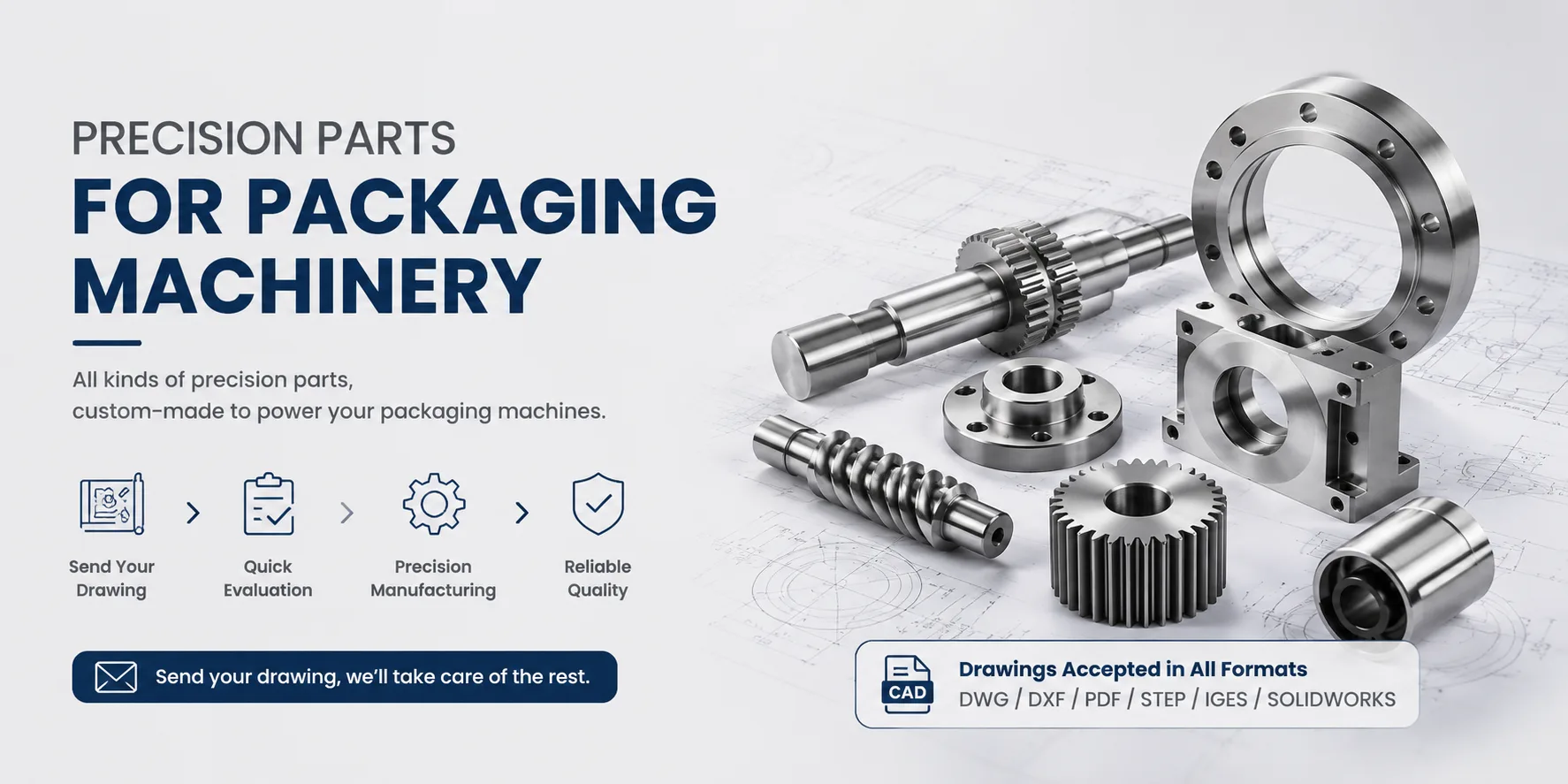
For the above wearing parts and key accessories such as heating wire, high-temperature coated cloth, silicone strip, printing wheel, and toothed belt, Hansheng Automation can provide custom machining according to equipment specifications and operating requirements.
4. How to use a sealing machine
4.1 Working principle
When the power is turned on, the mechanisms begin to operate. The heating elements are energized and heat up, causing the upper and lower heating blocks to rise rapidly in temperature. The temperature control system adjusts the temperature to the required level. The embossing wheel rotates, and the cooling system starts cooling as needed. The conveyor belt moves and is adjusted to the required speed by the speed control device.
When a packaged item is placed on the conveyor belt, the sealing portion of the bag is automatically fed between the two moving sealing belts and carried into the heating zone. Heat from the heating blocks is transferred through the sealing belts to the bag's sealing area, softening the film. The bag then passes through the cooling zone, where the film surface temperature drops appropriately. After that, the bag passes through knurling wheels or printing wheels, which press the upper and lower plastic films together and produce a mesh pattern or printed mark. Finally, the sealed bag is guided out of the machine by rubber belts and the conveyor, completing the sealing operation.
4.2 Operating steps
(1) Press the ON button. The power indicator and COOLER indicator light up, and the warning light flashes.
(2) Press the START button. The warning light goes off, the START indicator lights up, and the machine reaches the preset power.
(3) Turn on the conveyor power. The conveyor starts running. Adjust the speed knob to the appropriate position.
(4) Push the container to be sealed into the machine and begin normal operation.
(5) If an overcurrent occurs during operation, the FAULT indicator on the control panel lights up and the warning light flashes. Press the RESET button, wait for the overcurrent light to go off, and then press the START button again.
(6) When the work is finished, press the STOP button. The machine returns to the state described in step (1).
(7) Press the OFF button to shut down the machine and exit standby mode.
4.3 Precautions
(1) Do not use the machine on metal containers or metal caps, and do not place it on a metal tabletop when pressing the start button, as this may damage the machine.
(2) Before connecting the power supply, insert the induction aviation plug and tighten the screws.
(3) Use a single-phase three-wire power cord. For operator safety, always use a single-phase three-wire power outlet. The work area floor must be dry to maintain insulation.
(4) The machine is equipped with an overheat protection function. If the internal temperature becomes too high, the internal buzzer sounds continuously and the yellow "PRO.MD." indicator lights up. Turn off the main power switch and wait for the machine to cool down and the buzzer to stop before resuming work.
(5) During operation, frequently check the surface of the induction head for overheating. If it feels hot, stop heating and allow it to cool before continuing. The cooling process does not require turning off the power. Do not press the START button when the green "WARM UP" indicator is off, to avoid false triggering. After finishing work, turn off the power switch on the panel.
(6) The machine is equipped with a fuse. Do not replace it with wire or any other substitute.
(7) The machine contains high voltage and the bottom plate is energized. Do not attempt to repair it yourself to avoid electric shock.
(8) If exposed wires are found before use, stop using the machine and have it repaired before further operation.
(9) The equipment must not be struck, subjected to heavy pressure, or exposed to moisture during transportation, storage, or use.
(10) When unpacking and inspecting the product, if the parts do not match the packing list under normal transport and intact packaging conditions, contact the company promptly.
(11) Read the operating instructions carefully before use. If a manufacturing quality problem is found, notify the company within the specified period and arrange for repair.