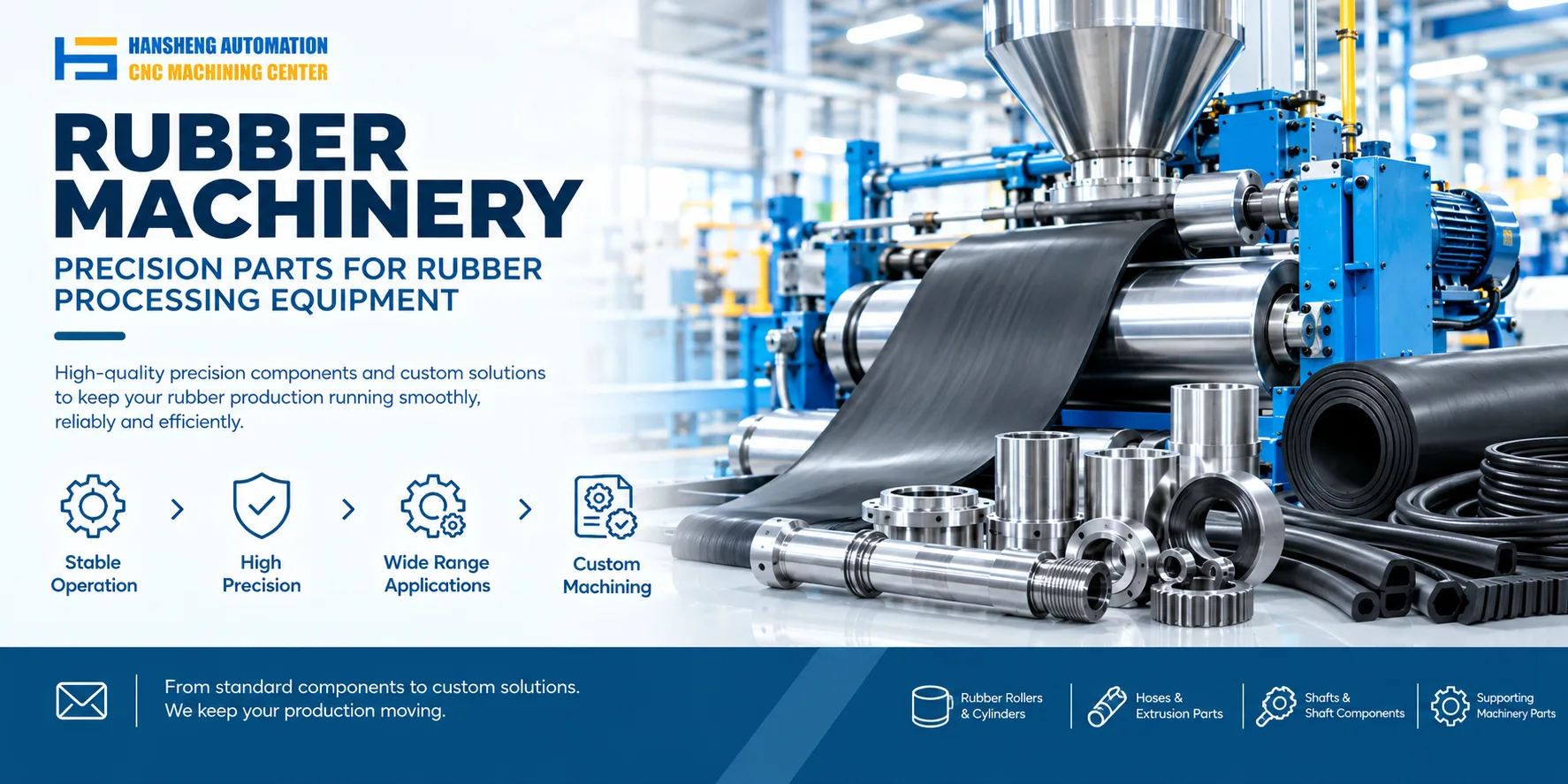
The three roll calendering process generally involves four stages: preheating and feeding the rubber compound, unwinding and drying the fabric when required, calendering, and cooling and winding. Each stage affects material flow, sheet thickness, and the quality of the finished product.
Rubber compound preheating and feeding
Before entering the calender, the rubber compound passes through a warming mill for preheating and further milling. This helps improve mixing uniformity and plasticity.
After preheating, a conveyor belt or feeding device delivers the compound to the calender feed inlet at a consistent rate. Stable feeding helps maintain a continuous supply of material between the rolls.
Fabric unwinding and drying
When producing reinforced or layered materials, such as rubberized cord fabric, the textile material must first be spread out through an unwinding unit. It then passes through drying equipment to reduce its moisture content to 1% to 2%.
Excessive moisture can reduce adhesion between the fabric and rubber compound. If the fabric becomes too dry, it may stiffen and become more susceptible to damage. Moisture content should therefore be controlled according to the material and processing requirements.
Calendering
The rubber compound passes between the three rolls arranged in an L configuration, where compression and stretching form the material into sheets of the required thickness or apply rubber to the fabric.
Several process parameters require attention during this stage.
Roll temperature: For natural rubber, the first roll is typically set to 160 to 170°C, the second to 165 to 175°C, and the third to 170 to 180°C.
Roll speed matching: The middle roll is usually the driving roll. The speed ratio is generally within the range of 1:1.3 to 1:1.5.
Roll gap accuracy: The adjustment mechanism controls the gap between the rolls, with a gap tolerance of ±0.01 mm.
These settings provide a reference for the specified process. The actual parameters should match the rubber compound, fabric requirements, and target product dimensions.
Cooling and winding
After calendering, the material passes through a cooling roll group to stabilize its shape and reduce the risk of deformation and aging. The cooling water temperature is controlled at 15 to 25°C.
Once cooled, the material is collected by an automatic winding unit and wound into rolls of a consistent specification. Stable cooling and winding help maintain the material's shape and make the finished rolls easier to handle in subsequent production stages.
Custom precision machining for calendering equipment
The performance of calendering equipment also depends on the dimensional accuracy and condition of its mechanical components. Hansheng Automation provides custom precision machining for nonstandard parts based on customer supplied drawings, supporting component replacement and equipment maintenance for rubber processing machinery.
Our machining services also cover precision components for tobacco packaging and filling machinery, as well as structural parts for yachts and remote control racing cars. We manufacture parts according to customer drawings and component requirements for different industrial applications.