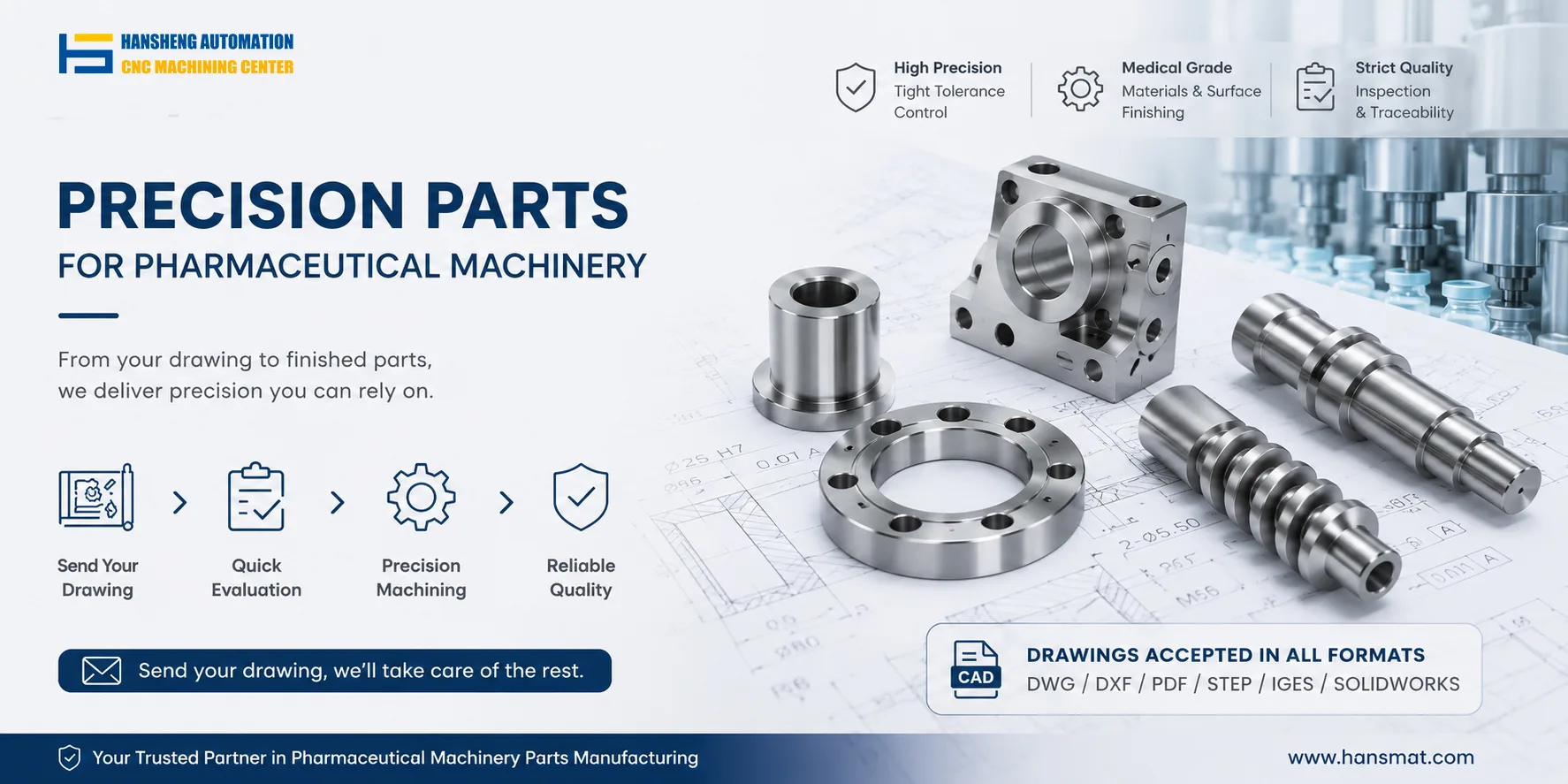
The discharge nozzle (often referred to as the die plate or pelletizing head) is the core operational component of extrusion granulation equipment. Its primary function is to force material through a die plate to form strands and cut them at high speed using rotating blades. The structural design, fitting precision, and wear resistance of the discharge nozzle's components directly determine the dimensional uniformity, surface finish, and production efficiency of the finished granules.
1. Core Structural Components and Custom Machining Capabilities
A complete discharge nozzle system is assembled from several high-precision components. We have long been dedicated to the custom machining of these core precision parts based on clients' drawings, delivering tailored solutions matching specific process requirements:
Extrusion Die Plate (Template):
This is the most critical part for determining granule shape and cross-sectional dimensions. Material is forced through micro-holes on the die plate under strong screw thrust.
Custom Machining Details: Hansheng Automation supports the precise manufacturing of non-standard die plates based on customer-provided drawings. Using 5-axis machining centers and precision slow-feed wire EDM processes, we can machine precision through-holes ranging from 1.0 mm to 12 mm on materials like SUS316L, 440C hardened stainless steel, or high-carbon chromium steel (such as Cr12MoV). We can flexibly customize circular, square, multi-lobed, or other special-shaped holes depending on material characteristics, ensuring the inner wall roughness reaches Ra 0.4 μm or lower to minimize extrusion resistance and prevent clogging. Furthermore, we can accurately control the aspect ratio (depth-to-diameter ratio) of the die holes to guarantee pellet density and throughput.
Cutter Assembly & Blades:
The cutter assembly holds the blades and rotates at high speed close to the outer surface of the die plate, quickly cutting the extruded strands.
Custom Machining Details: The flatness of the blades and their clearance with the die plate surface directly affect cutting quality. We can custom-machine cutter discs with outstanding dynamic balance, highly rigid blade holders, and precision adjusting mechanisms. The adjusting sleeves and transmission connectors we machine feature extremely tight fit tolerances, enabling operators to fine-tune the micron-level gap between the blades and the die surface. This ensures consistent granule length and minimizes powder generation, cohesive bridging, or burrs.
Housing and Flow Shield:
This component provides safety protection, guides granule flow, and prevents material splashing. We can fabricate complete food-grade stainless steel housings with precision welding and electropolishing, ensuring dead-zone-free and easy-to-clean interior surfaces that interface perfectly with different machines.
High-Precision Drive Shafts and Sleeves:
Used to transmit pelletizing power from the main motor. Hansheng Automation can custom-turn and grind high-precision drive shafts and shaft sleeves based on drawings, keeping coaxiality and runout within 0.01 mm. This ensures optimal dynamic balance at high speeds, reduces equipment vibration, and extends the service life of bearings and seals.
2. Process Flow and Operational Mechanism
Homogeneously mixed warm or wet materials are continuously pushed into the nozzle chamber by the extruder screw.
The material is subjected to high compression at the die plate inlet and is forced through the micro-holes, forming continuous strands on the outer side of the die plate.
Driven by the transmission shaft, the cutter assembly rotates at high speed. The blades sweep across the die plate end face, cutting the continuous strands into granules of uniform specifications at a high shear velocity.
Centrifugal force combined with the flow shield directs the cut granules through the discharge outlet, allowing them to flow smoothly into subsequent drying, cooling, or screening stages.
3. Structural Differences Across Granulation Methods
Wet Extrusion Granulation (Ring Die / Flat Die): Utilizes the classic high-speed blade and multi-hole die plate configuration described above. The cutting edge is typically flush against the inner side of the ring die or the outer side of the flat die, demanding extremely high wear resistance and impact strength for all components.
Dry Roller Compactor Sizing: Typically lacks rotating cutting blades. The discharge end features a forced discharge scraper with slotted openings. Materials are compressed into sheets and crushed by the scraper, relying primarily on screen apertures to control granule size.
Oscillating Granulation: Does not use a discharge nozzle structure; instead, it utilizes a reciprocating rotor with specific tooth profiles to rub and squeeze the material over a screen surface.
4. Safety and Maintenance Guidelines
The adjustment and fit between the blades and the die plate are highly precise, and the cutting edges are extremely sharp. During installation, alignment, cleaning, or maintenance of the discharge nozzle, strict Lockout/Tagout (LOTO) procedures must be enforced. The adjustment mechanisms we machine are designed with convenient manual alignment holes, allowing operators to make manual fine-tuning adjustments using dedicated tools when the equipment is safely powered down and stationary.