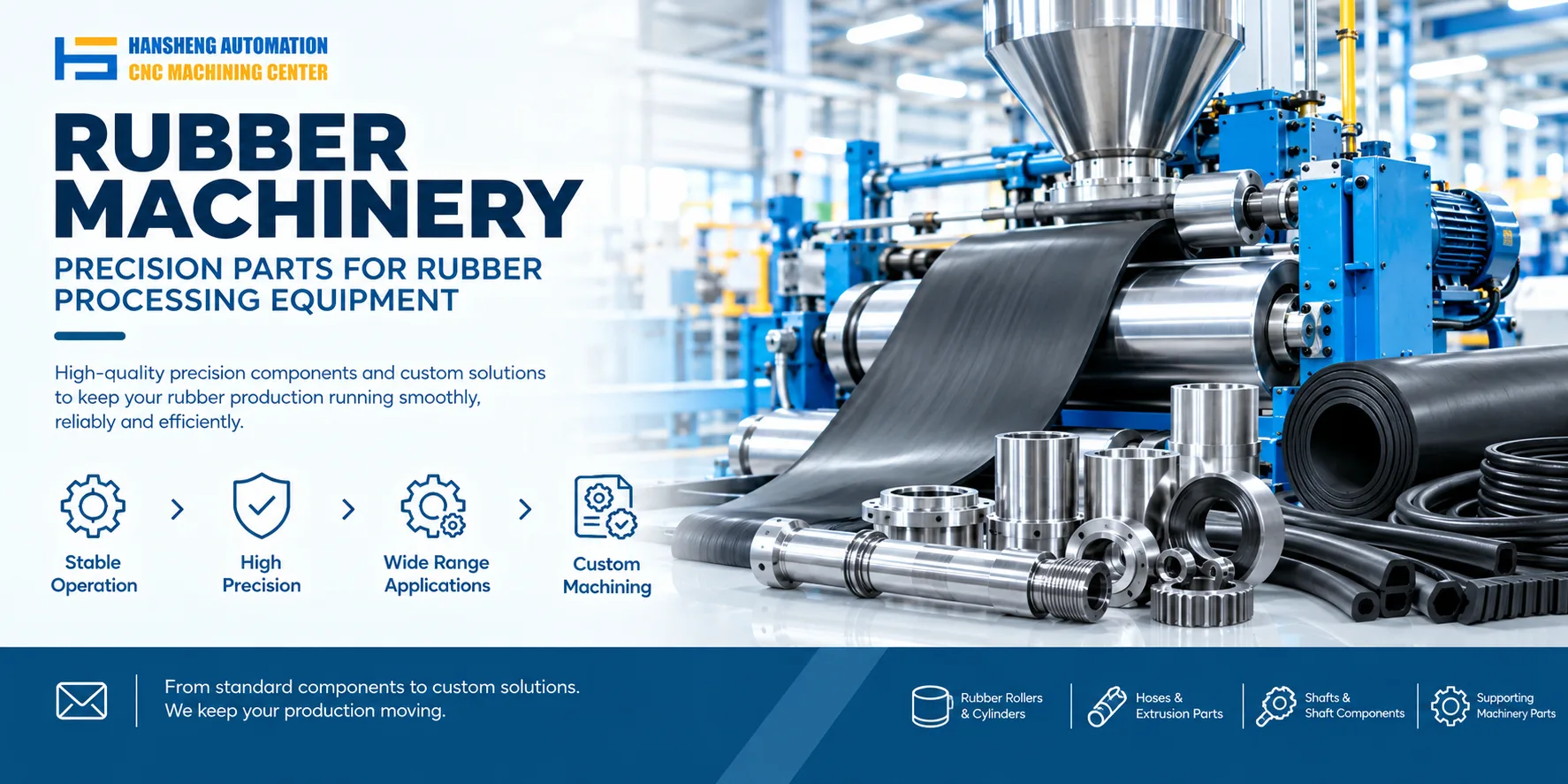
The manufacturing process for sponge rubber varies with the product type and material used. For natural rubber sponge, the general process involves raw material preparation, mastication and mixing, foaming agent dispersion, molding, foaming and vulcanization, followed by cooling and finishing. A basic formulation can serve as a starting point, but the actual recipe and processing conditions need to match the product requirements.
Raw material preparation
Weigh the rubber and compounding ingredients according to the specified formulation. Common ingredients include raw rubber, foaming agents, vulcanizing agents, accelerators, and fillers. Accurate weighing helps maintain consistency between batches.
Mastication and mixing
Place the base rubber in an internal mixer or open mill for mastication. This softens the rubber and improves its processability. Add the compounding ingredients in sequence and continue mixing until they are evenly distributed throughout the compound.
Mixing conditions need to be controlled to obtain a uniform compound suitable for subsequent processing.
Foaming agent dispersion
Add the foaming agent to the compounded rubber and continue mixing until it is evenly dispersed. Uniform distribution helps the material foam more consistently during the subsequent vulcanization stage.
Molding and forming
Process the mixed compound through equipment such as an extruder or calender to produce sheets, strips, or other shapes and dimensions required by the product design.
The forming method depends on the required shape and the production process. The compound must be prepared in a form suitable for the subsequent foaming and vulcanization stages.
Foaming and vulcanization
Place the molded compound in a vulcanizing vessel or flat vulcanizing press. Apply the specified temperature and pressure to complete foaming and vulcanization.
As the foaming agent decomposes under heat, it releases gas that expands the rubber and creates the sponge structure. At the same time, the vulcanizing agent promotes crosslinking between rubber molecules, forming a stable network structure.
The foaming and vulcanization process needs to be coordinated to obtain the required material structure and finished product characteristics.
Cooling and finishing
After foaming and vulcanization, remove the product and allow it to cool. Depending on the product requirements, further processing may include cutting, trimming, or grinding to achieve the required final shape and dimensions.
Basic formulation for natural rubber sponge
The following formulation provides a basic reference for natural rubber sponge. Ingredient quantities are expressed in parts by mass.
| Raw material | Quantity (parts by mass) | Function |
|---|---|---|
| Natural rubber | 100 | Base material that provides the fundamental properties of the rubber |
| Zinc oxide | 5 | Activator that improves vulcanization rate and compound properties |
| Stearic acid | 2 | Lubricant that improves processing characteristics |
| Accelerator M | 1 | Promotes the vulcanization reaction |
| Accelerator DM | 1 | Secondary accelerator used with M to improve vulcanization |
| Sulfur | 2 | Vulcanizing agent that crosslinks rubber molecules into a network structure |
| Foaming agent AC | 5 | Releases gas under heat to produce the foamed structure |
| Calcium carbonate | 30 | Filler used to reduce material cost and modify physical properties |
This formulation applies to natural rubber sponge as a basic reference. Sponge rubber made from other materials, such as styrene butadiene rubber or polyurethane, requires different formulations and processing methods. Actual production parameters should be selected according to the material, product requirements, and available processing conditions.
Custom precision component machining services
Beyond the sponge rubber manufacturing topics discussed above, Hansheng Automation provides drawing based custom machining for precision components used in different industries. Our work includes yacht components and RC racing car parts, as well as nonstandard components for tobacco packaging and filling machinery. We manufacture parts according to customer supplied drawings and specified dimensions to meet individual component requirements.