Safe operation of a two-roll mill requires checks before startup, careful control during processing, and proper shutdown and maintenance. The main risks include entanglement at the roll nip, material ejection, mechanical failure, and fire. Operators should follow the machine manufacturer's instructions and know how to use the emergency stopping devices.
1. Checks before startup
1.1 Inspect the machine
Check the roll surfaces for cracks, chipping, or other visible damage. Make sure the roll gap adjustment mechanism moves freely and the emergency stop button is in good condition.
Inspect the lubrication system, including the oil cups, oil levels, and lubrication lines. Check for leaks and confirm that the required lubrication points are receiving oil. The source procedure specifies running the machine without load for 10 to 15 minutes before processing to allow lubrication. Follow the startup sequence specified for the actual machine model.
Test the emergency stop function according to the manufacturer's procedure. The machine should stop immediately when the emergency stop is activated and should restart normally only after the device has been reset.
1.2 Check materials and the work area
Remove loose objects, combustible materials, and other unnecessary items from within 3 m of the mill. Keep enough space around the machine for operation and emergency response.
Check that the material to be processed is free from water, metal, and other hard foreign objects that could damage the rolls or cause operating problems.
Confirm that all guards and protective covers are correctly installed. Never operate the machine with required safety devices removed or bypassed.
1.3 Confirm operator training
Operators must receive appropriate training, understand the machine's operating characteristics, and know the emergency response procedures. Untrained personnel must not operate the mill.
2. Startup and operation
2.1 Startup and preheating
Start auxiliary equipment, such as the exhaust ventilation system, before starting the main motor where required by the machine configuration.
Adjust the roll gap gradually to the initial setting. During preheating, increase the temperature at a controlled rate and keep the roll surface temperature within the upper limit specified for the material and process.
Do not operate the mill above the required processing temperature.
2.2 Feeding and material handling
Before feeding the material, set the roll gap slightly wider than the material thickness. Once the material has entered the roll nip, adjust the gap gradually according to the process requirements.
Never place your hands between the rolls or reach into the roll nip while the machine is running. If the material forms a lump or does not feed properly, use an approved handling tool rather than pushing it by hand.
Monitor the roll temperature and material condition throughout processing. Stop the machine immediately if an abnormal condition develops.
2.3 Prevent hazards during operation
Do not touch both rolls or lean against the machine while it is running.
If material is ejected or the machine produces unusual noise, stop the mill and investigate the cause before resuming work.
When several operators work together, designate one person to coordinate the operation. All personnel should use agreed signals to avoid conflicting actions.
3. Shutdown and end-of-shift procedures
3.1 Normal shutdown
Remove the remaining material from the rolls according to the approved operating procedure. Adjust the roll gap to its maximum setting, stop the main motor, and then shut down the exhaust ventilation system where appropriate.
For an extended shutdown, disconnect the main power supply, lock the electrical enclosure, and attach a warning notice to prevent unauthorized startup.
3.2 Emergency shutdown
If material becomes trapped in the rolls, abnormal noise develops, or a fire or other emergency occurs, activate the emergency stop immediately.
Before attempting to clear trapped material or inspect the machine, isolate the power supply and ensure that the equipment cannot restart unexpectedly. Never reach into the roll nip while the machine is energized or moving.
3.3 Cleaning and routine maintenance
After shutdown, remove residual material from the roll surfaces using the designated tools. Do not strike the rolls with hard objects, as this may damage the working surfaces.
Inspect the lubrication points and transmission components, and replenish lubricant where required by the maintenance schedule. Record the operating condition and any abnormalities in the equipment log.
4. Precautions for special operations
4.1 Cleaning the rolls
Before cleaning, disconnect the power supply and apply the required lockout and warning procedures. Use a suitable scraper to remove material residue.
Do not use hard metal objects to pry material from the roll surfaces. Cleaning must follow the machine manufacturer's safety procedure.
4.2 Replacing the rolls
Roll replacement must be carried out by qualified maintenance personnel. Before dismantling, disconnect the main power supply and display a "Do Not Energize" notice.
Use suitable lifting equipment and the designated handling tools to remove and install the rolls. Do not attempt to lift or position heavy rolls without the proper equipment.
4.3 Night work and temporary operations
Provide sufficient lighting for night shifts and temporary maintenance tasks. The source procedure calls for two-person operation during these activities and advises against working alone on the mill.
Both workers should understand their roles and the relevant emergency procedures before starting.
5. Custom machining for industrial machinery components
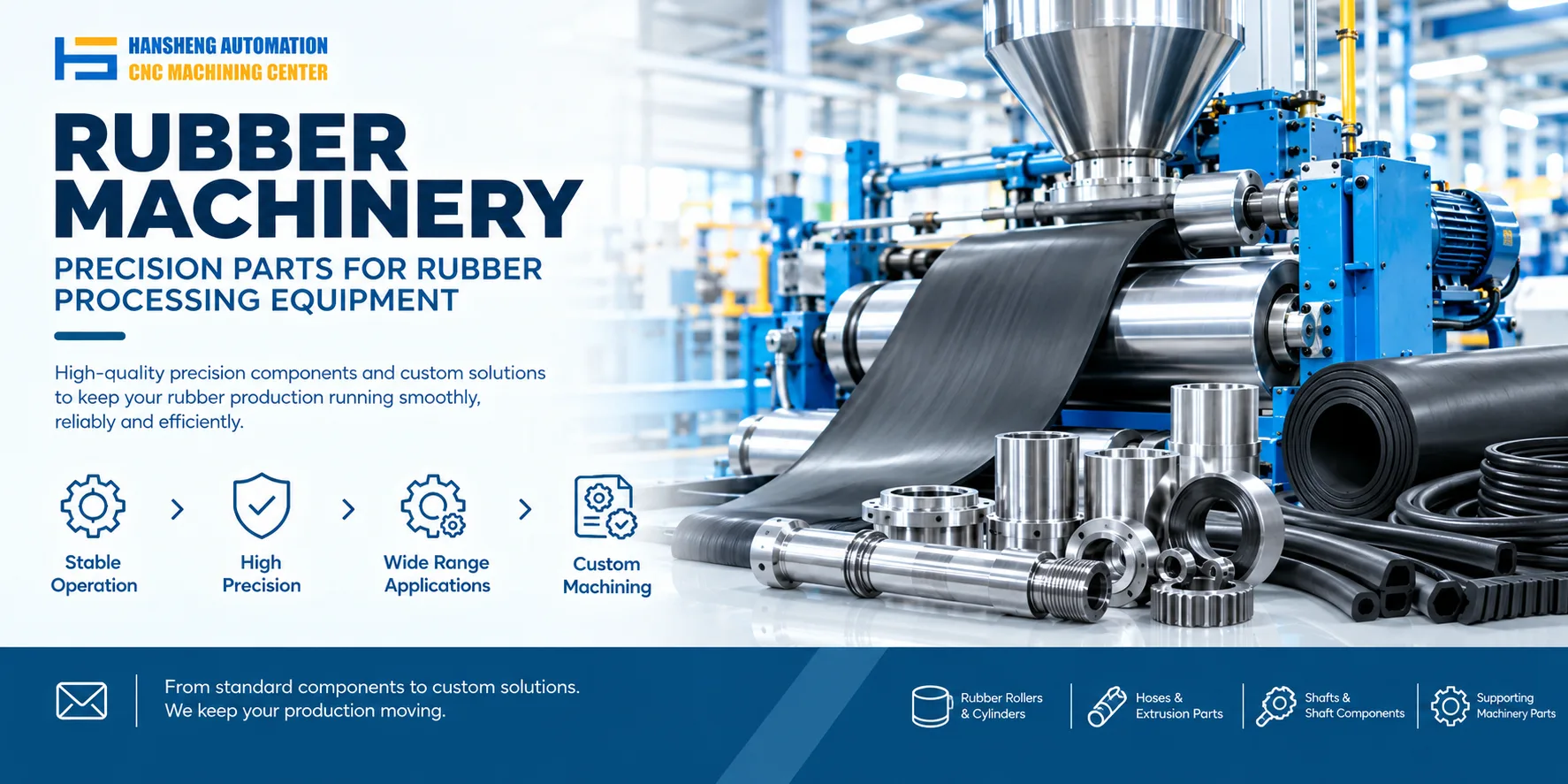
Maintenance of a two-roll mill may involve replacing worn or damaged metal components that must meet specific dimensional and fitting requirements. Hansheng Automation can assess custom machining based on customer drawings, material specifications, and dimensional requirements.
Our precision machining services also cover non-standard metal parts for rubber processing, packaging, filling, and tobacco machinery. We can also assess components for yacht equipment and RC racing cars according to the supplied drawings and machining requirements.