Routine maintenance of an open mixing mill involves cleaning, component inspection, lubrication, replacement of worn parts, and checks before startup. Following the machine manufacturer's maintenance instructions helps reduce component wear and prevent avoidable equipment failures.
1. Tools and maintenance supplies
Prepare the required tools and consumables before starting maintenance.
Hand tools: Used to dismantle and reinstall machine components.
Lubricating grease: Applied to designated mechanical parts to reduce friction and wear.
Replacement parts: Seals, bearing bushes, and other compatible components used to replace worn or damaged parts.
Oil filtration equipment: Used to remove contaminants from lubricating oil and maintain oil cleanliness.
Cleaning equipment: Vacuum cleaners, brushes, and other suitable tools for removing dust, debris, and material residues.
Confirm that replacement parts match the machine model and the original component specifications before installation.
2. Component cleaning and inspection
Before maintenance, shut down the machine and isolate the power supply. Clean accessible components and remove foreign objects that could enter the machine during operation.
If dismantling is necessary, follow the prescribed procedure for each assembly. Inspect the removed parts for contamination, wear, damage, and signs of overheating.
Pay particular attention to the roll area, bearing housings, transmission components, and lubrication passages. If hard foreign objects are found, remove them before restarting the machine. Never attempt to clear debris while the rolls are rotating.
3. Lubrication system maintenance
Check the oil supply
Confirm that the lubrication system supplies oil to the required locations. Inspect the oil passages for blockages and check for leakage or signs of inadequate lubrication. Apply lubricant at the specified intervals and use the grade recommended by the equipment manufacturer.
Troubleshoot overheating of bearing bushes
Overheating or seizure of a bearing bush may result from several conditions:
Insufficient lubrication or a lack of oil supply.
Blocked lubrication passages.
Foreign particles trapped between the bearing bush and shaft journal.
Incorrect bearing manufacture or installation.
Improper adjustment of the roll gap or related mechanisms.
Inspect the lubrication system and bearing assembly before deciding on corrective action. Where the equipment manual permits, the lubrication passages may need to be flushed with the specified lubricant while the machine is unloaded.
Molybdenum disulfide may be used in some lubricating greases, but its suitability depends on the bearing design and lubricant specification. Do not add sulfur powder or other unapproved substances to the lubricating oil. Use only lubricants and additives approved for the specific machine.
If a bearing bush has sustained damage, replace or repair it according to the manufacturer's requirements rather than relying on lubrication alone.
4. Component replacement and lubrication
Replace worn or damaged parts with components that meet the original dimensional and material requirements. Check the mating surfaces and installation conditions before reassembling the machine.
After replacement, apply the specified lubricant to the relevant mechanical parts. Check the assembly for binding or abnormal resistance before starting the machine.
If a replacement component requires non-standard dimensions, confirm the original drawing or measure the existing part before arranging machining.
5. Operating procedures and pre-start checks
Inspect the machine before startup
Check the roll gap and inspect the machine for foreign objects or other obstructions. Turn the drive manually where the machine procedure permits, confirming that the mechanism moves without binding.
For XK-550 and XK-650 open mixing mills, the source instructions specify starting the oil pump before the main motor so that the reducer receives sufficient lubrication. Follow the operating sequence specified for the actual machine model.
Adjust the roll gap
Use the adjustment handwheels to set the required gap between the rolls. On machines with two handwheels, adjust them together according to the manufacturer's procedure.
After increasing the roll gap, the source instructions recommend turning the handwheels backward by several rotations. Follow the machine-specific procedure and avoid forcing the adjustment mechanism.
Control roll temperature
Avoid sudden temperature changes that may cause uneven thermal expansion.
When steam is used to heat the rolls, the source instructions specify introducing steam while the rolls are rotating. If steam enters a stationary roll, condensate may accumulate in the lower part of the roll's internal cavity. Uneven heating and thermal expansion may then damage the roll, potentially leading to cracking.
Follow the machine manufacturer's heating sequence and temperature limits.
6. Safety precautions during operation
Emergency stopping
If an emergency occurs, operate the emergency safety bar or other designated emergency stopping device immediately. For normal shutdowns, use the standard stop button.
Do not use the emergency stopping mechanism for routine stopping unless the machine's safety procedure requires it.
Avoid starting under load
Do not start the machine under load unless the manufacturer explicitly permits it. Starting against an excessive load can overload the drive system and damage components.
Prevent hand injuries
If rubber accumulates or becomes trapped near the roll gap, never use your hands to push it through or clear the obstruction while the machine is running. Follow the approved clearing procedure after the equipment has been placed in a safe condition.
Respond to an overload or electrical trip
If an overload protection device trips or a fuse blows, disconnect the power supply and investigate the cause. Remove residual compound only after the machine has been safely isolated and the applicable procedure permits access.
Do not restart the machine until the fault has been identified and corrected.
Clean the machine after use
At the end of operation, shut down the equipment according to the prescribed sequence. Close the water, air, and steam valves as applicable, isolate the electrical supply, and clean the machine's accessible surfaces.
Check for lubricant leakage, unusual wear, and residual material buildup before the next production run.
7. Custom machining for open mixing mill components
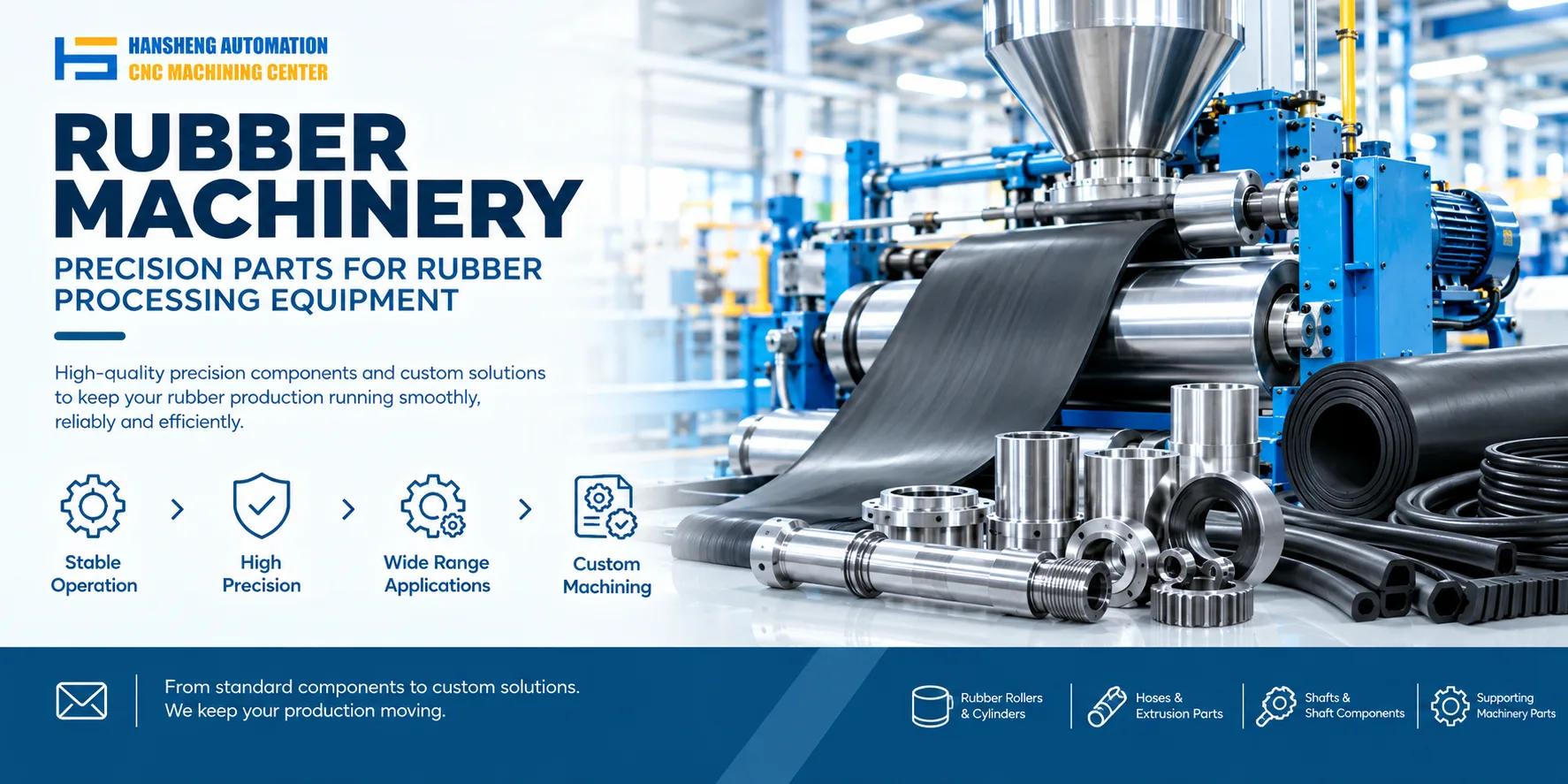
Maintenance may require replacement metal components when the original parts are worn, damaged, or difficult to source. Hansheng Automation can assess custom precision machining based on customer drawings, dimensional requirements, and material specifications.
Our machining services also cover non-standard components for rubber processing, packaging, and tobacco machinery. We can assess precision parts for filling equipment, yacht equipment, and RC racing cars according to the supplied drawings and machining requirements.