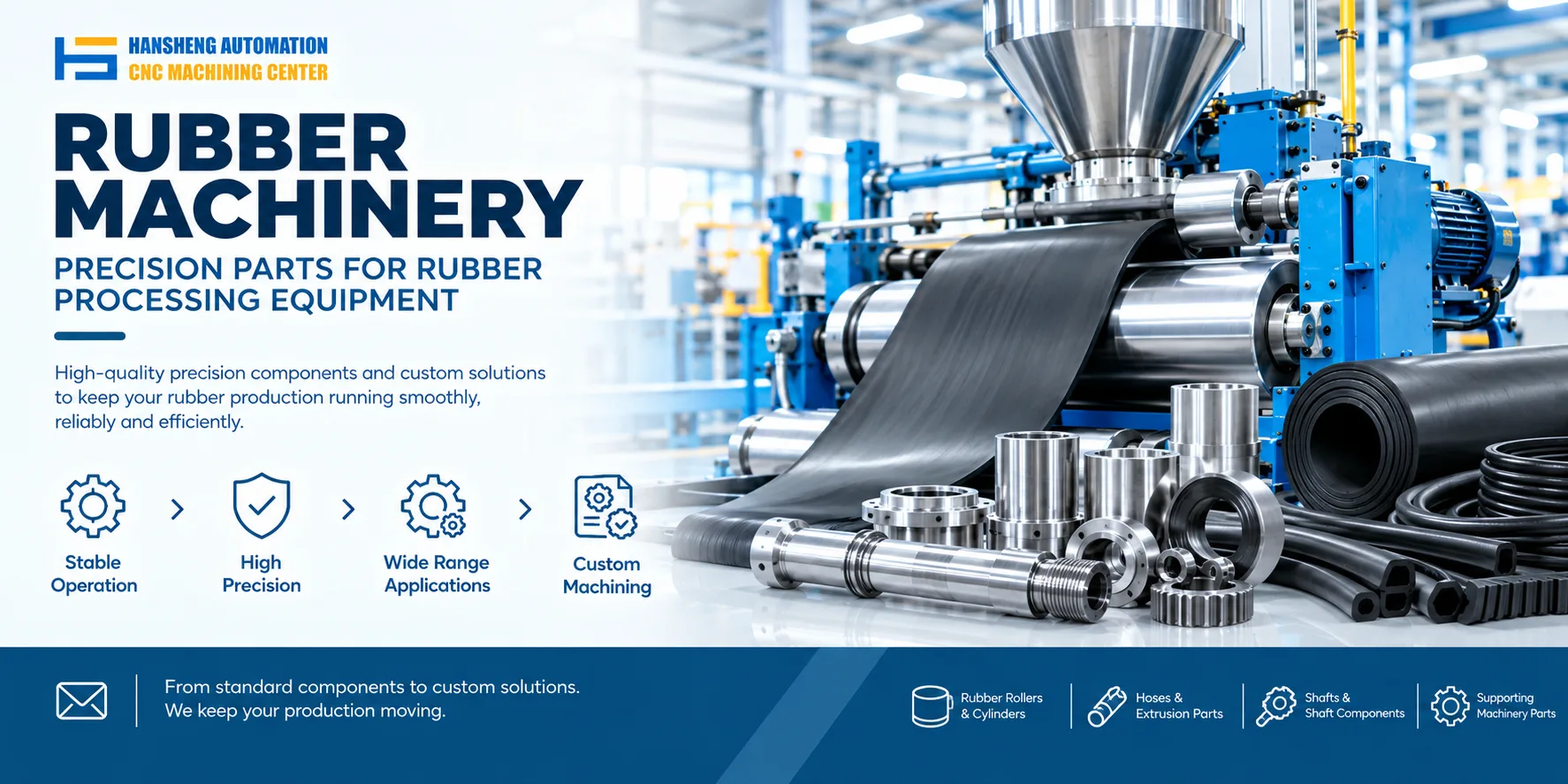
The manufacturing process for a rubber screw involves rubber compounding, metal core machining, molding, precision machining, surface treatment, and quality inspection. Throughout production, the helical groove dimensions, surface roughness, and overall coaxiality must meet the requirements specified in the design drawings. The surface treatment method also depends on the product's intended requirements. We provide custom machining of rubber screws and related precision components according to customer supplied drawings, with machining arranged to meet specified dimensions and fit requirements.
Raw material preparation and rubber compounding
Production begins with the selection of raw rubber and additives according to the rubber formulation. Common materials include nitrile rubber and silicone rubber, while additives may include carbon black, reinforcing agents, and vulcanizing agents. Operators weigh each material according to the specified proportions, then use an open mill or internal mixer to blend the ingredients into a uniform rubber compound.
During mixing, temperature and processing time require close control to prevent scorch. After compounding, a sheeting machine can roll the compound into sheets of the required thickness. Alternatively, operators can cut it into regular blocks for subsequent processing.
Metal core machining and rubber screw molding
We machine the metal core shaft according to the customer's design drawings. Common materials include 45# steel and alloy steel. During core machining, we reserve sufficient material for finishing operations so that the final dimensions and mating surfaces can meet the specified requirements.
Once the core shaft is ready, the rubber compound is wrapped around its exterior. An extruder or injection molding machine then forms the preliminary helical groove profile according to the design requirements. The process requires control of rubber temperature, extrusion pressure, and extrusion speed to maintain the specified helical geometry.
After molding, the workpiece undergoes initial shaping and low-temperature vulcanization in an oven. This stage partially cures the rubber and helps reduce deformation during subsequent machining.
Precision machining and dimensional correction
The molded workpiece requires further machining to meet dimensional tolerances and assembly requirements. The specific operations depend on the component's geometry and the design drawings.
Turning removes excess rubber and rough-machines the screw's outside diameter and shoulder surfaces. This provides the initial dimensions for subsequent finishing operations.
For the helical groove, a dedicated screw grinding machine follows the specified helix angle and pitch during precision grinding. The process brings the groove dimensions and surface finish to the required level, with surface roughness of Ra 0.8 μm or below.
The machining process also requires checks of radial runout and axial movement. We use the measurement results to correct deviations and maintain overall coaxiality at ≤0.02 mm. The mounting end faces and mating journals undergo fine grinding to meet the required installation and fit tolerances.
For custom rubber screws, we arrange machining according to the dimensions, helical geometry, and fit requirements in the customer's drawings. This helps control deviations in critical dimensions and supports the specified assembly requirements.
Surface treatment and finishing
When a product requires improved wear resistance, the surface can undergo plasma spraying or hard chrome electroplating, depending on the design requirements. Common spraying materials include ceramics and tungsten carbide, with coating thickness controlled within 0.1 to 0.3 mm.
After surface treatment, the component undergoes a second low-temperature vulcanization process to promote bonding between the treated layer and the rubber substrate. A polishing machine then refines the helical groove surface to reduce resistance to material flow.
The appropriate surface treatment method depends on the product's design requirements and actual operating conditions.
Final inspection and packaging
After machining, the finished product undergoes a full inspection according to applicable industry standards. Inspection items include dimensional accuracy, surface roughness, helical groove sealing performance, and static balance testing. These checks help verify whether the component meets its specified design requirements.
Once the product passes inspection, operators apply anti-rust oil where rust protection is required. They place the component in a moisture-resistant bag and use a dedicated transit box for protective packaging, reducing the risk of impact damage during transportation. The packaging carries the product model, batch number, and inspection pass identification before the component enters storage.
Rubber compounding and vulcanization involve high temperatures and pressures. Operators must follow equipment operating procedures and wear the required protective equipment throughout these operations.
Custom precision component machining services
Beyond rubber screws and related mechanical components, Hansheng Automation provides custom precision component machining based on customer supplied drawings. Our machining services also cover precision components for yachts and RC racing cars, as well as custom parts for tobacco packaging and filling machinery. We work to the dimensions and specifications defined in customer drawings to support the manufacturing requirements of different types of equipment.