Operating an automatic vial filling machine follows five stages: pre-start preparation, trial filling, production run, shutdown and cleaning, and periodic maintenance.
1. Pre-start preparation
Check that all machine parts are in good condition. Focus on the filling heads, conveyor belt, and other key areas for looseness or foreign objects.
Adjust the track, conveyor belt, and filling head height to match the vial size.
Connect power and air supply. Check the lines for blockage and leakage. Select the filling head according to material characteristics and calibrate the metering system.
Enter or manually set fill volume, speed, and cycle count on the touchscreen.
2. Start and trial filling
After power-on, check that the control panel display is normal.
Fill 3 to 5 vials as a trial and check whether dose error is within the allowed range. Confirm there is no dripping or bubbling before running production.
3. Production run
Vials are arranged by the unscrambler and conveyed to the filling station. A sensor detects the position, the vial is located and clamped, and the metering pump injects the material. Stopper insertion is completed in sync.
During operation, watch the display data and check fill volume error and operating temperature. If a vial jams or liquid leaks, press emergency stop immediately.
Take samples at intervals to check fill volume, vial mouth sealing, and vial integrity.
4. Shutdown and cleaning
Close the material valve first. Wait for residual material to drain before cutting power, then seal the vial caps.
Remove the filling heads and material tank. Rinse residue with purified water or a dedicated cleaning agent. If the machine will be idle for more than 48 hours, disinfect thoroughly and cover with a dust cover.
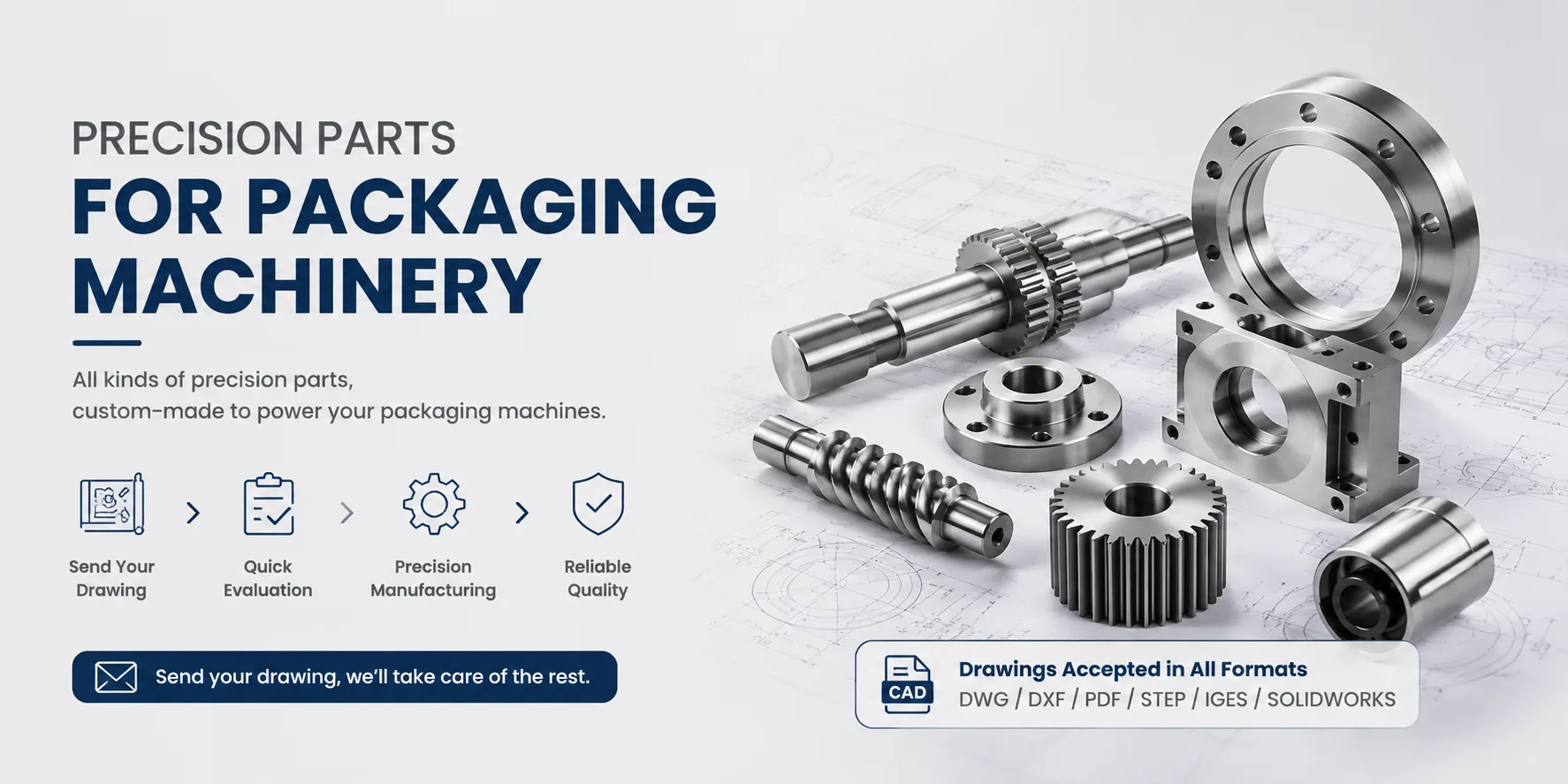
For filling heads, metering pumps, material tanks, and vial mouth locating blocks, we can machine to customer drawings, for single pieces or small batches, in 316L stainless steel or food-grade engineering plastics, with contact surfaces polished or passivated to drawing.
5. Periodic maintenance
Weekly: add lubricant to transmission parts.
Monthly: calibrate metering system accuracy.
Long-term: replace seals, belts, and other wear parts on schedule. Keep a maintenance log and use original parts for repairs.
Beyond filling machinery parts, our precision component machining capability also covers non-standard parts for pharmaceutical packaging machinery, food packaging machinery, and daily chemical filling equipment, as well as precision structural parts for yachts and RC race cars. Hansheng Automation machines single pieces or small batches to customer drawings, with material, tolerance, and surface finish specified by the drawing.