As a core piece of smart manufacturing equipment, industrial robots possess several prominent features that enable them to adapt to complex and ever‑changing industrial environments. These include programmability, anthropomorphic design, versatility, high‑level technology integration, upgradability, and broad application coverage.
I. Programmability and Flexible Manufacturing
Industrial robots can be reprogrammed to adapt to new production tasks without major hardware modifications, allowing rapid switchover between different product processes. This flexibility makes them essential in small‑batch, high‑mix flexible manufacturing systems – for example, in fast‑moving electronics production lines, where a simple software update allows the robot to handle new models.
II. Anthropomorphic Structure and Sensing
The mechanical body of a robot typically features articulated joints resembling human limbs (waist, upper arm, forearm, wrist, and gripper), enabling it to mimic human movements for complex tasks. Furthermore, modern industrial robots are equipped with a variety of sensors – vision, force, tactile, proximity, and even voice interaction – significantly enhancing their adaptability to environmental changes and enabling safe human‑robot collaboration.
III. Versatility and Quick Changeover
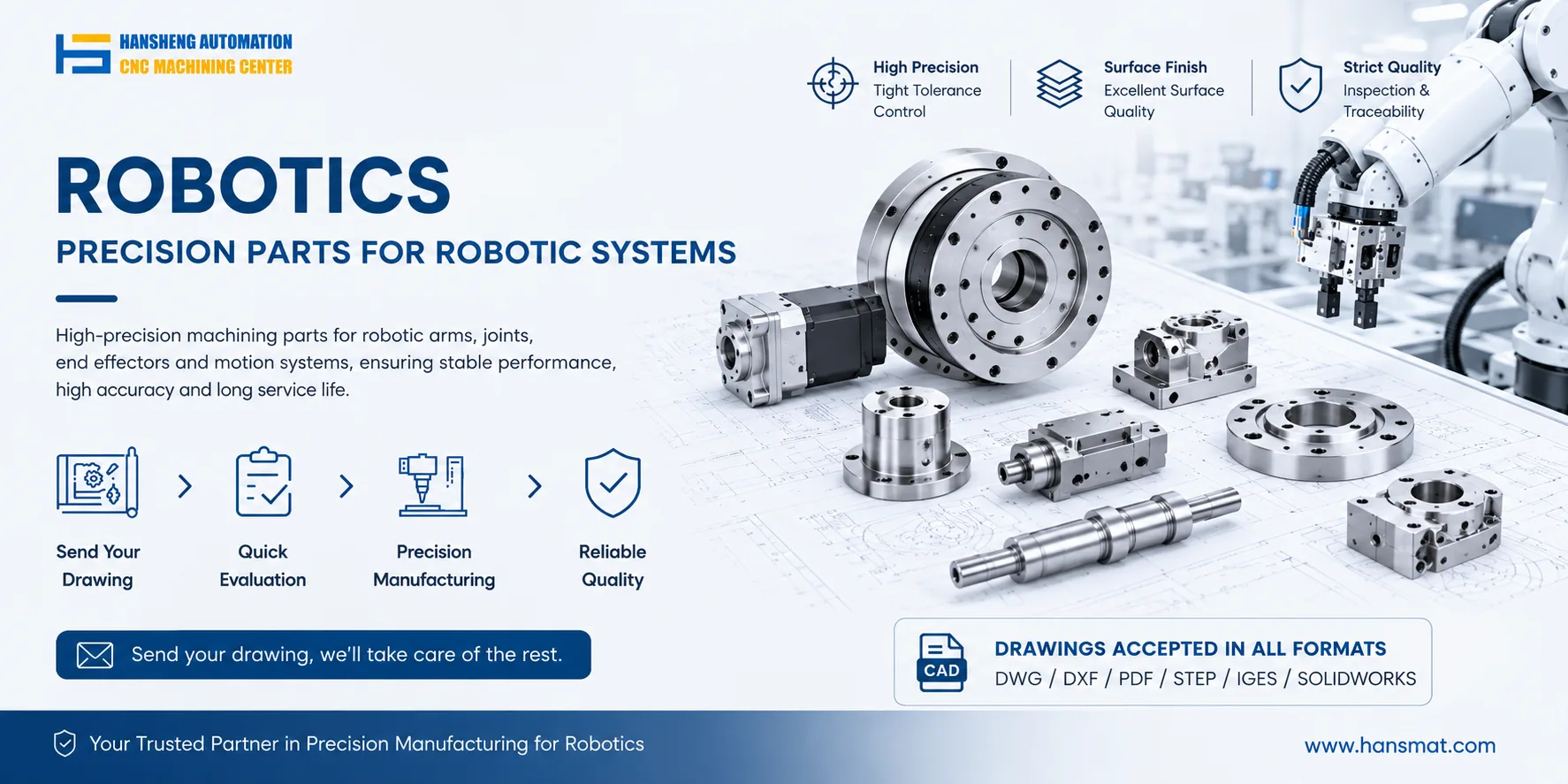
Except for specially designed single‑purpose units, most industrial robots can perform vastly different tasks – such as handling, welding, assembly, and painting – simply by swapping end‑effectors (grippers, suction cups, welding torches, dispensing guns, etc.). To support rapid changeover, we can custom‑design and manufacture dedicated end‑effectors, quick‑change plates, and mounting flanges based on customer process drawings, ensuring high positioning accuracy and operational stability during task switching.
IV. Advanced Technology Integration
Industrial robots integrate precision mechanics, servo drives, real‑time control, sensor fusion, and intelligent algorithms. Through online inspection, optimized scheduling, and decision support, they achieve a balanced improvement in productivity, product quality, resource efficiency, and environmental footprint – representing the highest level of industrial automation.
V. Digital and Intelligent Upgrading
As a new‑generation production tool following electric machinery and computers, industrial robots continuously incorporate networking, big data analytics, and artificial intelligence, driving manufacturing toward digitalized, interconnected, and intelligent operations – particularly suited for high‑precision, miniaturized product processing and inspection.
VI. Wide Industry Coverage
Industrial robots are now deeply embedded in automotive, construction machinery, rail transit, electronics, medical devices, food and beverage, logistics, defense, metallurgy, and many other sectors. They can perform hazardous operations as well as precision assembly and inspection. For users across all these industries, we provide custom‑manufactured precision components – from end‑tools and fixtures to peripheral auxiliary devices – to support robot integration and ensure rapid, stable deployment of production lines.