Robot external axes, also known as robot walking axes or seventh axes, expand the working range and flexibility of industrial robots. They are widely used for automated production across many industries. The main application industries and scenarios are as follows:
1. Spraying Industry
Application scenarios include spraying or cleaning of containers, car bodies, aircraft shells, and high-speed rail carriages. The suitable type is a fully enclosed overhead rail, which provides dust and pollution resistance in harsh environments. The external axis moves the robot along a track to achieve large-area uniform spraying, reducing manual intervention and improving efficiency and safety.
2. Welding Industry
Typical applications include spot welding and arc welding in automotive manufacturing, shipbuilding, and steel structure processing. Suitable types include overhead rails for high-altitude work and floor rails for ground-level work. The external axis enables the robot to cover a larger welding range, adapt to complex workpiece structures, and improve welding precision and speed.
3. Grinding Industry
Application scenarios include grinding of car bodies in white, polishing of mobile phone shells, and grinding after glass cutting. The external axis controls the movement path of the robot to achieve high-precision surface treatment, reducing manual grinding errors and labor intensity.
4. Packaging and Handling Industry
This includes food handling such as boxing and palletizing of canned and boxed food, building material handling such as bricks, cement, and wood, and palletizing of cartons and bagged materials. The external axis extends the robot's working radius, adapts to materials of different sizes, and improves logistics efficiency.
5. Intelligent Warehousing and Automated Storage
In multi-station warehouse systems, external axes are used for goods storage, retrieval, and sorting. The suitable configuration is a floor rail combined with a truss structure for high load and high precision. The external axis enables cross-area robot operation, optimizes storage space utilization, and reduces labor costs.
6. Inspection and Measurement Industry
Applications include product dimension inspection, surface defect detection, and barcode scanning. The external axis drives the robot along a fixed path, ensuring comprehensive inspection coverage and high repeat accuracy, which is suitable for large-scale production lines.
7. Machining Industry
Typical scenarios include automated loading and unloading for multiple CNC machine tools in machining centers and material loading for special-purpose machines such as winding machines and laminating machines. The external axis allows one robot to serve multiple machines, reducing downtime and improving production rhythm.
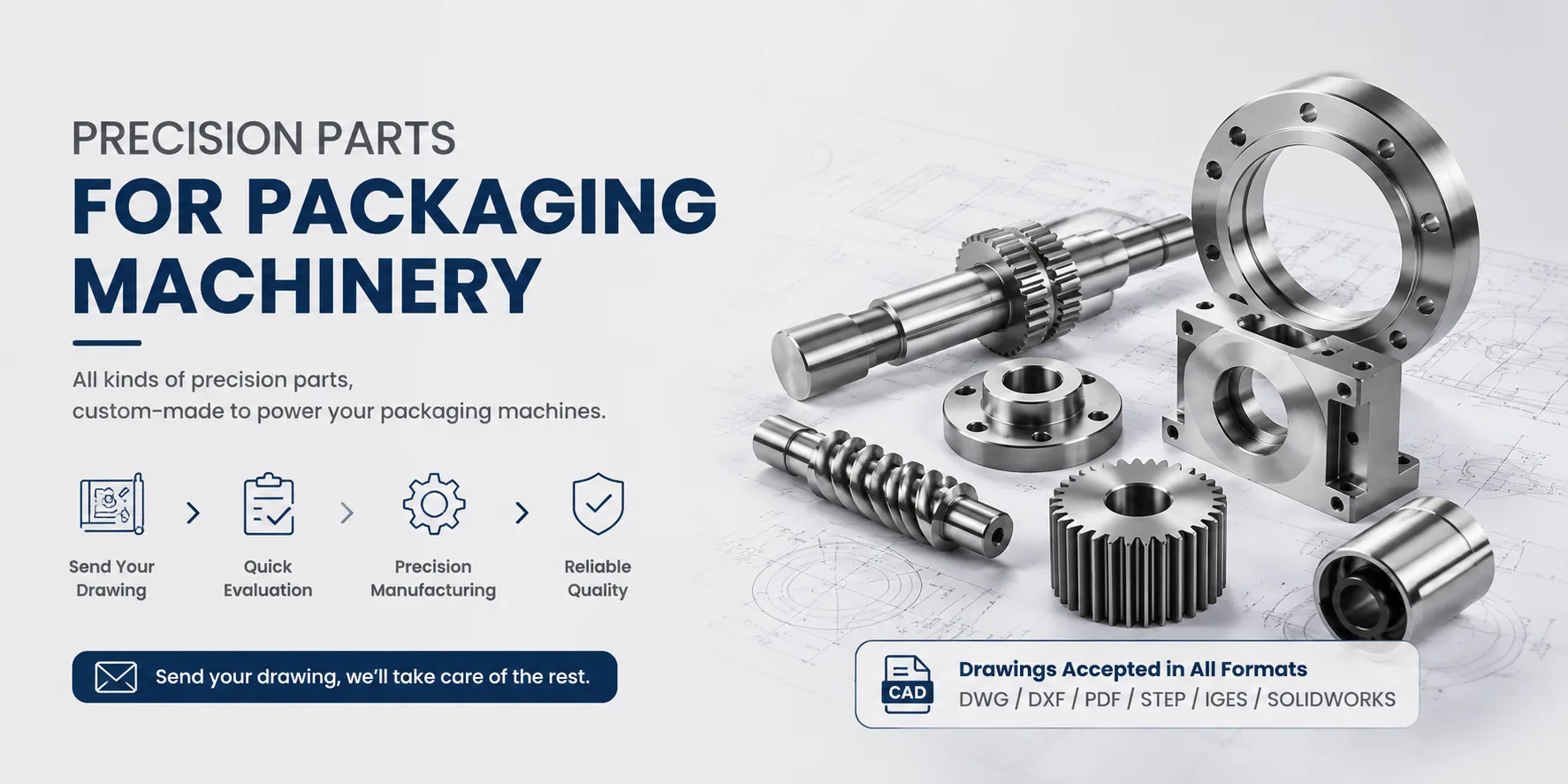
For precision-machined guide rails, gear racks, mounting bases, or custom structural components used in robot external axis systems, Hansheng Automation provides machining services based on customer drawings.
8. Full Production Process Across Industries
External axes are used in automotive manufacturing for parts processing, assembly line handling, welding, and painting; in home appliances and electronics for circuit board assembly, housing spraying, and finished product packaging; in wood and furniture for panel cutting, grinding, and painting; in food and pharmaceutical production for material handling and boxing in clean environments; and in chemical and defense industries for hazardous material handling and heavy equipment assembly. Core processes include product transportation, boxing, handling, and palletizing automation upgrades.
9. Robot Integrator Support
External axis units are supplied to robot integrators as standardized modules to simplify robot system design and installation. Key selection criteria include mature technology, reliable after-sales support, and system stability and compatibility.
The core characteristics of robot external axes support multi-industry applications. They offer high adaptability with simple structure and low failure rate, and can be customized for different industry needs. They optimize space with a small footprint and flexible installation in narrow environments. They provide high performance with large load capacity, high speed, and high repeat accuracy. Their enclosed or semi-enclosed design offers strong protection in dusty, humid, or otherwise harsh working conditions.
By extending robot motion capability, robot external axes have become key components in manufacturing automation upgrades. They are widely applied in spraying, welding, grinding, packaging, handling, warehousing, inspection, and machining. Their core value lies in improving production efficiency, reducing labor costs, ensuring operational safety, and adapting to complex industrial environments.