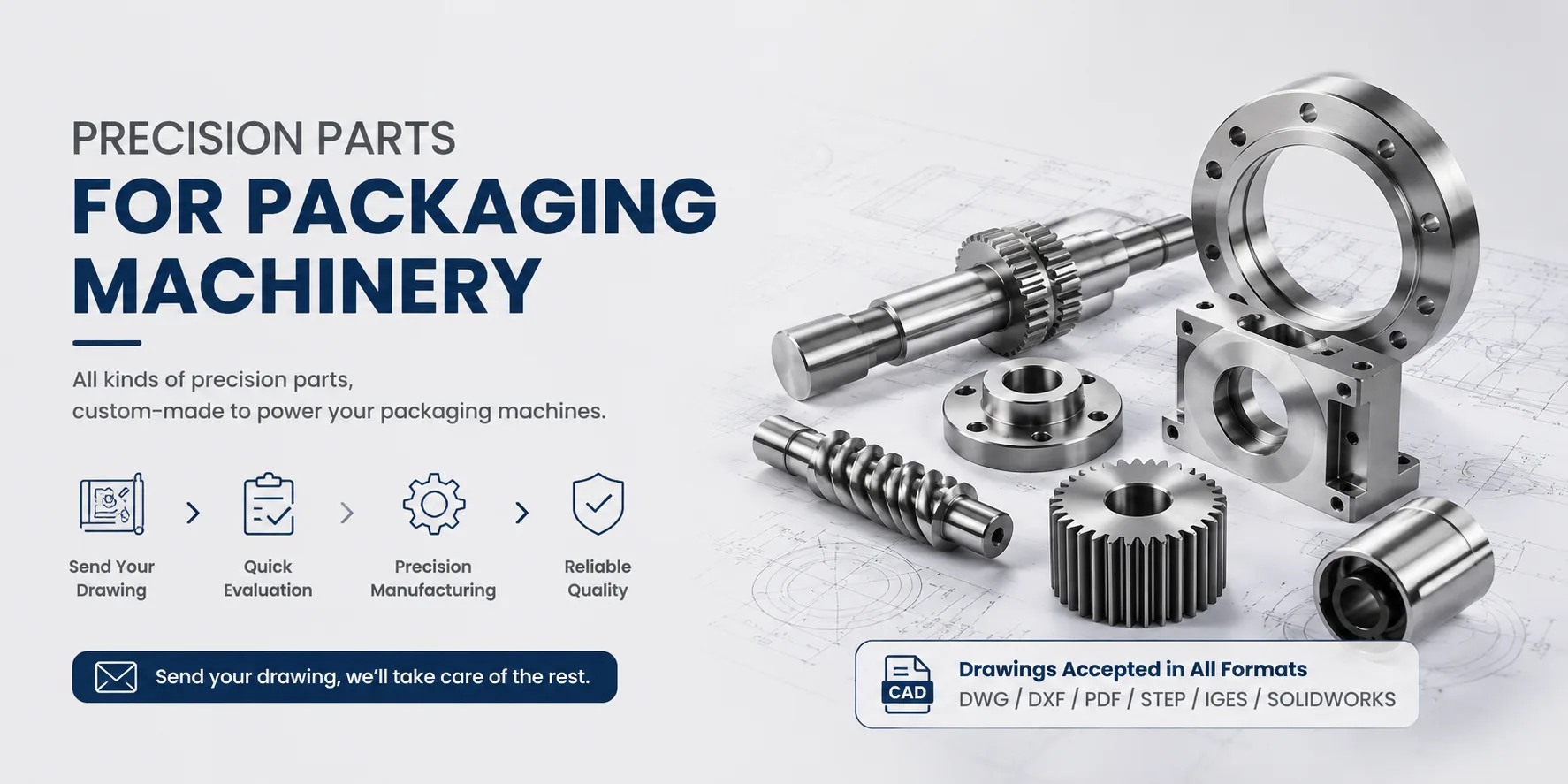
In the packaging section of high-speed continuous rolling lines in steel plants, automation solutions generally follow two core routes: laser automatic packaging machines for large-batch, single-variety steel products, and multi-axis packaging systems focused on flexible adaptation. The advantages and disadvantages of these two technical routes are essentially determined by on-site product morphology, cycle time requirements, and changeover frequency. During equipment implementation, the precision customization capability of non-standard parts often directly affects actual performance. We can provide custom manufacturing and small-batch processing of key machined parts based on design drawings.
The advantages of laser automatic packaging machines are mainly reflected in efficiency and cost control. They match the cycle time of high-speed continuous rolling lines; for example, in bar line field tests, they can correspond to a conveying rhythm of 60 pieces per minute, with single-machine packaging speed stable at 40–50 pieces per minute. After positioning by the laser displacement sensor, repeat positioning accuracy can be controlled within ±0.5 mm, and packaging consistency for regular profiles such as round bars and square billets is typically no less than 98%. The equipment body is compact, occupying about 2 m² per unit. Maintenance mainly involves periodic calibration of the laser head and replacement of the strapping mechanism, with annual maintenance costs about 40% of those of multi-axis solutions.
However, the limitations of laser automatic packaging machines are equally obvious. They can only handle steel with regular cross-sections; irregular shapes such as angle steel, H-beams, and channel steel cannot be automatically positioned and packaged by the equipment, requiring manual assistance. Changeover is time-consuming, usually taking 1.5–2 hours for a single specification switch, so mixed production of multiple varieties is not supported. More critically, such equipment generally lacks redundant stations. Once the laser positioning module or strapping mechanism fails, the entire packaging line shuts down, directly affecting continuous rolling line output. Therefore, steel plants usually need to keep spare parts for critical wear components.
The advantage of multi-axis solutions lies in flexible coverage. Using motion structures with 6 or more degrees of freedom, they can perform multi-angle strapping, film wrapping, and partial protective packaging of irregular steel, with packaging adaptability reaching over 90%. Changeover requires no mechanical adjustment and can be completed through program calls, with single-specification switching typically within 15 minutes. This supports mixed-line production of multiple varieties and small batches, and can also handle single pieces or small batches of special-specification steel. For packaging needs of non-standard parts, export materials, or trial-produced products in steel plants, multi-axis solutions offer clear adaptability.
The disadvantages of multi-axis solutions mainly lie in initial investment and maintenance thresholds. The cost of a single set of equipment is usually 2.5–3 times that of a laser automatic packaging machine, placing considerable pressure on small and medium-sized production lines with limited budgets. Multi-axis motion systems are sensitive to the high temperature, dust, and iron oxide scale splashing environment in steel plants. Synchronization accuracy adjustment of precision parts such as lead screws, guide rails, and joint bearings requires professional technicians, and maintenance difficulty is significantly higher than for laser solutions. The packaging cycle per station is about 30–40 pieces per minute, unable to match the full-load rhythm of high-speed continuous rolling lines, often requiring parallel multi-station setups to supplement capacity.
In summary, laser automatic packaging machines are more suitable for scenarios with single product specifications and demand for high-speed continuous production of bars or billets, where the core requirements are cycle time, consistency, and low maintenance cost. Multi-axis solutions are more suitable for flexible packaging scenarios with frequent product specification changes, a high proportion of irregular shapes, or frequent changeovers, where value lies in adaptability range and switching efficiency. Regardless of which route is chosen, fast and reliable supporting response for key machined parts is crucial. Hansheng Automation focuses on precision custom parts manufacturing and can complete the full process from material selection, tolerance confirmation, to surface treatment based on customer-provided design drawings or physical samples, helping packaging equipment maintain stable operation in complex steel plant conditions.