Tension instability at the drying and cooling rolls of a fiber calender can result from roll runout, worn bearings, drive system faults, inaccurate sensor readings, or inconsistent material conditions. Troubleshooting should cover mechanical components, the drive system, tension controls, and process parameters, followed by a controlled test run. Always disconnect the power supply and secure the equipment before maintenance to prevent accidental startup or injury.
Safety preparation before maintenance
Disconnect the machine's main power supply and display a warning sign stating "Under Maintenance. Do Not Switch On." Lock the calender roll braking mechanism to prevent unexpected rotation.
Remove any protective covers that obstruct access to the components and keep them in a designated location. Make sure tools and other items are removed from the machine before reassembly.
Inspect and repair the rolls and support components
Check roll radial runout
Mount a dial indicator on the machine frame, position its measuring tip against the roll surface, and rotate the roll at a steady speed to measure radial runout.
If radial runout exceeds 0.02 mm, the roll requires straightening. Replace the roll if the deformation is severe.
Clean and restore the roll surface
Remove accumulated fiber deposits, scale, and adhesive residue from the roll surface. Use a nylon scraper or soft abrasive paper to remove raised surface defects without causing further damage. Wipe the surface clean with a lint free cloth after cleaning.
An uneven roll surface can create local differences in friction, contributing to tension fluctuations during operation.
Adjust or replace the bearing housings
Check the fastening bolts on the bearing housings and retighten any loose bolts according to the specified torque requirements.
Use a feeler gauge to check the alignment between the bearing housings and roll shafts. If the deviation exceeds 0.05 mm, adjust the machine frame shims to correct the alignment.
If a bearing produces abnormal noise or has excessive clearance, replace it with a high precision bearing of the same model.
Repair and adjust the drive system
Inspect the belts and chains
Check drive belts for aging, cracks, and signs of slippage. Inspect the tensioner springs for signs of failure. Adjust the tensioning mechanism so that belt deflection remains within the specified range of 10 to 15 mm under pressure.
For chain drives, adjust the tensioning screws to remove excessive slack. Replace severely worn chain links.
Check the motor and variable frequency drive
Use a multimeter to check whether the motor's three phase currents are balanced. Inspect the motor cooling system to confirm that heat is being dissipated properly.
Open the variable frequency drive parameter interface and recalibrate the PID parameters used for closed loop tension control. Correct any zero point offset in the tension sensor.
Correct coupling misalignment
Remove the coupling guard and use a dial indicator to measure alignment between the motor shaft and roll shaft.
If radial misalignment exceeds 0.03 mm, adjust the motor base shims. If axial misalignment exceeds 0.02 mm, replace the flexible coupling.
Repair the tension control system
Calibrate the tension sensor
Suspend standard calibration weights from the tension measuring mechanism and use them to verify the sensor output signal. Correct zero drift and span errors that may have developed during prolonged operation.
Accurate sensor readings are necessary for the control system to respond appropriately to changes in material tension.
Inspect pneumatic and hydraulic actuators
Inspect the piping and connections for the tension adjustment cylinders. Check pneumatic lines for air leaks and hydraulic lines for oil leaks. Replace aged or damaged seals.
Adjust air or hydraulic pressure to the range specified in the equipment manual. The actuators should move smoothly without sticking or hesitation.
Check the PLC program
Access the machine control system and inspect the tension control logic for abnormal transitions or execution errors. Correct program faults that are causing tension fluctuations.
After making changes, verify that the control sequence and actuator response operate as intended.
Adjust operating parameters and material conditions
Check the moisture content of the fiber material. If moisture variation exceeds ±0.5%, adjust the drying unit temperature and hot air flow to improve drying uniformity.
Calibrate the calender operating speed and investigate any abnormal speed fluctuations in the drive control system. The unwinding and winding speeds must remain synchronized with the calender speed to prevent tension instability caused by speed differences.
Reset the unwinding and winding tension parameters according to the current fiber thickness, width, and tensile strength requirements. The settings should match the material being processed rather than relying on the previous production configuration.
Verify the repair through a test run
After maintenance is complete, run the machine without material for 30 minutes. Use a tension measuring instrument to monitor tension fluctuations in real time.
Confirm that the measured fluctuation remains within ±3% before resuming production with material. During the initial production run, continue monitoring the machine to check for abnormal vibration, unstable tension, or other operating problems.
Custom precision machining for fiber calendering equipment
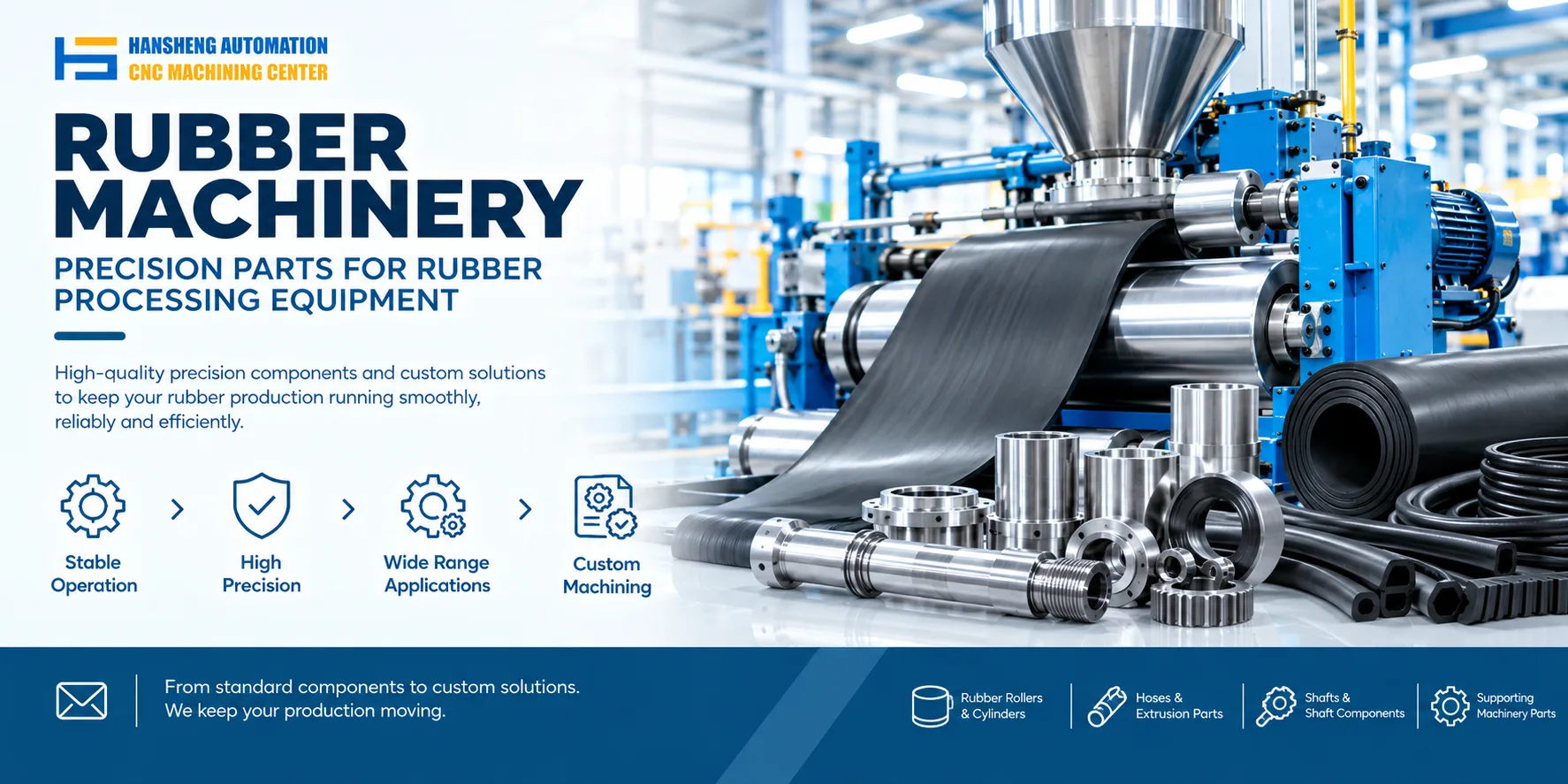
When worn or damaged mechanical components affect roll alignment or drive performance, Hansheng Automation provides custom precision machining based on customer supplied drawings. We manufacture nonstandard components according to specified dimensions and structural requirements to support equipment maintenance, component replacement, and custom manufacturing.
Our precision machining services also cover components for tobacco packaging and filling machinery, along with structural parts for yachts and remote control racing cars. Each part is manufactured according to customer drawings and application requirements.