Packaging powder in small bottles is mainly completed by powder packaging machines. By adjusting equipment parameters, the machine can adapt to different bottle types and achieve accurate filling, sealing, and conveying.
1. Preparation Before Powder Filling
The packaging process begins with powder pretreatment. The powder should be dry and free of lumps to avoid affecting filling accuracy. After the powder is fed into the hopper of the packaging machine, the hopper is usually equipped with a vibration device or screw conveyor to prevent powder bridging and ensure continuous, stable material flow. For moisture-sensitive powders, the hopper may also include a drying unit or inert gas protection system to prevent caking.
2. Accurate Weighing and Filling
The core stage is completed by the bag-clamping quantitative weigher and the filling device working together. The weigher monitors powder weight in real time through sensors, and automatically stops filling when the preset value is reached. The filling device adjusts the filling head position and outlet structure according to the bottle shape and size, allowing powder to fall evenly into the bottle while reducing splashing or accumulation. Some high-end machines use vacuum filling technology, which draws powder into the bottle through negative pressure. This further reduces dust dispersion and can control filling error within ±0.1%.
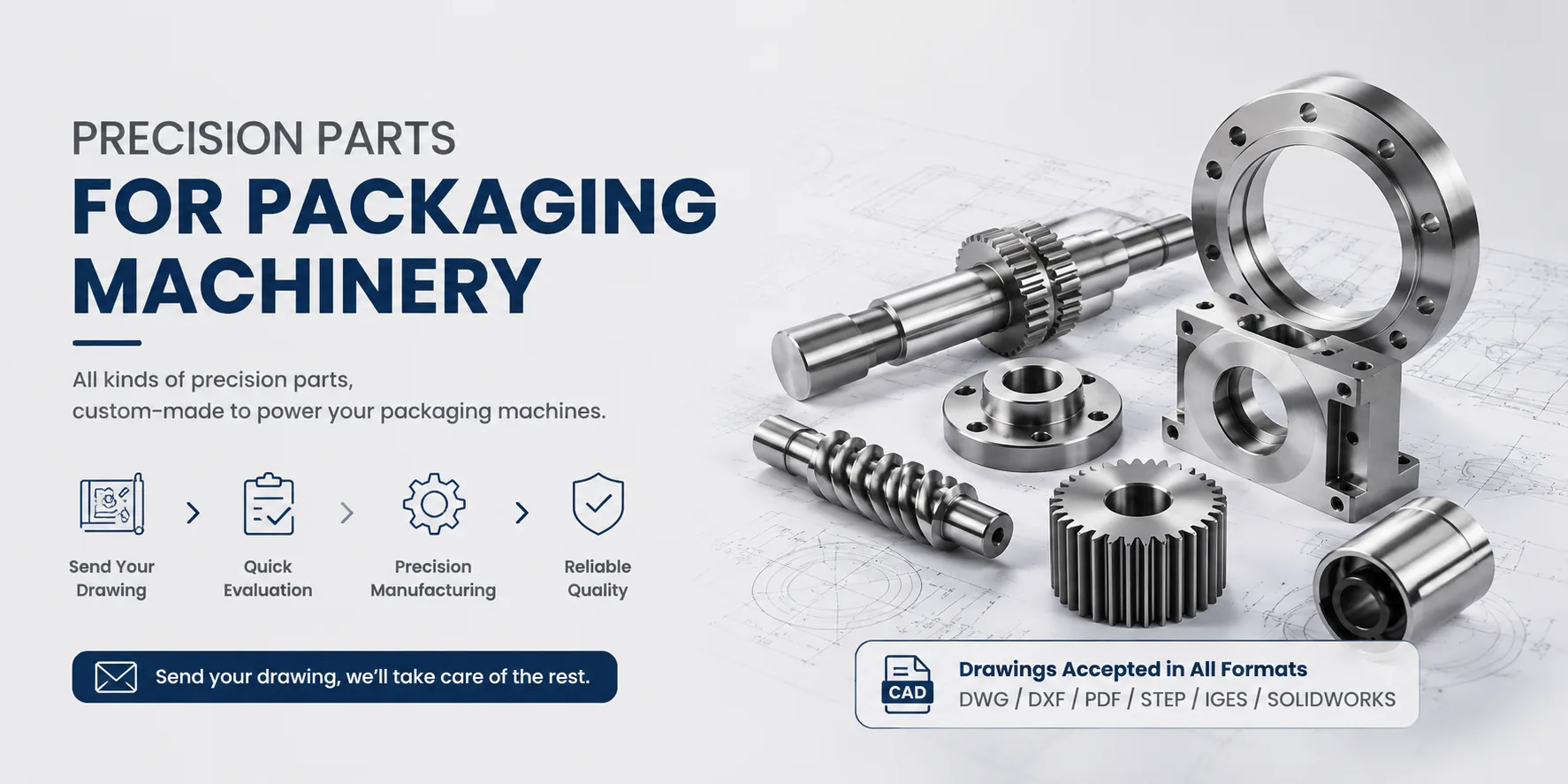
For the weighing and filling modules mentioned above, parts such as filling heads, sensor mounting bases, and quick-change interfaces require high fitting accuracy and wear resistance. Hansheng Automation provides custom machining services for these non-standard components based on customer drawings, supporting material selection and tolerance control to match different bottleneck sizes and powder characteristics.
3. Sealing and Finished Product Output
After filling is completed, the machine automatically proceeds to the sealing stage. Depending on the bottle material and sealing method, the equipment can switch between screw cap, press cap, or aluminum foil sealing modules. Screw cap sealing tightens the cap through a rotating mechanism, press cap sealing presses the cap into place, and aluminum foil sealing uses heat to bond the foil to the bottle mouth. After sealing, finished products are transferred by conveyor belt to the next process, and the conveying speed can be adjusted according to the production rhythm.
4. Equipment Adaptability Adjustment
The main advantage of the powder packaging machine lies in its flexibility. By changing molds or adjusting parameters, the same equipment can handle multiple bottle types and powder properties. For example, replacing the filling head can accommodate different bottleneck diameters, adjusting vibration frequency can improve powder flowability, and modifying weighing parameters can meet filling requirements from 1 gram to 1 kilogram. This adaptability allows the equipment to be used for packaging pharmaceutical powders, food additives, chemical raw materials, and many other powder products.