

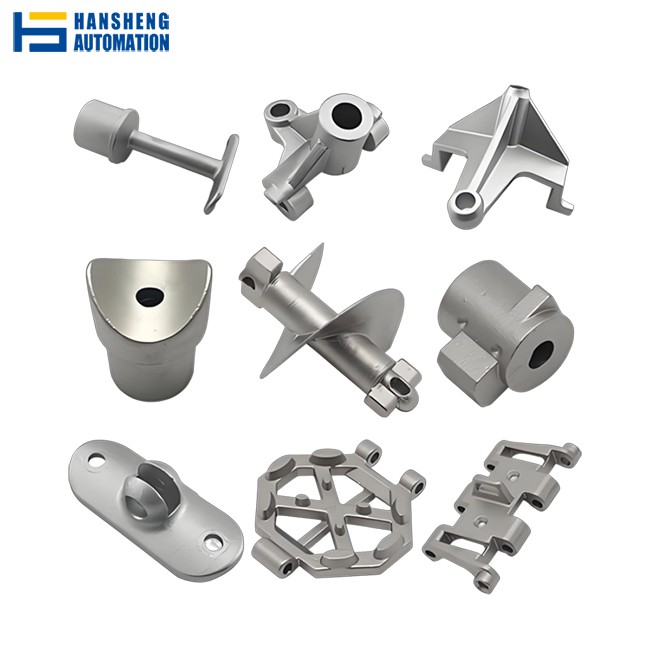
When a packaging line is hitting 800 packs per minute, even a microscopic shift in the main frame or a cam indexer housing can trigger a catastrophic chain reaction: misaligned seals, jammed conveyors, and immediate downtime. For maintenance engineers and OEMs, the question isn't just how to fix the failure, but how to prevent it at the metallurgical level.
It requires tobacco machine castings engineered to withstand relentless harmonic vibration and abrasive dust while maintaining a specified tolerance of ±0.03mm. Whether you are integrating heavy-duty Cast Iron frames or wear-resistant Brass fittings, the structural integrity of these components dictates your OEE (Overall Equipment Effectiveness).
As the global tobacco machinery market scales toward a projected USD 5.8 billion by 2033, the industry is shifting away from generic components. Today's high-speed lines require a fusion of advanced Sand or Gravity Casting and ultra-precision CNC finishing-where sub-micron accuracy (down to ±0.002mm) is the only way to ensure 24/7 operational stability. This article explores the critical manufacturing benchmarks that separate high-performance tobacco machinery parts from those destined for premature failure.
Why High Precision Matters for Tobacco Machine Castings
In high-speed packaging, the mechanical integrity of the chassis and internal housings is the silent driver of performance. When operating at speeds up to 1,000 packs per minute, tobacco machine castings act as the dampening foundation for the entire kinematic chain. At these frequencies, a deviation of even 20 microns is no longer "minor"-it becomes a source of harmonic vibration that resonates through rollers, sealers, and high-speed conveyors.
Precision engineering at the casting and pre-machining stage delivers three decisive competitive edges:
Suppression of Micro-Vibrations: High-precision alignment ensures that rotating parts operate within their designed center of gravity. This minimizes the "chatter" that often leads to seal failures and misfeeds-the culprits behind nearly 25% of all packaging rejects.
Kinematic Longevity: By maintaining exact tolerances, these cast components reduce parasitic loads on ISO Level 5 gears and high-speed bearings. In practice, this translates to a 25–40% extension in service intervals, as parts aren't fighting against their own housing's misalignment.
OEE Optimization: Stable, precision-cast frames allow lines to run at their theoretical maximum speed without the "micro-stops" caused by sensor errors or mechanical jitter.
Choosing the Right Materials for High-Precision Cast Parts
The relentless high-speed reciprocating motions of tobacco packaging lines demand materials that can absorb kinetic energy without deforming.
Engineered Cast Iron (HT250/HT300 & QT500-7): For massive components like machine bases and main frames, we prioritize Gray Iron (HT250/300). Its unique flake graphite microstructure acts as a natural acoustic and mechanical damper-offering vibration absorption up to 20 times superior to fabricated steel. For load-bearing structural parts, Ductile Iron (QT500-7) provides the necessary tensile strength while maintaining the stability required to hold a ±0.03 mm tolerance over years of continuous operation.
Specialized Copper Alloys: In sliding contact zones-such as bushings and guide fittings-standard steel often fails due to the abrasive nature of tobacco dust. Our Brass and Bronze Casting focus on Phosphor Bronze and Aluminum Bronze. These alloys are selected for their inherent self-lubricating properties and exceptional wear resistance, typically extending the component lifecycle by 200-300% compared to generic metal fittings.
By leveraging Near-Net-Shape casting techniques, we minimize internal residual stress during the cooling process. This ensures that when these parts reach our precision grinding or ultra-mirror machining stages (achieving up to ±0.002mm), the material remains stable, preventing the "warp and creep" that often plagues lower-quality castings.
Advanced Design and Simulation Techniques
In the realm of high-speed tobacco packaging, "good enough" design leads to catastrophic resonance. Achieving a ±0.03 mm tolerance isn't just about precise machining; it's about controlling the internal stress and thermal behavior of the metal during its transition from liquid to solid.
We simulate the high-frequency vibration profiles typical of 1,000 ppm (packs per minute) lines to ensure the casting's natural frequency stays well outside the machine's operating range.
Thermal & Solidification Simulation: Using advanced mold-filling software, we predict potential porosity and shrinkage zones. By optimizing the gating system, we reduce internal micro-defects by up to 40%, ensuring the casting remains stable and doesn't "creep" after the final CNC milling or grinding process.
Geometry for Stability: We specialize in optimizing wall thicknesses (typically within the 5–20 mm range) and strategically placing structural ribs. This minimizes mass while maximizing rigidity, preventing the warping that often occurs when removing large amounts of material during ultra-precision machining (±0.002mm).
Precision Casting Processes for Tobacco Machinery
The choice of casting method directly determines achievable precision in cast parts for tobacco machinery.
Sand Casting: For massive machine bases and frames, we utilize Sand Casting to produce heavy-duty Cast Iron Parts. This method allows us to hold a general as-cast tolerance of ±1 mm, providing enough "meat" for our Horizontal Machining Centers to refine critical mounting surfaces to a precise ±0.03 mm.
Lost-Foam: For components requiring intricate internal vacuum channels or cooling paths-common in high-speed cigarette making-Lost-Foam Casting is our preferred choice.
Gravity & Investment Casting : When the application demands tighter as-cast tolerances (down to ±0.13 mm) for smaller, wear-resistant components, these methods ensure minimal material waste and superior surface integrity.
Large-Scale CNC Integration
The true differentiator is our post-casting capability. Utilizing Horizontal Machining Centers with up to 2,100 mm travel, we can process entire machine frames in a single setup. This eliminates the alignment errors inherent in multiple re-fixturing steps, allowing us to achieve surface finishes of Ra 3.2 and critical dimensional accuracies of ±0.005 mm. This "Foundry + Precision Shop" synergy ensures that even the largest tobacco machinery components operate with the clockwork precision required for 1,000 ppm production lines.
Machining, Finishing, and Quality Control

A high-quality casting is only a "blank" until it undergoes precision finishing. To ensure that a tobacco machine casting maintains its geometry under the thermal and mechanical stresses of a 24/7 production line, we employ a rigorous post-casting regimen:
Sub-Micron CNC Finishing: Utilizing our high-precision Horizontal Machining Centers (up to 2100mm) and Seibu Wire EDM, we achieve more than just "tight" tolerances. For critical mounting interfaces and motion-control housings, we deliver Ultra-Mirror Machining with accuracies down to ±0.002 mm. This level of precision is essential for housing ISO Level 5 gears and high-speed cam indexers without inducing parasitic friction.
Metallurgical Stabilization: Precision is a function of time. Every critical casting undergoes controlled Stress Relieving and Normalizing in our automated kilns. This eliminates the residual internal stresses that cause "dimensional drift," ensuring the ±0.03 mm specified tolerance remains stable for the entire lifecycle of the machinery.
Multi-Stage Quality Verification: Our QC lab doesn't just check dimensions; we verify performance. Using Coordinate Measuring Machines (CMM) and dedicated Gear Inspection Machines, we perform 100% verification on critical features. From ultrasonic internal flaw detection to micron-level surface profilometry, we eliminate the variability that often plagues generic suppliers.
By integrating these advanced finishing processes, we transform raw Cast Iron and Brass parts into high-performance components that exceed industry benchmarks, ensuring your packaging lines run faster, quieter, and longer.
Why Hansheng Delivers Unmatched Precision in Tobacco Machine Castings
With years of practical experience, we provide a vertically integrated solution that most foundries cannot match.
Unmatched Scale & Accuracy: We are one of the few providers capable of delivering large-format castings up to 3,800 mm while maintaining a specified tolerance of ±0.03 mm.
Advanced Machining Infrastructure: Our facility is powered by world-class equipment, including Kashifuji Gear Skiving machines and Seibu Wire EDMs. This allows us to transition seamlessly from heavy-duty sand casting to ultra-precision CNC finishing (±0.002 mm), ensuring that every housing and frame is perfectly aligned for high-speed operation.
Proven Reliability: Our components are engineered for the rigors of 24/7 production. By controlling the entire process-from FEA-backed design to final CMM inspection-we eliminate the quality fluctuations that cause costly downtime on your packaging lines.
Whether you are developing a new high-speed line or upgrading existing modules, Hansheng Automation delivers the structural integrity and micron-level precision your machinery demands.

FAQ
Q: What tolerances can be achieved in precision tobacco machine castings?
A: While standard tobacco machine castings hold general tolerances of ±1 mm, our integrated process achieves critical machined tolerances of ±0.03 mm. For high-speed motion components, our CNC finishing and grinding capabilities can reach ±0.005 mm, with ultra-mirror surfacing achieving ±0.002 mm where sub-micron accuracy is required.
Q: Why is Cast Iron preferred for high-speed tobacco machinery frames?
A: Cast Iron Parts (specifically HT250/HT300 Gray Iron) offer a graphite microstructure that provides vibration damping 10–20 times higher than fabricated steel.
Q: What is the most effective way to ensure high precision in custom cast parts?
A: High precision is a result of "Foundry + CNC Synergy." It begins with FEA simulation to eliminate internal stress, followed by precision casting (Sand or Lost-Foam). The final lock-in of accuracy happens in the machine shop-using high-end equipment like Horizontal Machining Centers (up to 2100mm) and Kashifuji Gear Skiving machines to ensure every dimension aligns with the original CAD model.
References
Precision Machining Solutions for Cigarette Machinery, Hansheng Automation
Why Are Castings Crucial for Tobacco Packaging Machinery?, Hansheng Automation
Tobacco Machinery Market Analysis 2026, Cognitive Market Research
What Are the Tolerance Standards of Precision Casting, Neway Precision
Investment Casting Tolerances, Bastech
Casting Specifications, Franklin Precision Castings
The Complete Guide to Iron Casting Processes, Sinoway Industry