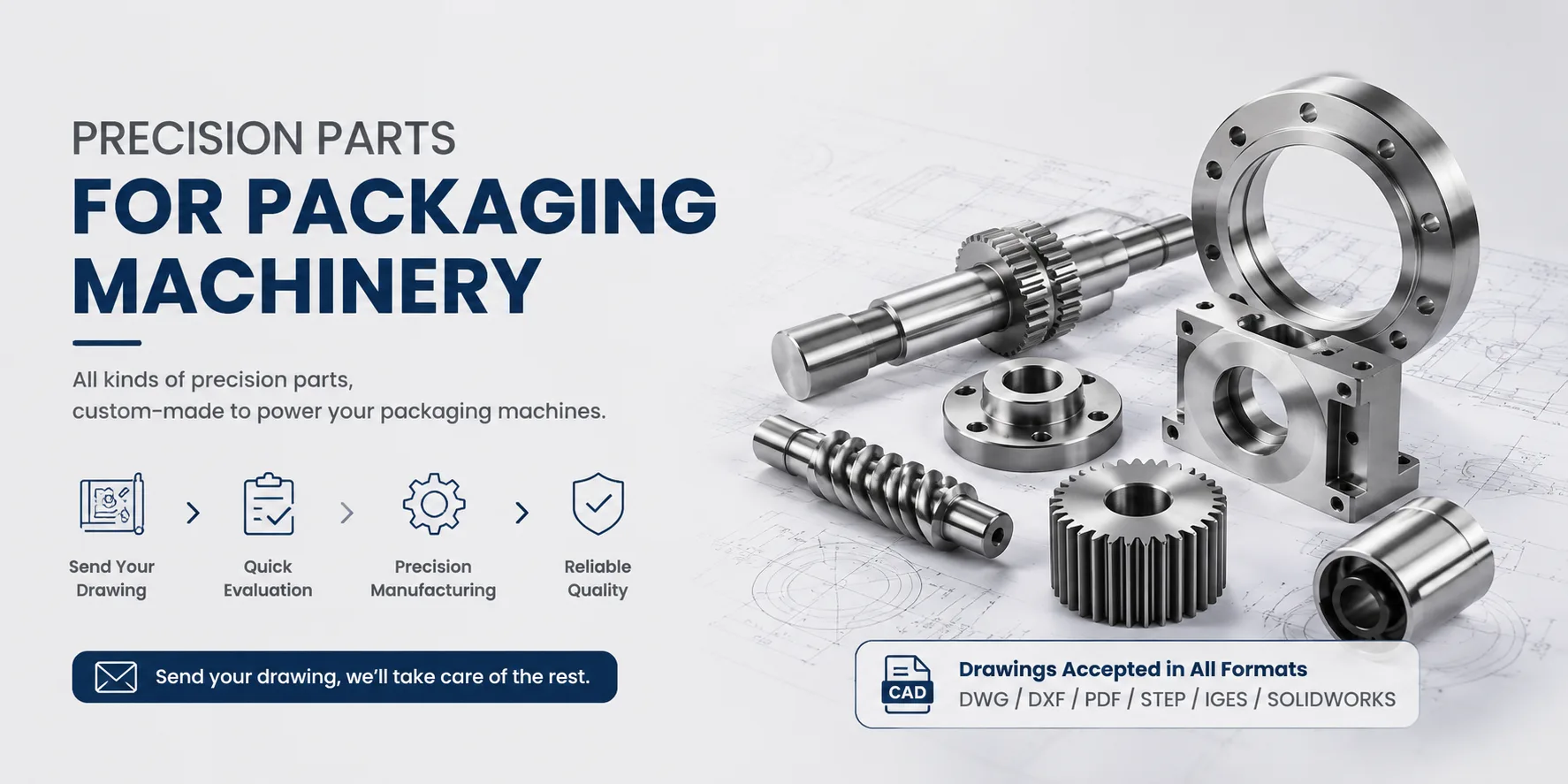
A self-built sandbag machine needs automatic cloth feeding, filling, and sealing. A basic version uses mechanical drive and simple electrical control. A production-level machine uses a PLC control system and a high-precision weighing module. If non-standard parts such as frame connection plates, cloth roll shaft retaining rings, pressure roller seats, and weighing support plates need to be machined to site dimensions, we can custom machine them according to customer drawings. Hansheng Automation supports single-piece and small-batch delivery.
Core units
(1) Cloth feeding and sealing unit
Cloth roll support frame: a vertical frame welded from φ50 mm galvanized steel pipe, with deep groove ball bearings to mount the cloth roll shaft. Limit rings are added on both sides to prevent cloth roll offset and misalignment.
Cloth feed pulling mechanism: composed of a stepper motor or gear motor, timing pulleys, and rubber pressure rollers. It works with a photoelectric sensor to detect cloth position and feed cloth in fixed lengths from 100 to 1000 mm.
Heat sealing device: a double-row heating wire structure, suitable for PP woven bags, canvas, and other common sandbag fabrics. Heating temperature is adjustable from 180 to 220°C. Pressing time is 0.5 to 2 s and can be adjusted by a time relay.
(2) Filling and weighing unit
Material storage hopper: welded from 304 stainless steel or carbon steel according to sandbag specifications. Volume matches the single filling amount. A vibration feeder is installed at the bottom to prevent material bridging and blocking.
Weighing module: a cantilever load cell with a digital display meter. The basic version has accuracy of ±100 g. The production version can reach ±50 g. When the preset filling weight is reached, it triggers a stop signal for feeding.
Bag support station: an adjustable plastic or metal support plate catches the filled sandbag and prevents material spillage.
(3) Control unit
- Basic version: time relays, limit switches, and AC contactors form the control circuit to sequence cloth feeding, heat sealing, and feeding.
- Production version: a PLC and touch screen control system can preset filling weight, cloth feed length, and heat sealing parameters. It supports production data statistics and fault alarms.
- Build and commissioning steps
- Frame construction: weld the overall frame from 80*80 mm square tube. Reserve mounting positions for each unit. Keep the operating face height at 70 to 80 cm to suit a standing operator.
- Part installation and adjustment
- Fix the cloth roll support frame and cloth feed pulling mechanism. Adjust the gap between the timing belt and pressure rollers to 0.3 to 0.5 mm to suit different cloth thicknesses.
- Install the heat sealing device. Adjust the alignment between the heating wire and pressure block. Test the heat seal and adjust temperature and pressing time until qualified.
- Install the material storage hopper and weighing module. Calibrate the load cell zero point. Test the feeding speed and amount of the vibration feeder.
- Electrical wiring: connect motors, sensors, and heating devices according to the control circuit drawing. Add an emergency stop button and grounding protection wire. Grounding resistance should be ≤4 Ω.
- No-load trial run: run without material. Test the continuity of cloth feeding, heat sealing, and bag support actions. Adjust the action sequence of each stage.
- Load commissioning: load sandbag fabric and filling material. Adjust filling weight parameters until the finished sandbag weight deviation meets requirements.
- Safety and use limits
- Electrical safety: all wiring must have insulation protection. The equipment must be reliably grounded. Do not repair the equipment without cutting off power.
- Heat sealing safety: install a heat insulation baffle around the heat sealing area to prevent operators from touching hot parts. Heating temperature must not exceed 250°C to avoid cloth carbonization and fire.
- Material limits: only dry, loose materials such as sand, rice husks, and sawdust can be filled. Do not fill sharp or hard materials, to prevent damage to the hopper and feeding mechanism.
- Regular maintenance: check timing belt tension and photoelectric sensor cleanliness every week. Calibrate the load cell every month and clean residual material in the hopper.
Our custom precision parts machining capability is not limited to sandbag machines. In addition to parts for building materials machinery, packaging machinery, and food machinery, Hansheng Automation can machine yacht precision parts, RC car precision parts, tobacco packaging machinery parts, and filling machinery parts according to drawings. We also machine non-standard parts for printing machinery and medical devices, supporting drawing-based customization and small-batch delivery.