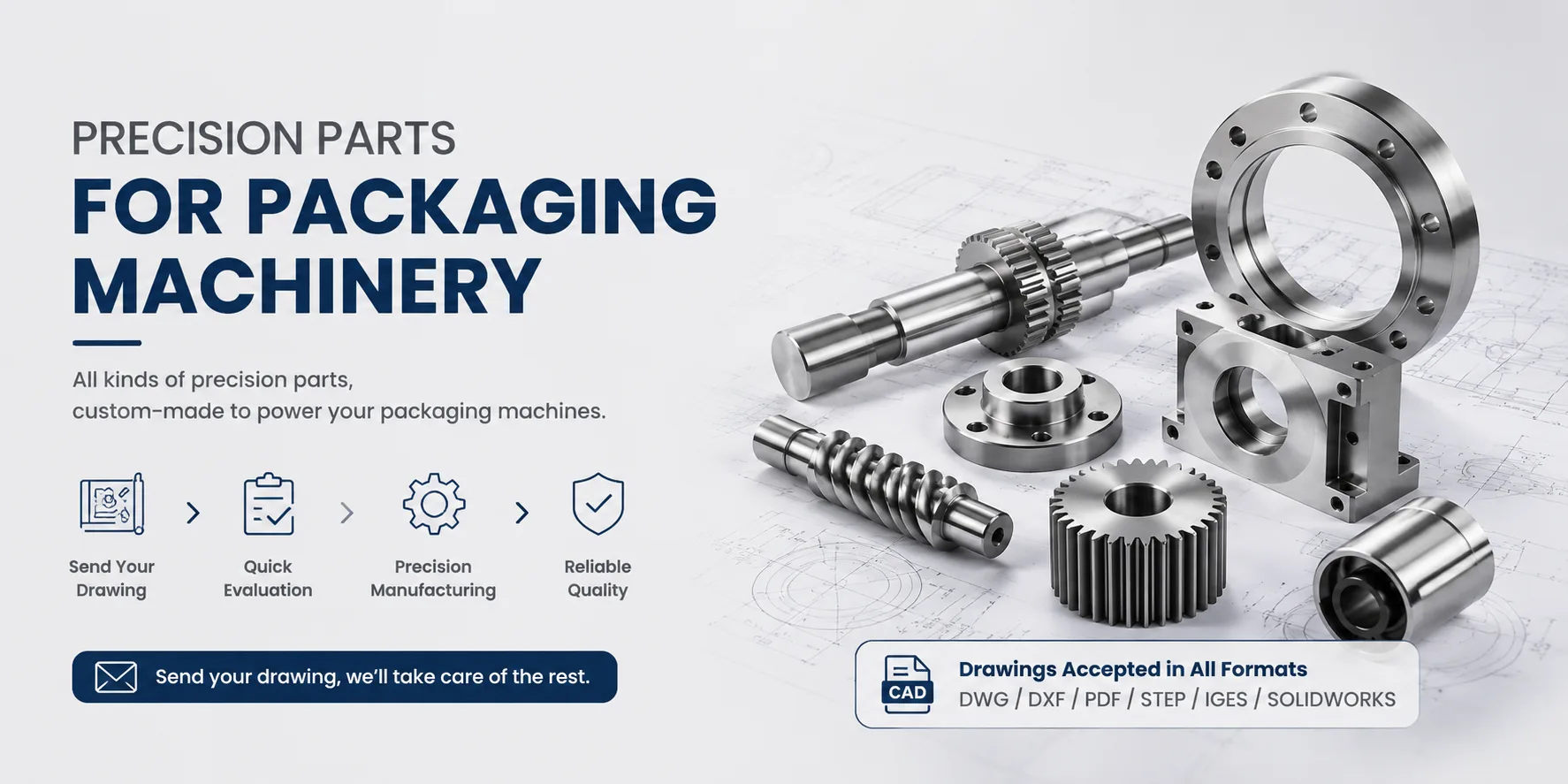
Flatbed conveyors work with automatic ton-bag packaging machines to improve automation in packaging conveying. They receive ton bags from the packaging machine outlet and move them to a warehouse, loading area, or the next process. If non-standard parts such as chain plates, traction chains, rollers, or connectors need to be machined to site dimensions, we can custom machine them according to customer drawings. Hansheng Automation supports single-piece and small-batch delivery.
Connect packaging and conveying
After an automatic ton-bag packaging machine completes filling and sealing, the ton bag, usually about 1 ton, needs to be moved quickly to storage or transport. As supporting equipment, a flatbed conveyor can directly receive ton bags from the packaging machine outlet. It uses a continuously running chain plate to convey them smoothly to a designated position, such as a warehouse, loading area, or the next processing stage. This removes manual handling and forms an automated line.
In the chemical industry, after powder or granular materials are sealed by a ton-bag packaging machine, the flatbed conveyor can send them directly to a high-temperature curing area or automatic palletizing system, reducing material exposure time and improving production efficiency.
Handle bulk material conveying in multiple industries
The fixed connection design of the chain plates allows stable conveying of solid materials such as cement and fertilizer, or unit items such as packaged ton bags. Its horizontal or inclined conveying capability, with an inclination angle generally not exceeding 15°, covers most production scenarios.
In the building materials industry, a flatbed conveyor can move cement or sand ton bags to an automatic loading system. In the food industry, it can convey bagged flour or starch, avoiding manual contact contamination and meeting hygiene standards.
Improve stability and reliability
A flatbed conveyor uses a traction chain to drive chain plates. It runs with low vibration and low noise. The gaps between chain plates are small, which prevents ton bags from slipping or being damaged during conveying. Its heavy-duty design, usually with a load capacity of several tons, meets the weight requirements of ton bags and reduces failure rate.
In the coal industry, a flatbed conveyor can continuously convey coal bags from hundreds of kilograms to ton level. With an automatic sorting system, it supports 24-hour uninterrupted operation and reduces manual intervention.
Support automatic control and integration
Modern flatbed conveyors can be equipped with sensors, frequency converters, and other intelligent components. They link with the control system of the automatic ton-bag packaging machine to provide speed matching, position detection, and fault warnings.
Speed matching adjusts conveyor speed to the packaging machine discharge rhythm, preventing ton bag accumulation or empty running.
Position detection uses photoelectric sensors or encoders to locate ton bags and trigger subsequent processes such as palletizing or coding.
Fault warnings monitor traction chain tension, motor temperature, and other parameters in real time to warn of potential faults and reduce downtime.
In a logistics center, when integrated with an automatic sorting system, the flatbed conveyor can automatically assign conveying routes based on barcodes on ton bags, achieving full-process automation.
Reduce labor cost and work intensity
Traditional ton bag handling requires several people and carries risks such as material spillage and injury. A flatbed conveyor keeps workers from directly touching the bags from packaging to conveying. Only a few operators are needed to monitor equipment operation, which reduces labor demand.
According to statistics, in a fertilizer plant with an annual output of 100,000 tons, after introducing a flatbed conveyor, labor cost in ton bag handling can drop by 60%, and the packaging damage rate caused by human factors falls below 0.5%.
Strong expandability and adaptability
A flatbed conveyor can use modular design, such as adding turning sections and lifting sections, to adjust the conveying route and suit different workshop layouts. Its expandability also appears in coordinated operation with robots, AGVs (automatic guided vehicles), and other equipment.
For example, in the auto parts industry, a flatbed conveyor can move packaged ton bags to an AGV stop, and the AGV completes cross-workshop transport, extending the automation chain.
Conclusion: Through structural optimization, intelligent control, and integration with packaging equipment, flatbed conveyors convey ton bag materials efficiently and stably. They also move packaging and conveying toward full-process automation and fewer workers, helping modern industrial production improve efficiency and reduce cost.
Our custom precision parts machining capability is not limited to flatbed conveyors. In addition to parts for conveying machinery, packaging machinery, chemical equipment, and building materials machinery, Hansheng Automation can machine yacht precision parts, RC car precision parts, tobacco packaging machinery parts, and filling machinery parts according to drawings. We also machine non-standard parts for printing machinery, food machinery, and medical devices, supporting drawing-based customization and small-batch delivery.