When laser cutting precision small holes, avoid micro-connections by controlling the heat-affected zone and slag residue through cutting parameters, process logic, auxiliary processes, and equipment maintenance. This prevents molten material from sticking during piercing and cutting.
Cutting parameter optimization
(1) Power and pulse mode
Use high-frequency pulsed laser instead of continuous laser. Pulse intervals break up the molten pool and prevent continuous melting from forming sticky bridges. For sheets ≤0.5 mm thick, set pulse frequency at 10 to 50 kHz and duty cycle at 20% to 40% to reduce heat input buildup.
Lower peak power while keeping average power stable. Avoid excessive molten pool overflow from instant overheating. Set peak power at 60% to 80% of rated power. Use a flat-top spot generator to even out energy distribution so molten material on the hole wall falls off evenly instead of sticking locally.
(2) Cutting speed and focus position
Adjust speed by hole diameter. For holes ≤0.3 mm, increase cutting speed to 1.2 to 1.5 times the normal speed. This avoids prolonged heat that cures and sticks molten material. For holes ≥0.5 mm, speed can be reduced, but increase assist gas pressure at the same time.
Set the focus on the top surface of the sheet, or slightly below it by 0.05 to 0.1 mm. Too deep a focus piles slag at the hole bottom. Too shallow a focus overheats the top edge and forms dross micro-connections.
Process logic adjustment
(1) Piercing process
Use pre-piercing plus spiral cutting instead of direct piercing. First pierce a locating hole at the center with a diameter 1/3 to 1/2 of the target hole. Then cut from inside out in a spiral path. This avoids molten material buildup at the center during direct piercing. For stainless steel, aluminum alloy, and other sticky materials, turn on high-pressure assist gas purge during pre-piercing.
Ramp up power during piercing. Go from low-power preheating to peak power. This avoids sudden high temperature that makes the sheet melt and collapse into micro-connections.
(2) Cutting path and finishing
Use a closed-loop cutting path. Return cut 0.1 to 0.2 mm at the end. This prevents molten material at the end point from sticking when it is not purged in time. For round small holes, use a concentric circle path instead of straight back-and-forth cutting to reduce dead corners for molten residue.
After cutting, delay laser shutoff by 100 to 300 ms and keep assist gas purging. This blows residual molten slag out of the hole.
Auxiliary process adaptation
(1) Assist gas selection and pressure
For carbon steel sheets, use compressed air with a small amount of oxygen. Set pressure at 0.5 to 0.8 MPa. For non-ferrous metals such as stainless steel and aluminum alloy, use pure nitrogen or argon. Raise pressure to 0.8 to 1.2 MPa. The high-speed gas flow carries slag out of the small hole in time and prevents it from sticking to the hole wall after cooling.
For ultra-precision small holes ≤0.1 mm, use a coaxial annular gas jet device. This directs gas evenly around the hole wall. It avoids local slag left by one-side purging.
(2) Post-treatment
After cutting, use ultrasonic cleaning or high-pressure gas blow-off to remove tiny slag particles inside the hole. For high-precision workpieces, use chemical passivation to prevent residual slag from oxidizing into micro-connection marks.
For batch processing, add inline vision inspection. It identifies micro-connection defects in real time and automatically triggers a second purge or recut.
Equipment and consumable calibration and maintenance
Regularly calibrate the laser focusing lens and cutting head. Keep spot diameter error ≤0.02 mm. This avoids spot shift that causes uneven cutting paths and local sticking.
Use a high-precision ceramic nozzle with an inner diameter 2 to 3 times larger than the target hole diameter. This avoids nozzle airflow interfering with purging inside the small hole. Clean slag blockages inside the nozzle regularly.
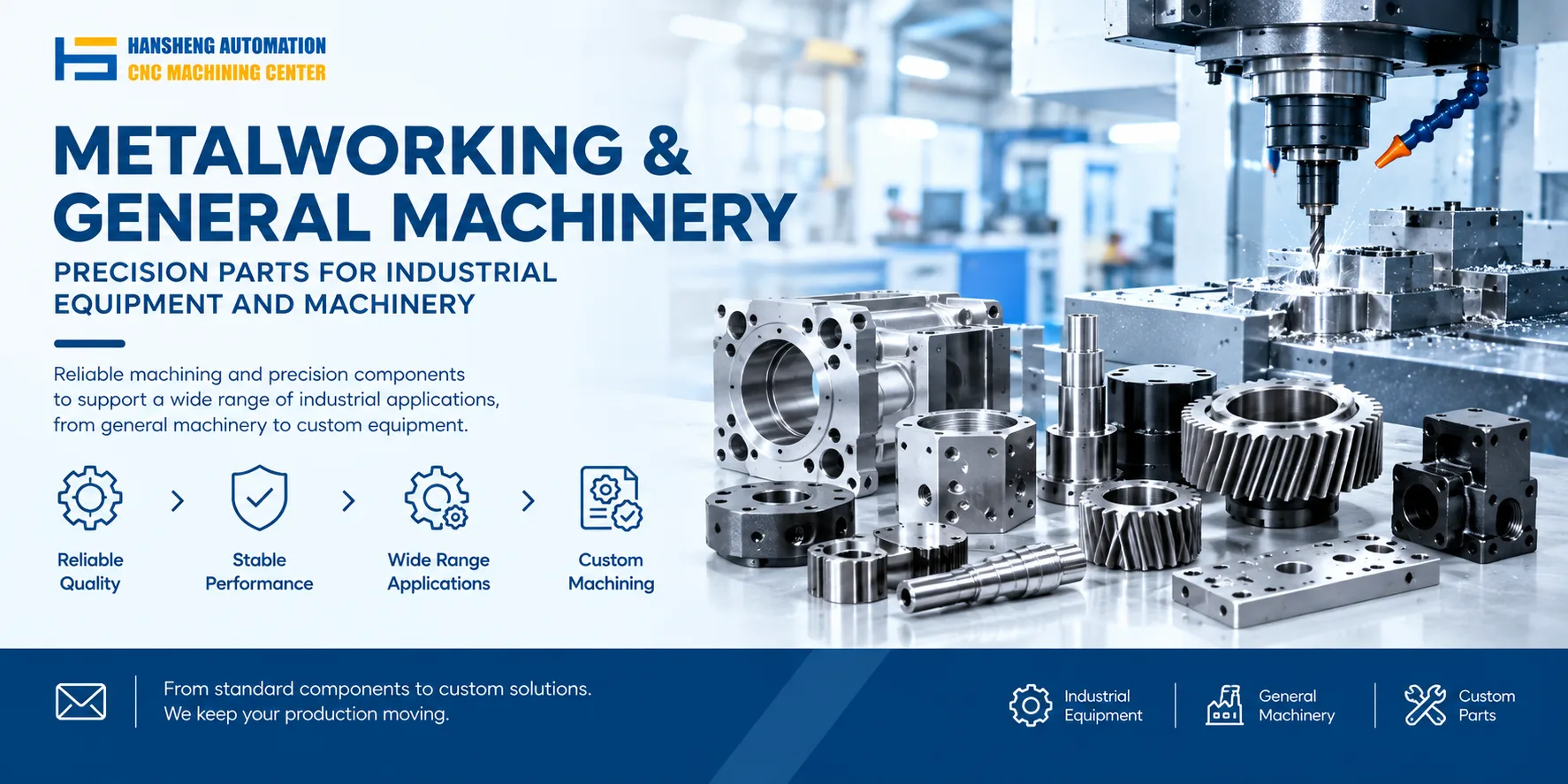
We can machine custom ceramic nozzles, focusing lens holders, fixtures, and other precision parts for laser cutting from customer drawings, for single-piece or low-volume production.
Our custom precision component machining capability is not limited to laser cutting. Beyond ceramic nozzles, focusing lens holders, and fixtures, we also machine yacht precision components, RC car structural parts, medical device parts, and non-standard parts for tobacco packaging machinery, filling machinery, and printing machinery. Hansheng Automation works from customer drawings and production quantities to deliver single-piece or low-volume precision machining.