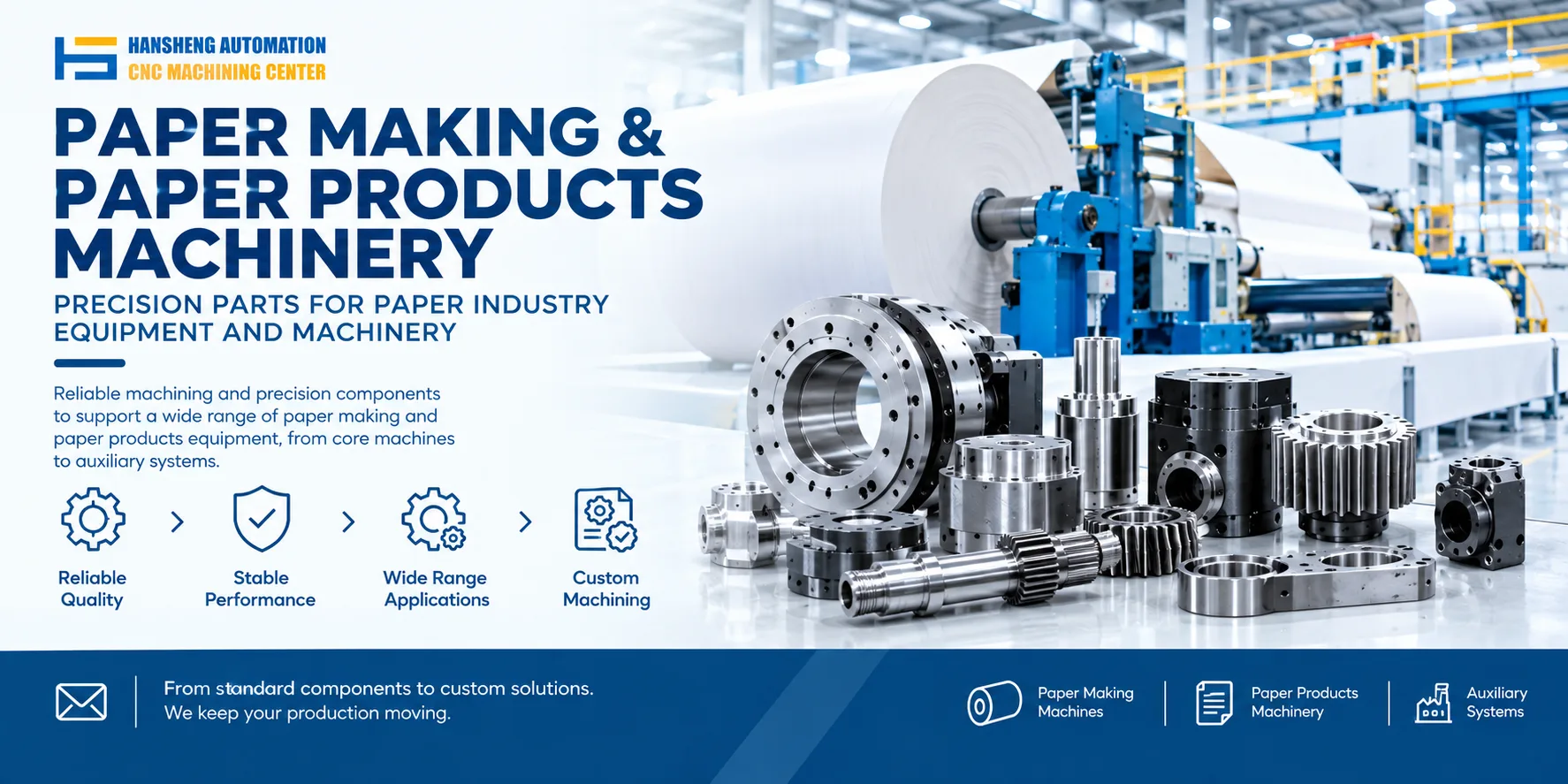
Paper production covers a linked sequence: pulping, screening and cleaning, refining, wire forming, pressing, drying, calendering, reeling and rewinding, and cutting and packaging. Each step affects sheet quality, runnability, and final appearance.
Pulping
Mechanical or chemical methods separate fibers from wood, grass, and other raw materials. Mechanical pulping uses grinding. Chemical pulping uses chemicals to break down the material and release fibers.
Screening and cleaning
Screening and cleaning equipment removes bark, knots, stones, and other impurities from the stock. This protects paper quality and downstream equipment.
Refining
Refining treats fibers mechanically. It fibrillates or brushes the fiber surface and increases fiber bonding. This improves paper strength and other physical properties.
Wire forming
The prepared stock suspension is dewatered on the forming wire of a paper machine. Fibers deposit and interweave into a wet sheet.
Pressing
Press rolls apply mechanical pressure to remove more water. This raises sheet dryness and improves density and strength. For press section components such as press rolls, suction boxes, and bearing housings, Hansheng Automation can machine custom parts from customer drawings, in single pieces or small batches.
Drying
Heat from dryer cylinders or other drying equipment brings sheet moisture into the required range. Drying also sets the fiber network and stabilizes the sheet.
Calendering and finishing
A calender treats the paper surface. It improves smoothness, gloss, appearance, and printability.
Reeling and rewinding
The paper is wound into a parent roll. It is then rewound and slit to the required width and length.
Cutting and packaging
Large rolls are cut into sheets or narrower rolls in different specifications. Packing protects the paper for storage and transport.
Beyond papermaking machinery, Hansheng Automation also machines precision components for yacht systems, RC cars, tobacco packaging machinery, filling machinery, printing machinery, food machinery, and medical devices. We work from customer drawings and deliver one-off or small batch parts to the required material, tolerance, and surface finish. Our scope is precision components, not complete machines.