The dryer section is the core unit of a paper machine's drying stage. It uses a group of cast iron dryer cylinders heated by saturated steam. Heat transfers through direct contact and removes free water and some bound water from the pressed wet sheet. Dryer fabrics and guide rolls keep the sheet running steadily. The section raises sheet dryness to 92% to 96% and sets the sheet.
Core heat transfer process
Main heat transfer logic
Saturated steam at 0.15 MPa to 0.6 MPa enters the dryer cylinders. The cylinder surface reaches 110°C to 160°C. Steam condenses and releases a large amount of latent heat. The heat passes through the cast iron cylinder wall directly to the wet sheet held against the surface.
Condensate inside the cylinder is removed in time through an internal siphon. This prevents a water film from forming on the cylinder wall and blocking heat transfer. It is a key detail for drying efficiency.
Drying stages
Preheating stage: Cylinder temperature is slightly lower at the start. This stage mainly removes free water from the sheet surface. Sheet dryness rises from 40% to 50% after pressing to about 60%.
Constant rate drying stage: The internal moisture diffusion rate matches the surface evaporation rate. Cylinder temperature stays stable. Dryness gradually rises to 75% to 85%.
Falling rate drying stage: The share of bound water inside the sheet increases, and moisture diffusion slows. Cylinder temperature is raised slightly or ventilation parameters are adjusted. Final dryness reaches the process requirement of 92% to 96%.
Sheet and dryer fabric control
Sheet transfer path
After dewatering in the press section, the wet sheet is transferred by a vacuum pickup roll to below the dryer fabric of the first dryer cylinder. The fabric presses the sheet against the cylinder surface. This prevents the sheet from wandering or wrinkling. It also carries the sheet through all dryer cylinder groups for drying.
Tension and contact control
Tension rolls and guide rolls adjust dryer fabric tension to match the wire section speed. This avoids sheet breakage or slack wrinkles.
The dryer fabric must stay clean and undamaged. This keeps the sheet in close contact with the cylinder surface and prevents uneven local drying.
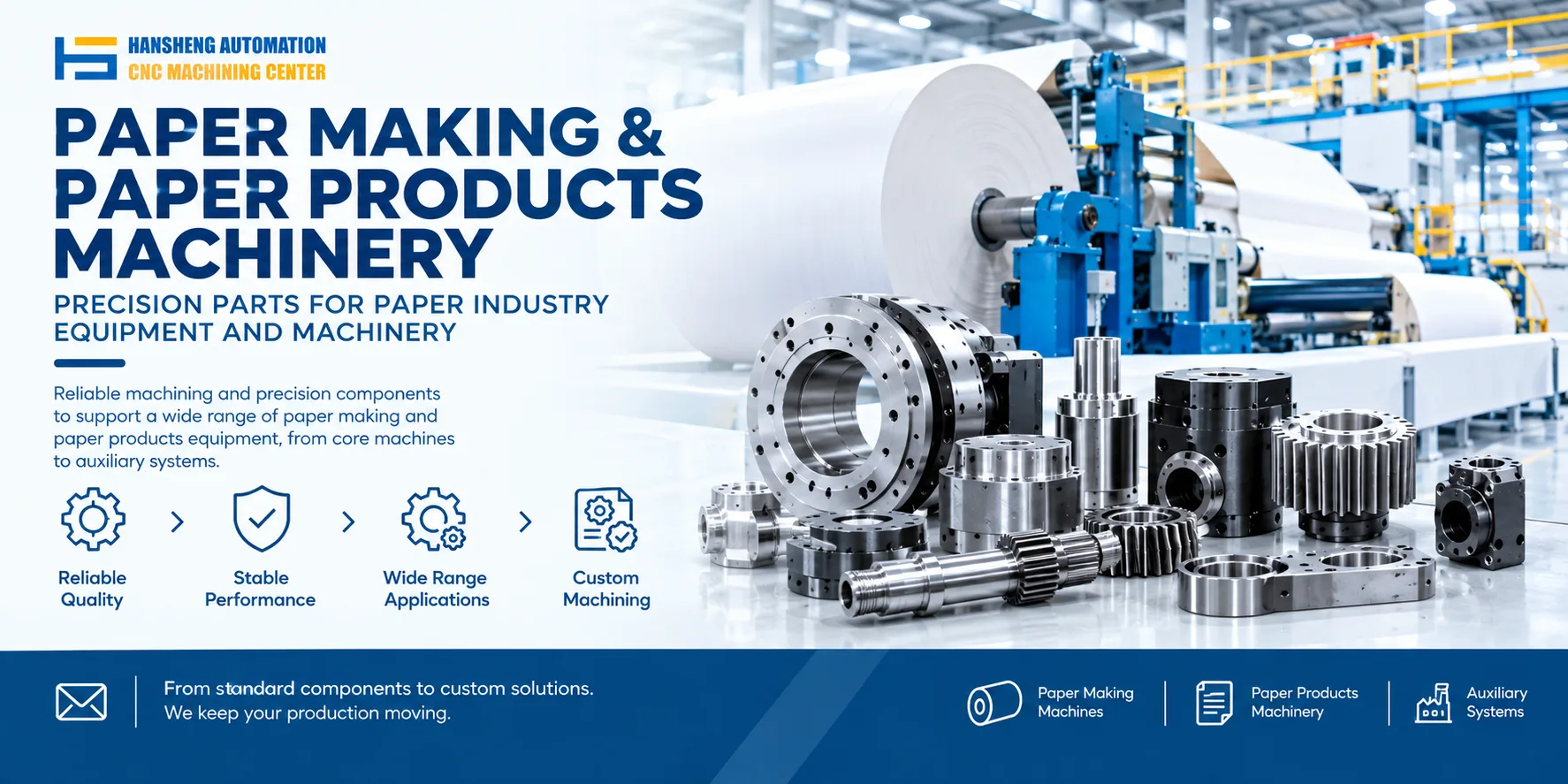
Hansheng Automation can machine custom dryer cylinder journals, bearing housings, guide rolls, and doctor blades from customer drawings, in single pieces or small batches.
Auxiliary support systems
Ventilation and moisture removal system: A closed exhaust hood above the dryer section removes evaporated water vapor in time. This prevents vapor from condensing in the workshop or returning to the sheet and helps maintain drying efficiency.
Parameter control system: Pressure sensors and temperature transmitters monitor dryer cylinder steam pressure and surface temperature in real time. They automatically adjust steam control valve parameters to stabilize the drying process.
Condensate recovery system: Condensate discharged from each dryer cylinder is recovered to the boiler house for waste heat use. This lowers production energy consumption.
Safety
Operating the dryer section steam system requires certified personnel. Before servicing siphons or dryer cylinders, the machine must be stopped and pressure released. This avoids high-temperature burns and high-pressure leakage risks.
Beyond paper dryer section components, our precision component customization is not limited to this topic. We machine yacht precision components, RC car precision components, filling machinery parts, tobacco packaging machinery parts, printing machinery parts, food machinery parts, and medical device components. Hansheng Automation works from customer drawings and delivers one-off or batch parts to the required material, tolerance, and surface finish. Our scope is precision components, not complete machines.