Aseptic filling is filling in an aseptic environment. An aseptic filler integrates cleaning and sterilization technology. The technology is mature and widely used for aseptic packaging of milk, juice, beverages, jam, and other foods. Food processing plants use it to give products a longer shelf life without preservatives and without refrigeration.
The purpose of an aseptic filler is to pack sterilized food, such as dairy products, in an aseptic environment and seal it in a sterilized container. To do this, the machine must meet the following requirements.
- The packaging container and sealing method must suit aseptic filling. The sealed container must block microorganisms during storage and distribution. The container must also have physical properties that prevent chemical changes in the product.
- Surfaces that contact the product must be sterilized before filling. Sterilization effectiveness depends on the contamination level of the container surface before sterilization.
- During filling, the product must not be contaminated by any equipment part or the surrounding environment.
- Sealing must be done in a sterile zone to prevent microbial contamination.
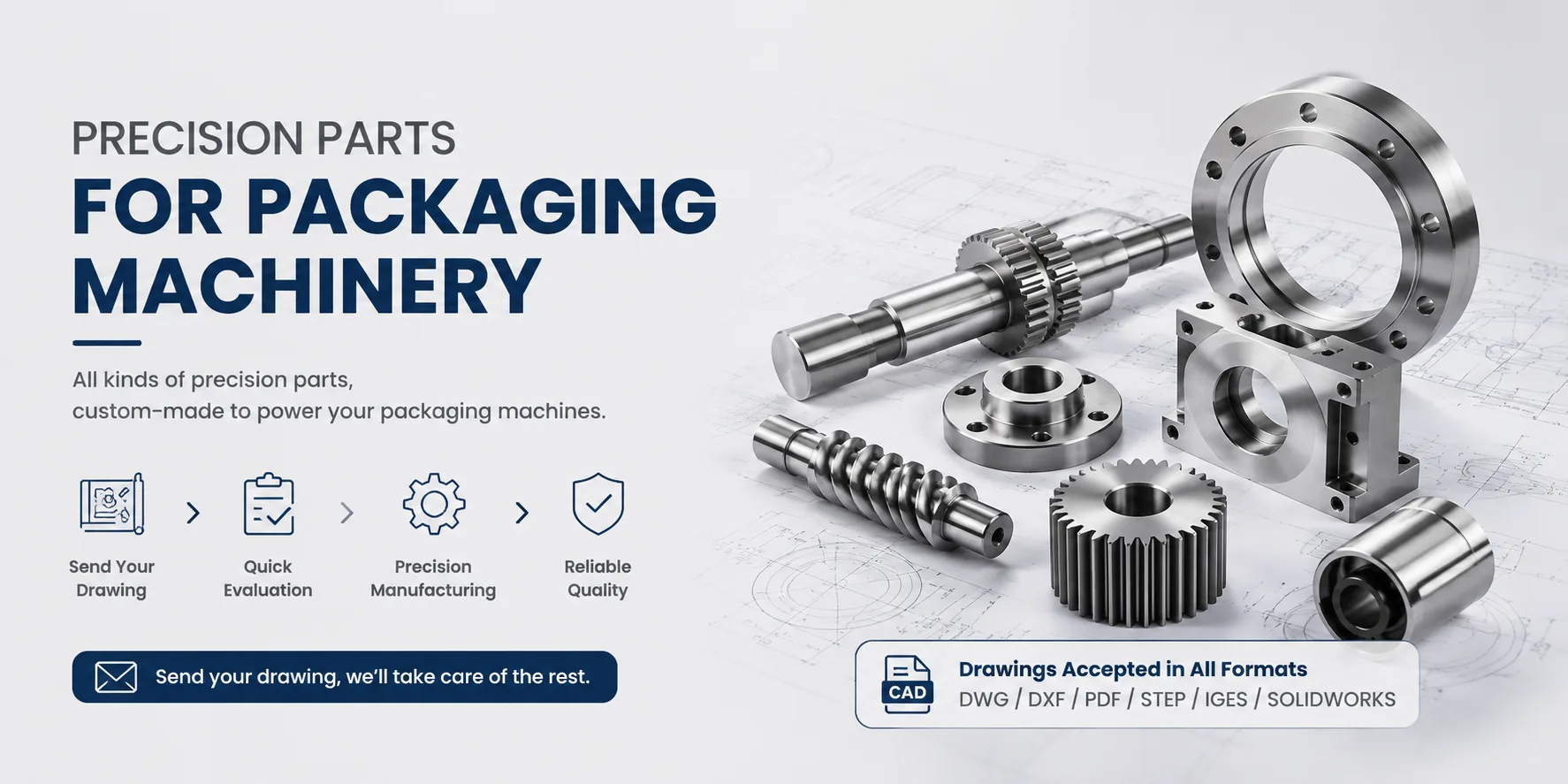
Aseptic filling lines demand tight fits and reliable seals. If filling valves, aseptic chambers, seal seats, locating parts, or conveyor brackets need custom machining to drawing, we can handle single pieces or small batches from customer drawings. Hansheng Automation supports materials such as 304/316 stainless steel, with tolerances and surface treatment controlled by the drawing. We focus on precision machined parts, not complete machines.
Beyond aseptic filling equipment parts, our drawing-based custom machining also covers dairy filling lines, beverage packaging equipment, pharmaceutical aseptic equipment, personal care filling machinery, food processing lines, tobacco packaging machinery, yacht hardware, and RC car structural parts. We machine single pieces and small batches to drawing for equipment builders and production lines.