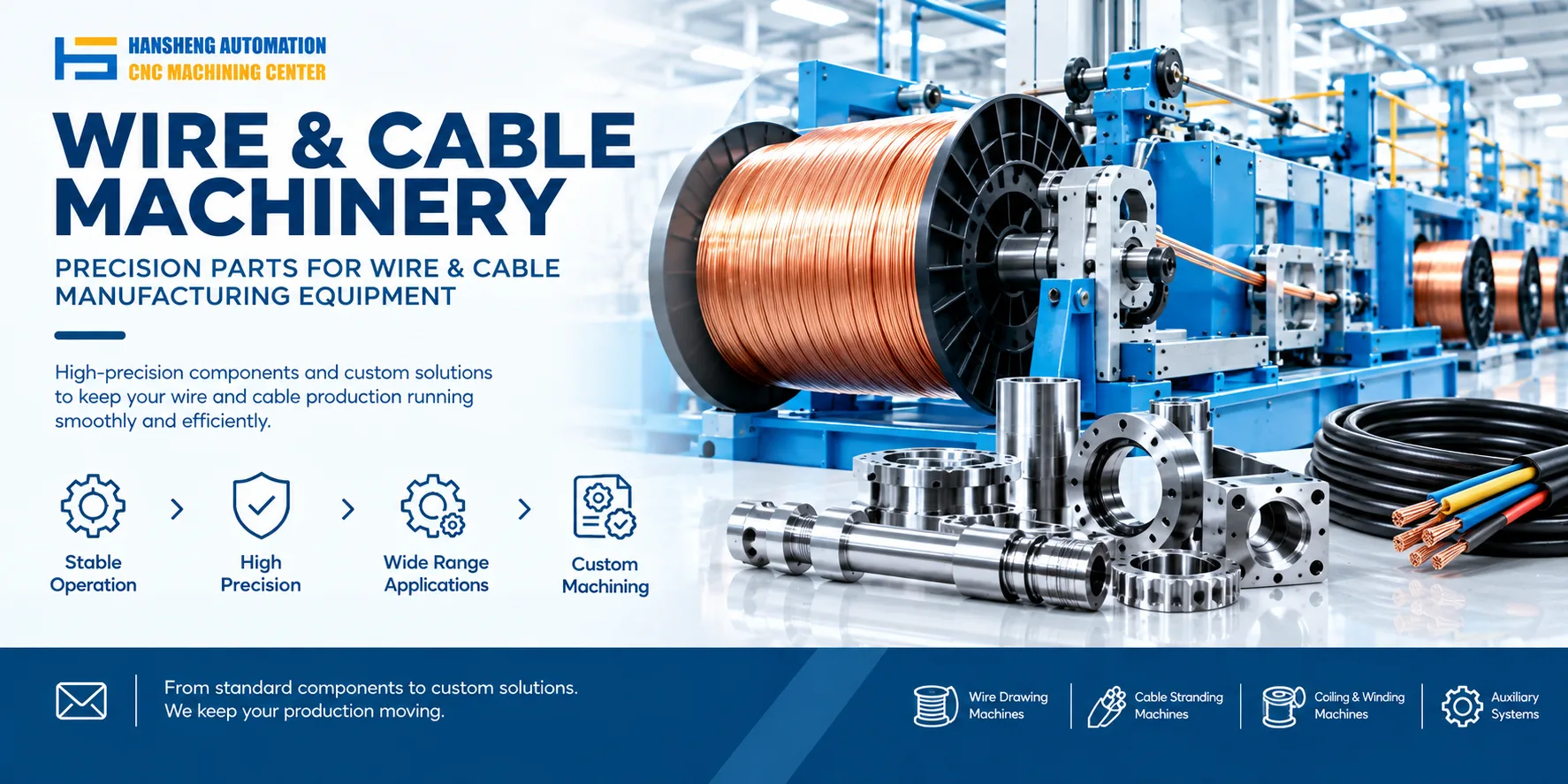
Cage strander maintenance centers on three stages: checks before startup, monitoring during operation, and cleanup after shutdown. Daily and scheduled maintenance should work together.
1. Checks before startup
Air system: Drain water from air lines and check all air connections for leaks.
Parts condition: Confirm that bolts, tape angle adjusters, and other common parts are in good condition. Check the crane hook, wire rope, and slings for damage. We can machine common parts such as fastening bolts and tape angle adjusters from customer drawings.
Lubrication: Check lubrication points, gearboxes, and brake oil levels. Make sure oil quality is acceptable and oil passages are clear. Keep oil cans and grease guns clean.
Function test: Power on and test protection switches for the take-up and pay-off traverse stand, main machine, wrapping unit, and crane. Run no-load tests for take-up, pay-off, and crane travel.
Trial run: Run the machine from low speed to high speed, then slowly reduce speed. Confirm the control system works normally, with no abnormal noise or unexpected stops.
Reel loading: Leave a 3 to 5 mm gap at both ends of the pay-off center cone. Adjust the lowering height according to reel size to avoid excessive force. Check that drive pins are in good condition. Pay attention to the tape cover direction and cage counterweight balance.
2. Monitoring during operation
Startup check: Start the machine at low speed. Check whether take-up tension is suitable and whether the gearbox oil passage is clear.
Balance and safety: When changing wires, make sure the cage has no obvious offset weight. If the reel shifts, add a shaft sleeve. Confirm the reel frame pin is in place. Watch the support rollers and gears at all times.
3. After shutdown
Power off: Cut power to the machine immediately after shutdown.
Area cleanup: Remove debris under the cage. Place reels neatly at the side. Keep the work area clean and clear.
4. Daily and scheduled maintenance
Order: Place tools, workpieces, and accessories at fixed points. Make sure safety guards and line conduits are complete.
Cleanliness: Keep the machine free of oil stains, impact damage, chips, and waste. Prevent oil, water, air, and electricity leaks.
Electrical system: Clean the electrical control cabinet regularly. Check connections and insulation to prevent leakage or short circuits.
Mechanical parts: Check bearings, transmission devices, and the brake system. Repair or replace them promptly if abnormalities are found.
Beyond cage stranders, our precision custom machining capability is not limited to one industry. Hansheng Automation can machine non-standard metal parts for tobacco packaging machinery, filling machinery, printing equipment, food machinery, and medical devices from customer drawings. We also machine yacht components and RC car components. We focus on build-to-print custom machining and produce single pieces or small batches according to customer drawings. We do not sell complete machines.