Threading tension and stop tension on a rewinder are two different process control parameters. They differ in application, control target, value range, and execution logic.
Application and control target
Threading tension: Used only during the temporary web threading stage. The web is pulled from the unwind stand, passes through guide rolls, tension rolls, and a web guide, and the web end is fixed to the rewind roll. The main goal is to keep the web moving smoothly through each process point. It prevents slipping, web drift, and breaks. It also matches the low-tension threading needs of thin materials and prevents pulling the substrate apart.
Stop tension: Used only during normal shutdown or fault shutdown. It maintains tension on the partly wound roll on the rewind side and the remaining web on the unwind side. The main goal is to prevent the roll from loosening or wrinkling and the web from sagging or shifting. This avoids waste when the machine restarts and prevents equipment protection alarms.
Value range and dynamic characteristics
Threading tension: Usually 30% to 60% of normal running tension. For thin paper, plastic film, and other flexible substrates, it can drop to 10% to 20% of normal tension. It is adjusted in real time based on threading progress. This avoids tension fluctuation at different guide roll points that can affect threading.
Stop tension: Usually slightly higher than threading tension, often 40% to 70% of normal running tension. Once set, it stays constant and does not adjust over time. It is released only before restarting and threading again. In practice, stop tension is adjusted based on substrate thickness and roll diameter. Too much tension can deform the paper core or make later unwinding difficult.
Control logic and actuators
Threading tension: Controlled by tension rolls, magnetic powder brakes or clutches, and variable-frequency motors working together. Most machines use tension sensors for real-time feedback. During threading, output torque can be adjusted manually or automatically to keep web tension stable.
Stop tension: Usually locked by a magnetic powder brake or pneumatic brake on the rewind side. High-end rewinders can include automatic stop tension switching. After shutdown, the tension system switches automatically to a preset stop tension value. No manual adjustment is needed.
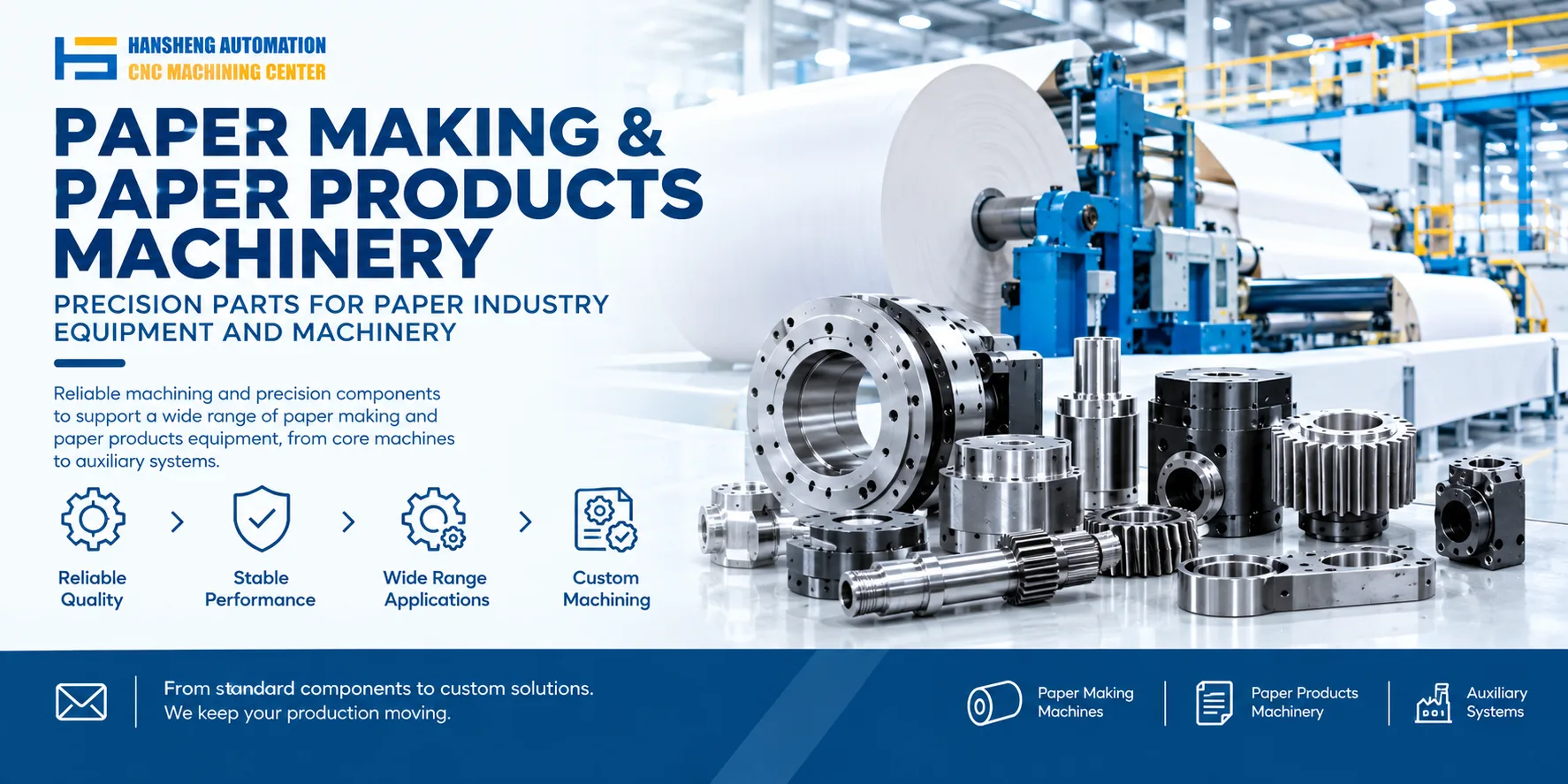
For rewinder builders, Hansheng Automation can machine custom tension roll components, brake mounting parts, guide roll assemblies, and structural parts from customer drawings, in single pieces or small batches.
Beyond rewinder components, our precision component customization covers more than one industry. We machine yacht precision components, RC car precision components, tobacco packaging machinery parts, and filling machinery parts. Hansheng Automation also produces printing machinery parts, food machinery parts, and medical device components from customer drawings. We deliver one-off or batch parts to the required material, tolerance, and surface finish. Our scope is precision components, not complete machines.