Homogenizers, mixers, and emulsifiers are often grouped together, but they work in different ways and fit different jobs. The differences come down to principle, application, and trade-offs.
Working principle
A homogenizer uses a precision-matched rotor and stator. The rotor spins at high speed and steady rate, creating high-frequency circumferential and angular velocity that produces homogenization.
A mixer, in the common household form, uses blades at the bottom of a cup that spin at high speed. The water flow keeps moving the food so it is repeatedly broken down.
An emulsifier uses a homogenizing head driven by a motor. The head spins at high speed and shears, disperses, and impacts the material. The result is a finer texture.
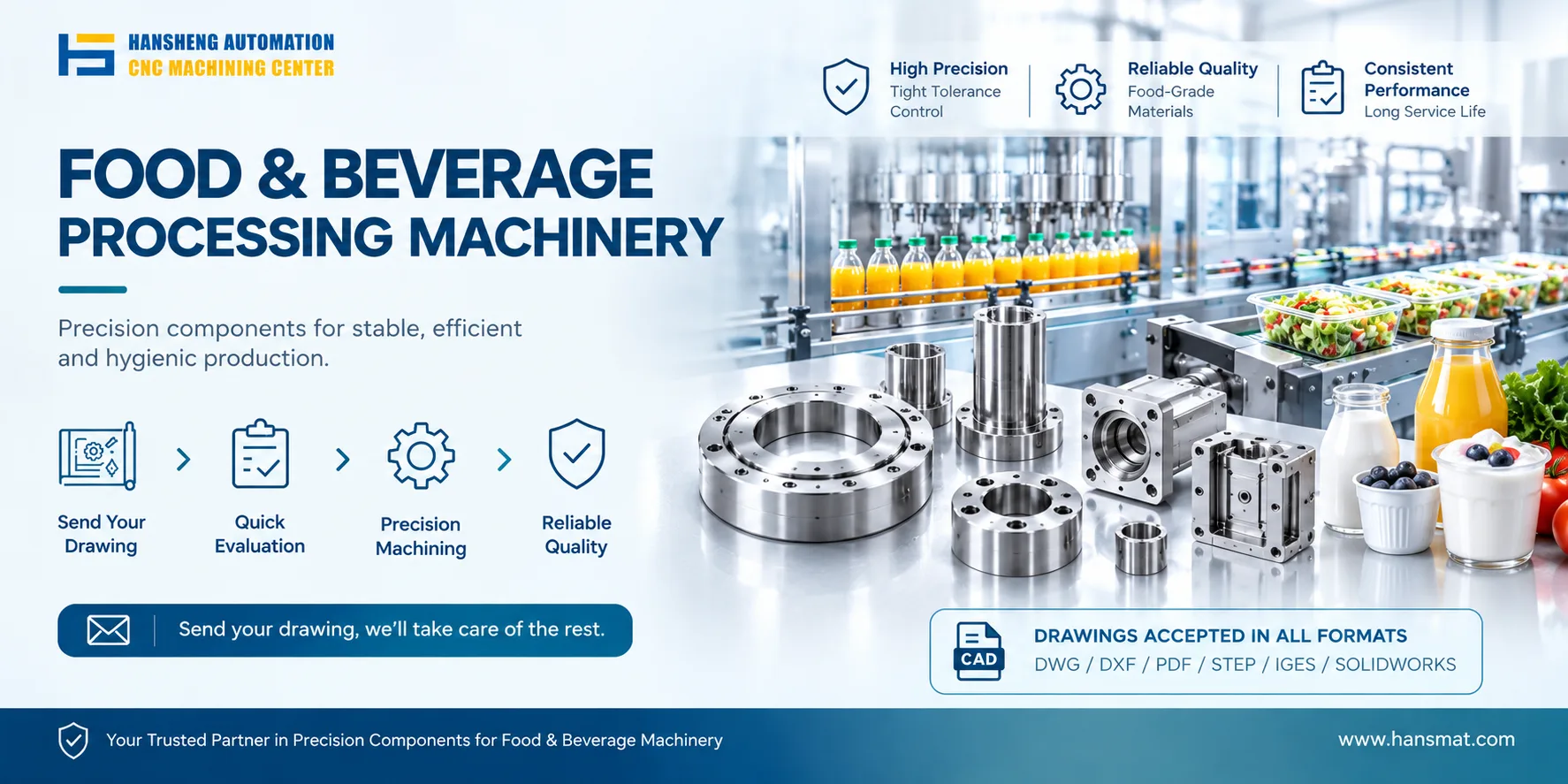
For equipment builders, Hansheng Automation can machine custom rotor-stator assemblies, emulsifying heads, mixing shafts, and wear parts from customer drawings, in single pieces or small batches.
Applications
A homogenizer is used for tissue dispersion in biotechnology, sample preparation in pharmaceuticals, and enzyme processing in the food industry. Many of these uses focus on research materials.
A mixer is a small household machine. It blends fruits and vegetables to make fresh juice and vegetable juice.
An emulsifier is used in adhesives, paints and coatings, cosmetics, food, pharmaceuticals, plastics and resins, printing and dyeing, inks, asphalt, and other industries.
Advantages and disadvantages
Homogenizer: The main advantage is the best mixing result. The disadvantages are high power consumption, low output, a higher chance of faults, and high repair cost.
Mixer: The main advantage is that it is the most traditional mixing method, widely used and convenient. The disadvantage is that it does not shear or refine material. It only performs simple mixing.
Emulsifier: The main advantage is good mixing. With the right emulsifying head, it can handle many working conditions and has wide application. The disadvantages are low output and poor mixing results with hard particles and high-viscosity materials.
Beyond homogenizers, mixers, and emulsifiers, our precision component customization serves more than one industry. We machine yacht precision components, RC car precision components, medical device parts, filling machinery parts, tobacco packaging machinery parts, food machinery parts, and printing machinery parts. Hansheng Automation works from customer drawings and delivers one-off or batch parts to the required material, tolerance, and surface finish. Our scope is precision components, not complete machines.