A rubber screw dewatering machine removes free water from wet rubber through mechanical compression and screening. Its main components are a screw and a perforated screen. As the rubber moves through the machine, the screw applies increasing pressure, forcing water through the screen while retaining the solid rubber material.
1. Working principle
A rubber screw dewatering machine operates continuously. Wet rubber enters through the feed inlet and is pushed forward by the rotating screw.
The screw has a variable diameter and pitch. Its diameter increases gradually, while the pitch decreases along the screw. These changes reduce the available space for the rubber and increase the compression applied to the material.
As the rubber moves through the compression zone, free water is forced out through the openings in the surrounding screen. The dewatered rubber continues toward the discharge outlet, allowing the machine to process material continuously.
2. Main components and their functions
Screw: The main working component. Its variable diameter and pitch help convey and compress the rubber material.
Screen: A perforated section of the machine housing that allows expelled water to pass through while retaining the rubber solids.
Barrel: Forms the compression chamber together with the screen and withstands the pressure generated during operation.
Drive system: Supplies the power required to rotate the screw at the selected speed.
Gearbox: Reduces motor speed and increases output torque to provide the force required for compression.
3. Main technical parameters
The following figures are reference values for a particular equipment range. Actual specifications depend on the machine model and the properties of the incoming rubber.
|
Parameter |
Reference value |
Description |
|---|---|---|
|
Processing capacity |
500 to 5,000 kg/h |
Material throughput per hour, depending on the model |
|
Motor power |
55 to 160 kW |
Power required to drive the system |
|
Moisture content after dewatering |
8% to 15% |
Remaining moisture in the discharged rubber |
|
Screw speed |
10 to 30 rpm |
Adjustable to control compression and discharge rate |
The actual capacity and final moisture content depend on the feed material, initial moisture level, screw configuration, and operating settings. These figures should be confirmed against the equipment specifications and the intended application.
4. Advantages and limitations
Advantages
A screw dewatering machine supports continuous processing, offers relatively high throughput, and requires less floor space than some alternative arrangements. Mechanical dewatering can also reduce energy consumption compared with relying entirely on hot air drying.
Limitations
The machine mainly removes free water. Water retained within certain rubber materials, such as natural rubber latex coagulum, may be more difficult to remove mechanically. Additional hot air drying may therefore be required to reach the target moisture content.
The screw and screen operate under substantial mechanical loads. Their materials and construction must withstand both compressive forces and wear during continuous operation. Regular inspection is necessary to identify damage, deformation, or excessive wear before these conditions affect dewatering performance.
5. Safety precautions
Keep hands and tools away from the feed inlet, compression chamber, discharge outlet, and other moving parts while the machine is running.
Before inspection, cleaning, or maintenance, disconnect the power supply, apply lockout and tagout procedures, and verify that the machine cannot start unexpectedly. Do not remove guards or attempt to clear blockages while the screw is moving.
6. Custom machining for industrial equipment components
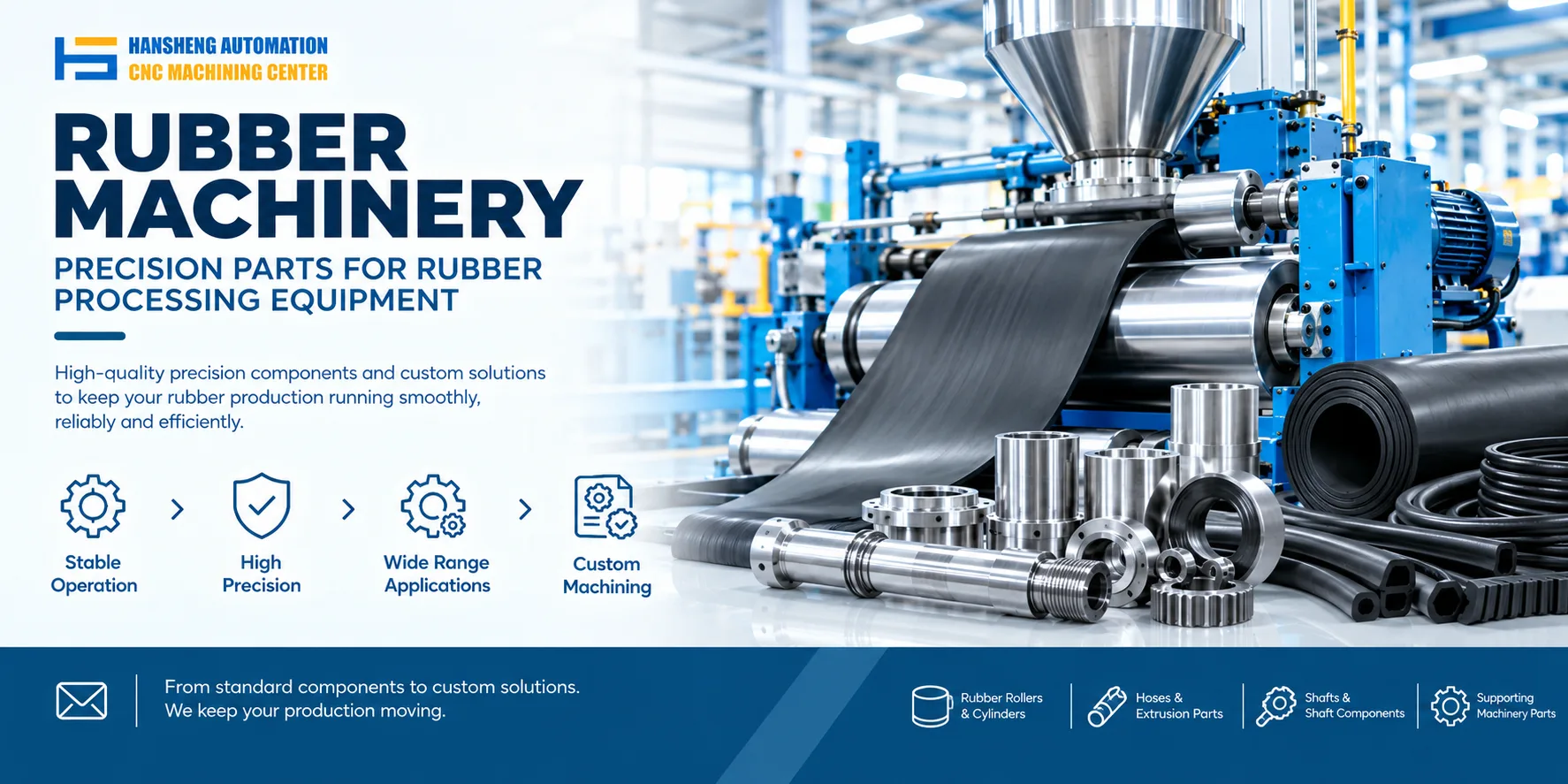
Rubber processing equipment may require replacement screws, shafts, sleeves, and other metal components manufactured to specific dimensions and material requirements. Hansheng Automation can assess custom precision machining based on customer drawings, technical specifications, and dimensional tolerances.
Our machining services also cover non-standard components for packaging machinery, filling equipment, and tobacco machinery, along with precision parts for yacht equipment and RC racing cars. Customers can submit drawings and material requirements for an assessment of machining feasibility.