A medical ventilator uses mechanical means to assist or replace spontaneous breathing. Its purpose is to maintain effective alveolar ventilation, correct hypoxemia and carbon dioxide retention, and support oxygen delivery and metabolic demand.
Core components
1.1 Power and control unit
Power module: uses a central oxygen supply, external oxygen cylinders, or an onboard electric air compressor to provide a stable oxygen and air mixture.
Control module: a microprocessor adjusts flow, pressure, and timing based on preset respiratory rate, tidal volume, inspiratory to expiratory ratio, and airway pressure.
1.2 Ventilation delivery unit
Inspiratory path: delivers the conditioned gas mixture. Some models include a heated humidifier to control temperature and humidity and prevent dryness or damage to the airway mucosa.
Expiratory path: includes a one-way valve and an expiratory valve. The one-way valve prevents exhaled gas from flowing back and contaminating the gas source. The expiratory valve controls airway pressure during expiration, such as positive end-expiratory pressure (PEEP), to prevent alveolar collapse.
1.3 Monitoring and feedback unit
It collects airway pressure, tidal volume, respiratory rate, blood oxygen saturation, and other clinical parameters in real time. The data goes back to the control unit, which adjusts ventilation strategy to reduce risks such as high airway pressure injury and insufficient ventilation.
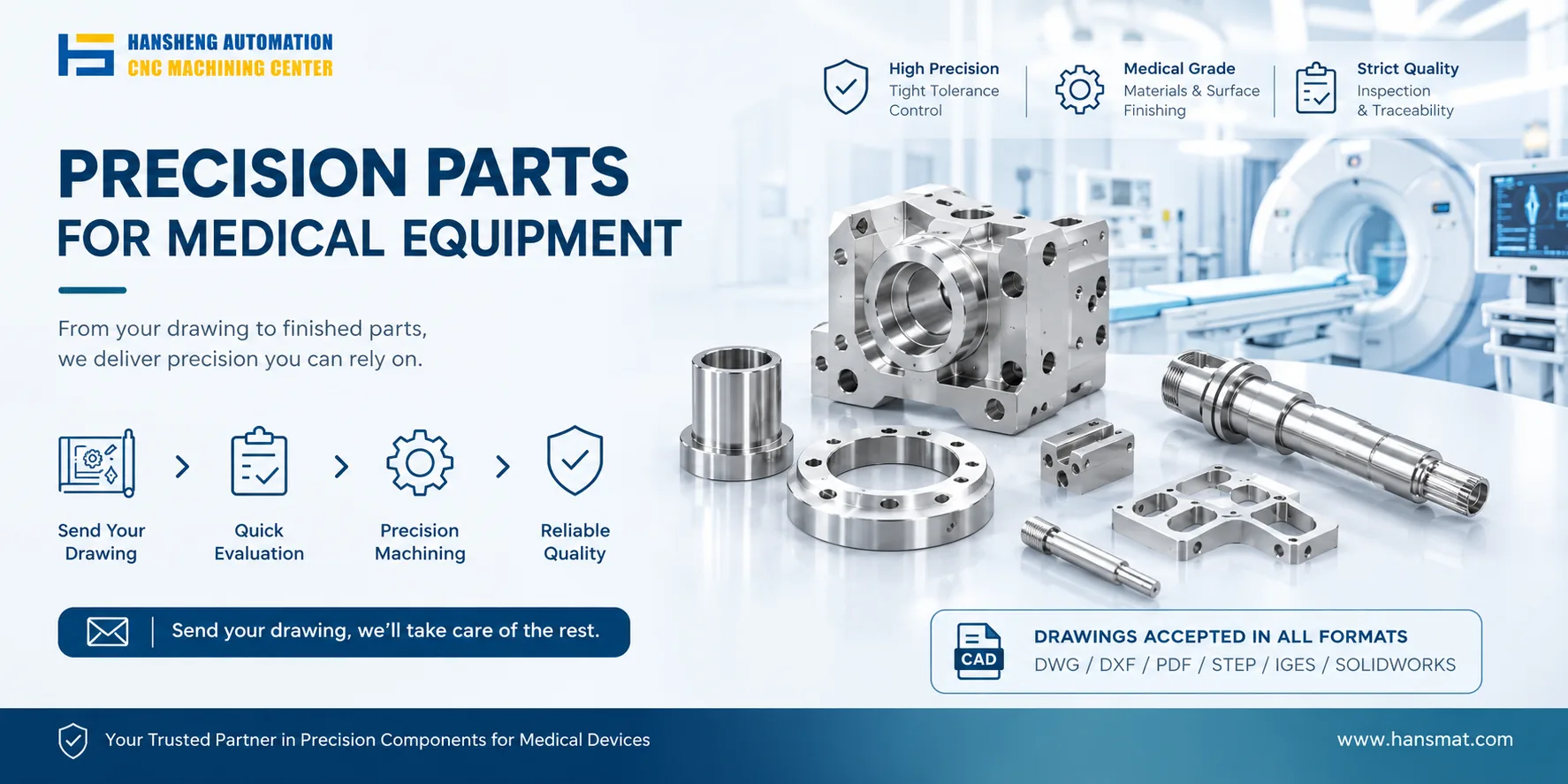
For ventilator parts such as valve bodies, sensor mounts, and gas path connectors, Hansheng Automation can machine custom parts to customer drawings in single units or small batches.
Complete working cycle
Ventilation can be invasive or non-invasive. The core cycle is the same.
2.1 Inspiratory trigger
The control unit triggers ventilation according to preset parameters, opens the inspiratory valve, and sends the heated and humidified gas mixture to the lungs until the preset tidal volume or airway pressure threshold is reached.
2.2 Expiratory switch
The inspiratory valve closes and the expiratory valve opens. The patient exhales through elastic recoil of the chest wall and lungs. Gas containing carbon dioxide leaves through the expiratory path.
2.3 Repeat
The ventilator repeats inspiration and expiration at the preset respiratory rate to replace or assist the patient through a complete breathing cycle.
Our precision parts machining service is not limited to ventilator components. Hansheng Automation also produces custom parts for medical devices, food machinery, printing machinery, filling machinery, tobacco packaging machinery, yacht hardware, and RC car parts. We work from customer drawings and deliver single units or small batches. The service remains focused on precision parts manufacturing, not complete equipment sales.