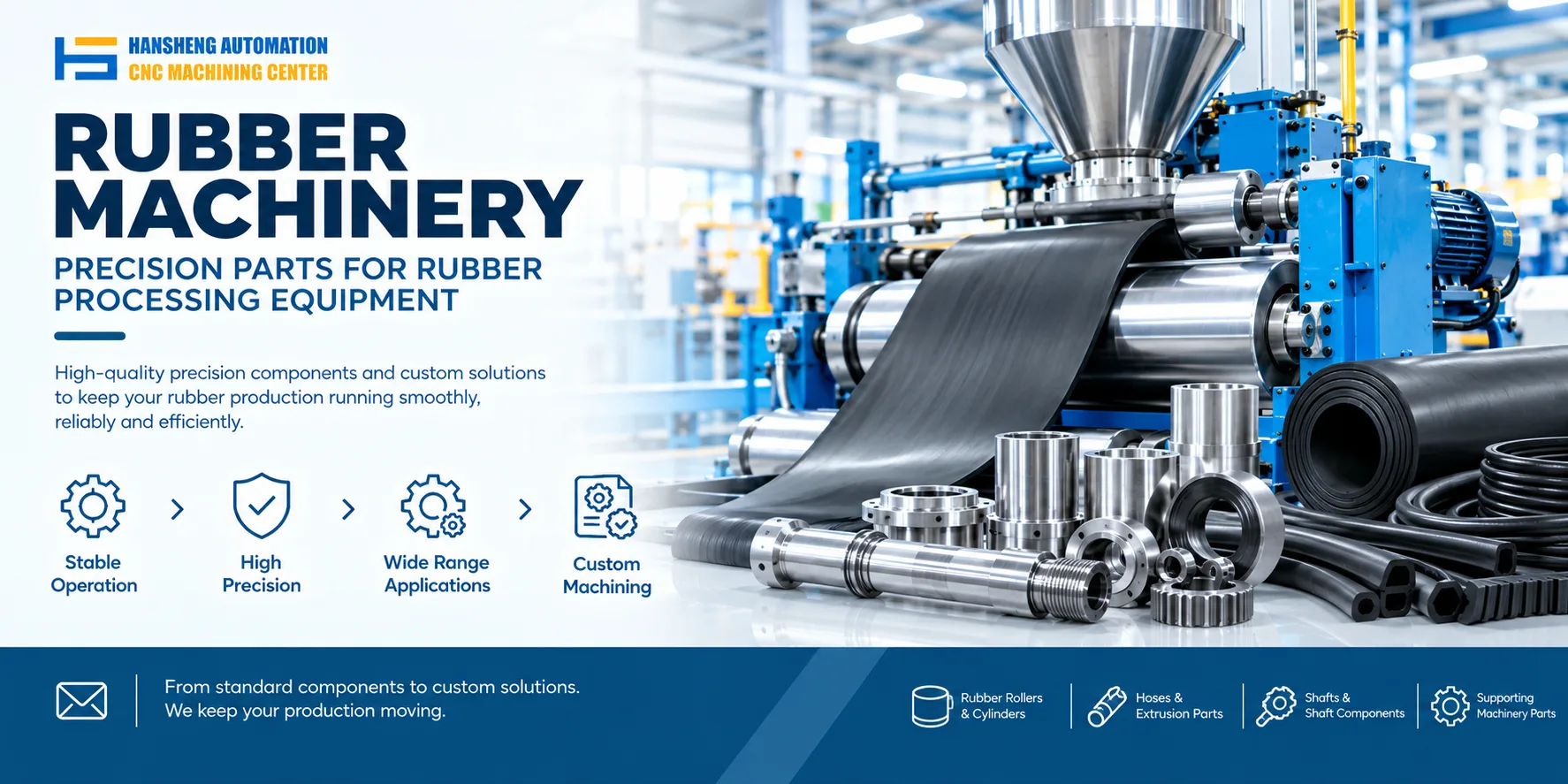
High temperature vulcanization with a flat vulcanizing press requires precise control of temperature, pressure, and curing time. These parameters help ensure sufficient crosslinking and consistent properties in finished rubber products.
Preparation before vulcanization
Raw material preparation
Masticate the rubber to improve its plasticity, then weigh the vulcanizing agents, accelerators, reinforcing agents, and other compounding ingredients according to the specified formulation.
Mold preparation
Clean contaminants from the mold surfaces and apply a release agent. After installation, check that the mold closes securely and fits together properly.
Equipment calibration
Check the stability of the temperature control system, with a temperature deviation within ±1°C. Verify pressure uniformity and ensure that hydraulic pressure fluctuations remain at or below 0.5 MPa.
Vulcanization and molding
Accurate material loading
Keep the rubber compound weight deviation within ±0.5% to reduce the risk of flash or incomplete mold filling. Before loading the compound, preheat the mold to 80 to 100°C to improve rubber flow.
Mold closing and pressure application
During the initial pressurization stage, apply a lower pressure of 12 to 15 MPa to allow the rubber compound to flow into the mold cavity. Once the cavity is completely filled, increase the pressure to 18 to 20 MPa and maintain it during vulcanization.
Staged temperature increase
Set a gradual heating rate of 3 to 5°C per minute to reduce the risk of scorch on the rubber surface. Maintain the temperature at 160 to 180°C during the holding stage.
For nitrile rubber products, the typical vulcanization time specified in this process is 8 to 12 minutes per millimeter of thickness. The actual process settings must be matched to the product requirements.
Post vulcanization and quality inspection
Mold release
Allow the mold temperature to decrease to 60 to 70°C before demolding. Compressed air can assist with ejecting the part and help prevent deformation while the product is still hot.
Secondary vulcanization
Materials such as EPDM that require a higher degree of crosslinking may undergo secondary vulcanization in an oven at 120°C for 4 to 6 hours. This treatment can improve rebound resilience by 20 to 30%.
Quality inspection
Use Shore hardness testing, with a tolerance of ±3A, and tensile strength testing, with a required value of at least 15 MPa, to assess the vulcanization result.
Temperature monitoring and operating safety
Thermocouples require periodic calibration to prevent temperature measurement errors that could lead to overcuring or undercuring.
Because the process involves high temperatures and pressure, operators must wear heat resistant gloves rated for 300°C. A physical safety barrier must also be installed in the direction in which the mold opens to protect personnel during operation.
Custom precision component machining services
Beyond rubber processing applications, Hansheng Automation provides custom machining of precision components according to customer supplied drawings. Our work includes components for yacht equipment and RC racing cars, as well as nonstandard parts for tobacco packaging and filling machinery. We manufacture components to the specified drawing dimensions and requirements for different mechanical applications.