Food processing plants choose between fully automatic and semi-automatic centrifugal compressors based on production scale, product mix, and hygiene requirements. Each option has clear trade-offs in capacity stability, compliance, and changeover flexibility.
Fully Automatic Centrifugal Compressors
Advantages
Capacity Stability
Fully automatic units run continuously with efficiency above 90 percent. Common specifications in food processing range from 100 to 500 m³/min. There is no capacity fluctuation from manual intervention. This makes them suitable for continuous production lines in beverages and dairy with daily output above 1,000 tons.
Hygiene Compliance
Closed piping with an automatic CIP program meets GB 14881, the general hygiene standard for food production. This reduces the risk of secondary contamination from manual operation. It also supports the automated data retention required for SC certification traceability.
Operating and Maintenance Costs
One unit needs only one operator on duty, cutting labor costs by more than 60 percent compared with semi-automatic operation. A built-in fault warning system helps identify problems early. Downtime drops by about 40 percent year on year. When replacement parts such as valve components, seals, or impellers are needed, Hansheng Automation can machine them to customer drawings.
Disadvantages
High Initial Investment
Equipment purchase plus the automatic control system costs two to three times more than a semi-automatic solution. This creates financial pressure for small and medium-sized companies.
Slow Product Changeover
Switching between products, such as different flavored juices, requires 4 to 8 hours to adjust piping and programs. Capacity loss during changeover is significant. The system does not support small batch orders with multiple product categories.
Semi-Automatic Centrifugal Compressors
Advantages
Lower Initial Investment
Equipment cost is only 40 to 50 percent of a fully automatic solution. No professional automatic control system is needed. This suits small and medium food plants with daily output below 500 tons.
Flexible Product Changeover
Manual adjustment of piping and parameters takes only 1 to 2 hours. This fits multi-category, small batch production such as braised seasoning products and specialty dairy products.
Simple Maintenance
The structure is simple. Repair does not require automation specialists. On-site maintenance costs are low.
Disadvantages
Higher Hygiene Risk
Manual operation involves more steps. Piping may not be cleaned thoroughly, and cross-contamination between materials is possible. Extra manual inspection and cleaning costs are needed.
Capacity Fluctuation
Manual start-stop and parameter adjustment can cause capacity to vary by 10 to 15 percent. This cannot meet orders that require stable high output.
Compliance Gaps
Manual production data recording is prone to error. It does not meet the automated data retention requirements for food production traceability. This may affect SC certification audits.
Matching the Solution to Production Scale
Choose a fully automatic centrifugal compressor when the line runs continuously, output is high, and hygiene compliance must be documented automatically. Choose a semi-automatic solution when batches are smaller, product categories change often, and initial capital is limited. The right choice depends on daily output, product mix, and the level of traceability the customer needs.
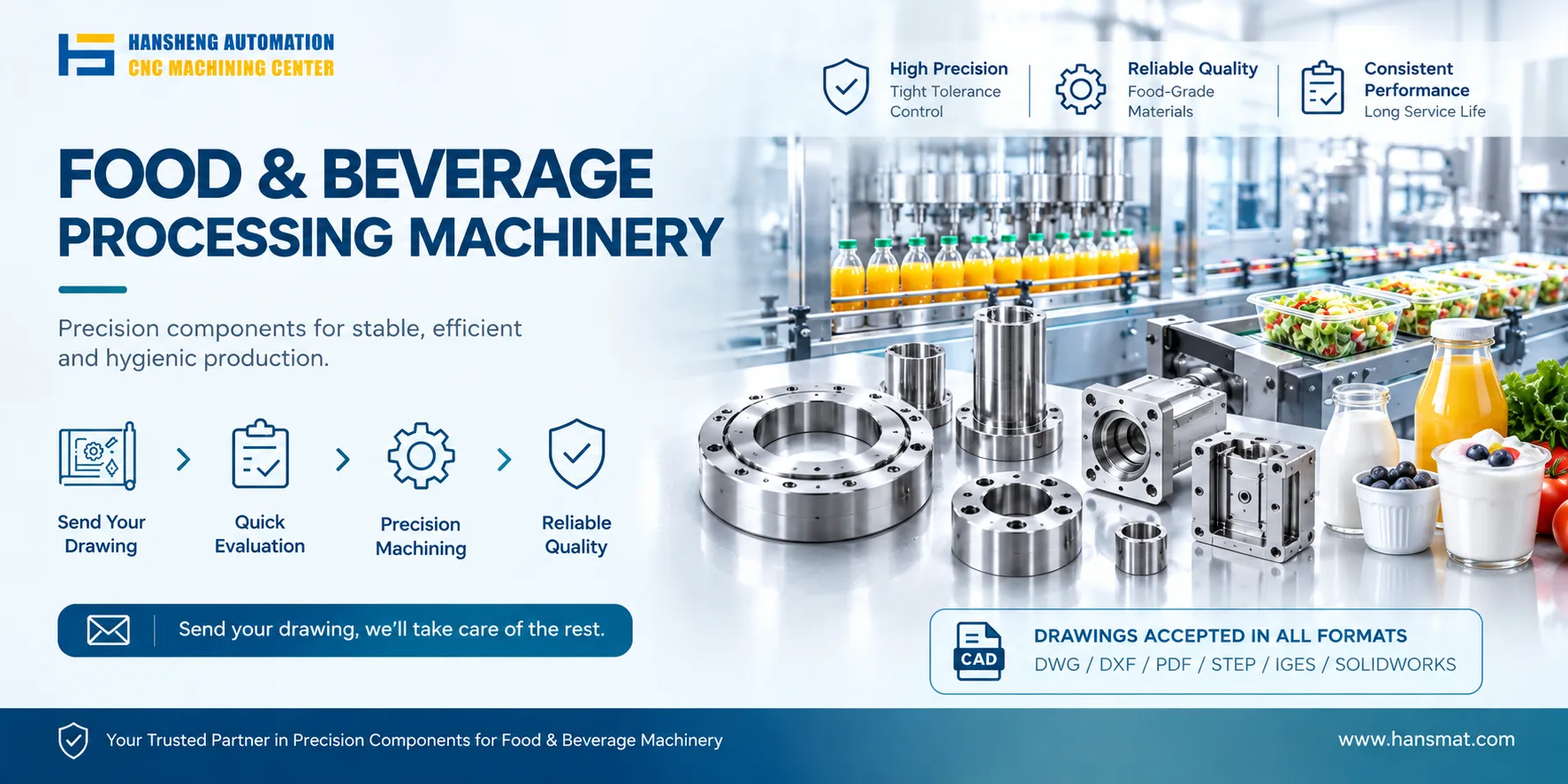
Our precision custom machining capability is not limited to compressor components. Hansheng Automation also produces parts for filling machinery, food processing equipment, and medical devices, along with precision components for yachts and RC cars. From single parts to small batch runs, we machine to customer drawings and deliver parts for assembly.