The eight main parameters of a laser cutting machine are feed speed, cutting head height, base laser current, laser pulse frequency, laser pulse duty cycle, laser power supply, laser power modulation, and assist gas.
Feed speed
The dwell time of the laser beam at the current point is inversely proportional to the moving speed of the cutting head on the material plane. Higher speed means shorter dwell time. Lower speed means longer dwell time. Geometry also affects feed speed. For example, when the cutting area is too small, heat can build up in the material over a similar time, which affects cut quality.
Cutting head height
The laser beam focuses below the nozzle through the lens. Power density is highest at the focus. The height from the cutting head to the cutting surface affects both the flat focus area and the energy density at the current point. A proper height lets the laser beam focus accurately on the material surface and gives the best cut.
Base laser current
Base laser current directly determines laser beam power. When base laser current is 100%, laser beam power reaches its maximum. Adjusting base laser current controls laser output power to meet different material and cutting requirements.
Laser pulse frequency
Besides a continuous laser beam, a laser cutting machine also uses a pulsed laser beam, which switches on and off rapidly. Adjusting the duty cycle of the pulsed laser beam adjusts its power and enables special functions such as fine cutting and drilling.
Laser pulse duty cycle
Duty cycle is the percentage of time the pulsed laser stays on in one cycle. It is proportional to laser power. When duty cycle is 100%, the laser is on for the whole cycle, which is continuous laser. Adjusting duty cycle flexibly controls laser output power and energy distribution.
Laser power supply
The laser power supply provides energy in several sections. Some sections can be shut off separately when needed to reduce laser power. This design lets the laser cutting machine adjust laser power flexibly for different processing needs and improves energy efficiency.
Laser power modulation
To match different cutting speeds, dedicated equipment is needed to adjust laser power at any time. For example, when the cutting direction changes, the cutting head travel speed is lower than in straight cutting. Without real-time power adjustment, energy release in that section would be too high and affect cut quality. A modulator lowers laser power for corner cutting and similar cases.
Assist gas
Assist gas is ejected from the nozzle. Its main job is to protect the cutting head from smoke and dust and improve cut quality. Assist gas has no direct relation to laser power or dwell time at the current point, but it is important for metal cutting and similar processes. Different gases suit different materials. Oxygen cuts carbon steel. Nitrogen cuts stainless steel.
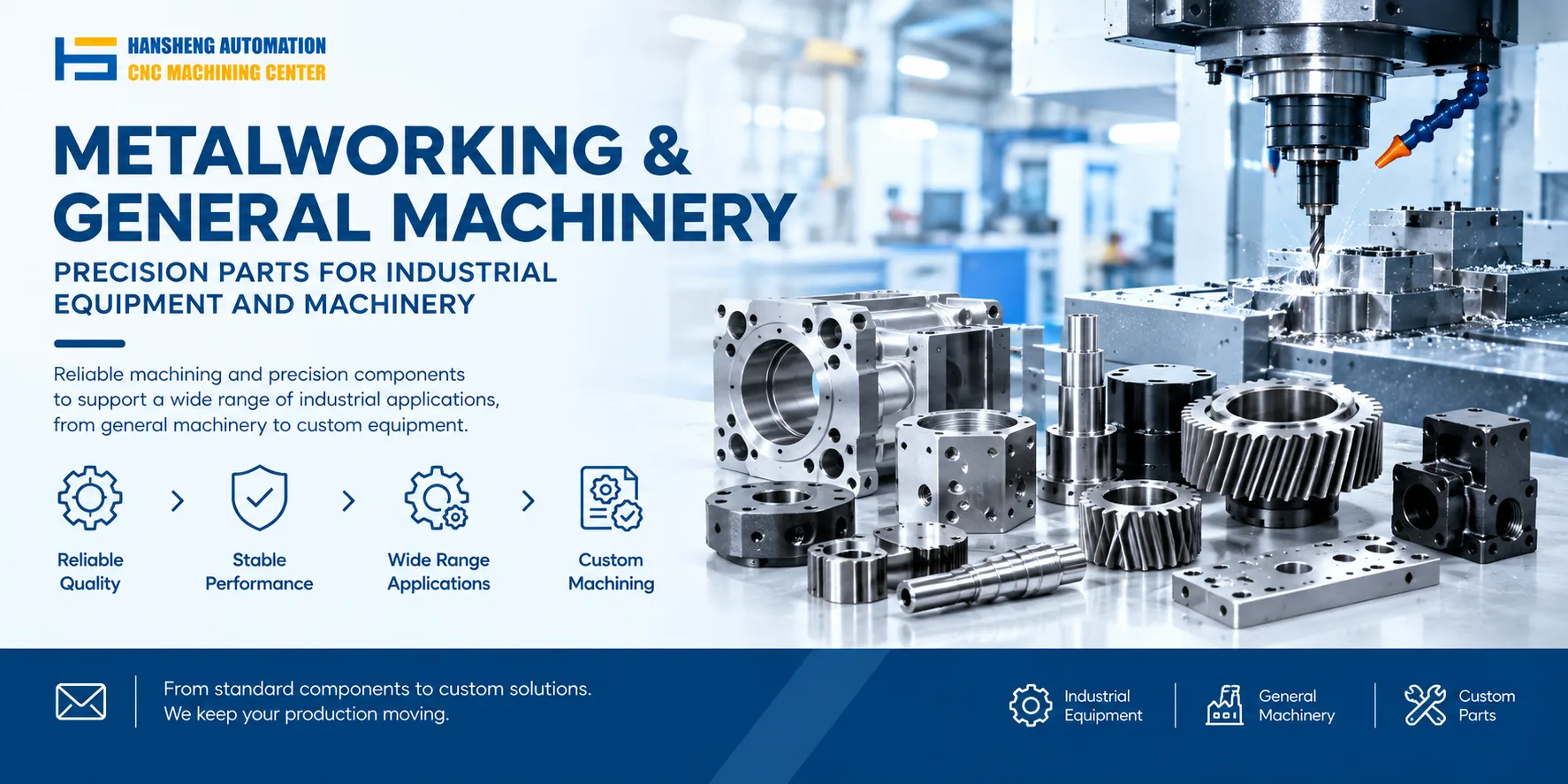
We can machine custom nozzles, fixtures, protective lens holders, and other precision parts for laser cutting machines from customer drawings, for single-piece or low-volume production.
Our custom precision component machining capability is not limited to laser cutting equipment. Beyond nozzles, fixtures, and protective lens holders, we also machine medical device parts, food machinery parts, yacht precision components, RC car structural parts, and non-standard parts for tobacco packaging machinery, filling machinery, and other equipment. Hansheng Automation works from customer drawings and production quantities to deliver single-piece or low-volume precision machining.