Different specifications and models of packaging automation equipment differ mainly in four dimensions: capacity matching threshold, material adaptability range, workshop space compatibility, and process coordination capability. They need to be accurately matched according to production batch, material characteristics, and workshop layout, and cannot be forcibly mixed across specifications.
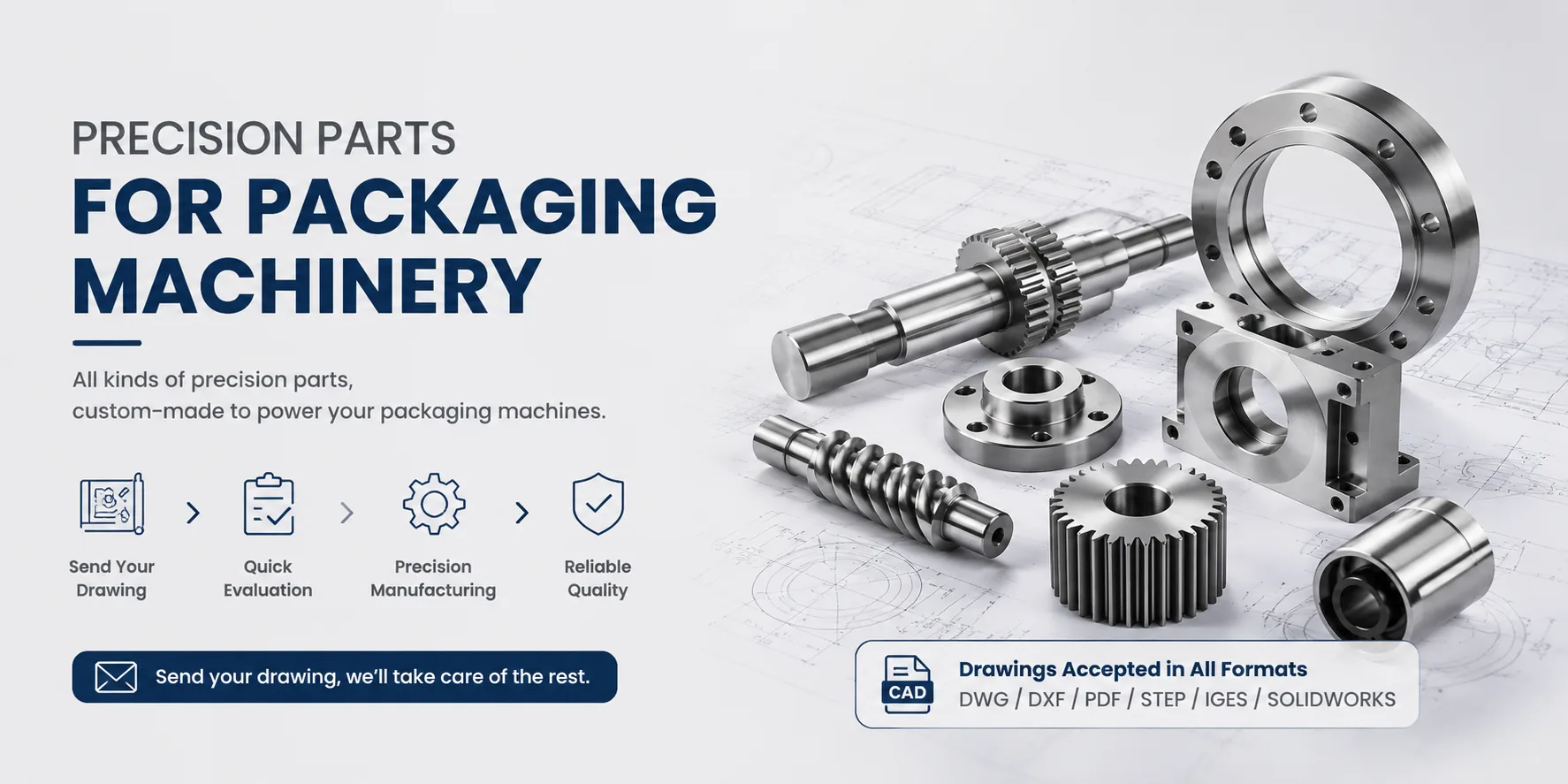
For non-standard structural frames, precision machined components, or custom fixtures required in these packaging systems, Hansheng Automation provides machining services based on customer drawings.
1. Applicable Conditions by Capacity Specification
Small single-machine equipment with a capacity of 120 pieces per minute or less is suitable for small-batch, multi-variety, and frequent line changeover conditions, such as small parcel packaging for e-commerce orders and laboratory sample packaging. It cannot be used for continuous production with large batches and fixed specifications, because insufficient capacity will interrupt the production rhythm.
Medium-sized inline equipment with a capacity of 120–300 pieces per minute is suitable for medium-batch standardized process conditions, such as cartoning of daily chemical products and bag packaging of food. It is suitable for multi-station connection and avoids the time-consuming manual transfer between single machines.
Large high-speed full-line equipment with a capacity above 300 pieces per minute is suitable for large-batch fixed-specification conditions, such as full-process packaging of bottled beverages and canned food. It requires dedicated conveying lines and has high requirements for workshop power supply and material supply speed.
2. Applicable Conditions by Station Configuration
Single-station packaging equipment is suitable for small-batch packaging of special-shaped or special materials, such as irregular hardware parts and handmade custom gift boxes. It offers large flexibility for adjustment, but a single process cannot meet multi-step linkage requirements.
Multi-station rotary table equipment is suitable for coordinated conditions involving two to five processes, such as integrated labeling, cartoning, and case sealing. Inter-station takt time synchronization is strong, making it suitable for standardized batch production.
Multi-station robot linkage equipment is suitable for customized and multi-specification switching conditions, such as protective packaging of 3C electronic components. Line changeover adjustment time is within 15 minutes, making it suitable for flexible production with small batches and multiple batches.
3. Applicable Conditions by Load Rating
Light-duty equipment with a single-station load of 5 kg or less is suitable for small-volume lightweight materials, such as cosmetic tubes and electronic component reel packaging. The structure is lightweight and occupies little station space, but exceeding the maximum load will cause equipment jamming.
Medium-duty equipment with a single-station load of 5–50 kg is suitable for conventional finished product materials, such as cartoning of home appliance parts and outer packaging of bottled laundry detergent. It has a wide load adaptation range and is the first choice for general-purpose working conditions.
Heavy-duty equipment with a single-station load above 50 kg is suitable for heavy materials, such as drums of chemical raw materials and complete packaging of large home appliances. It requires supporting lifting auxiliary devices and has high requirements for the rigid structure and power output of the equipment.
4. Applicable Conditions by Space Specification
Benchtop small equipment is suitable for narrow spaces such as workshop corners and laboratories, including sample and specimen packaging. The floor area is 0.5 square meters or less, but inline expansion is difficult.
Cabinet-type inline equipment is suitable for linear layout beside the production line, with medium space utilization. The floor area is 1–3 square meters, making it suitable for partial renovation of small and medium workshops.
Large gantry-type full-line equipment is suitable for full-line layout in spacious workshops, requiring a depth space of at least 20 meters. The floor area exceeds 10 square meters and requires ground fixing bases to adjust levelness, making it suitable for planning in newly built plants.