Differences between laser welding machines and TIG welding:
Working principle
Laser welding machine: uses a laser beam focused from a high-power coherent monochromatic photon stream as the heat source. It does not need a vacuum environment. It enables precise energy control for welding precision components.
TIG welding: a type of arc welding. It uses an arc burning between a continuously fed welding wire and the workpiece as the heat source. Argon gas from the torch nozzle shields the arc during welding.
Welding results
Laser welding machine: strong penetration, able to weld various complex angles. Weld seams are neat, with no weld scars and low heat effect. The joint gap is narrow and the surface is smooth, reducing or eliminating rework.
TIG welding: large heat-affected area and large weld spots. It suits most major metals, but in precision mold repair it has gradually been replaced by laser welding.
Applications
Laser welding machine: especially suitable for automation. Models include mobile and fixed types, with high flexibility and strong expandability. A robot arm or other CNC welding machine can be added later. For thin plate welding, it is replacing TIG welding.
TIG welding: suitable for stiffeners or fasteners, such as plates or pipes over 4 mm, and bed frame welding. It does not require precision or appearance, and is mainly used for reinforcement and load bearing.
Benefits of laser welding
Selective energy application in a small area: reduces thermal stress and heat-affected zone, with very low distortion, ensuring weld quality.
Narrow joint gap and smooth surface: reduces or eliminates rework, improves efficiency, and lowers cost.
High strength with low weld volume: welded workpieces can withstand bending or hydroforming, meeting complex workpiece needs.
Easy integration: can combine with other production operations, such as alignment or bending, improving production line automation.
Only one side of the joint needs access: simplifies the welding process and improves efficiency.
High process speed: shortens processing time and improves production efficiency.
Suitable for automation: easy to integrate with automated equipment for efficient, precise welding.
In summary, laser welding machines and TIG welding differ clearly in principle, results, and applications. Laser welding offers high precision, high efficiency, and low heat effect, and is widely used in automated production and precision manufacturing.
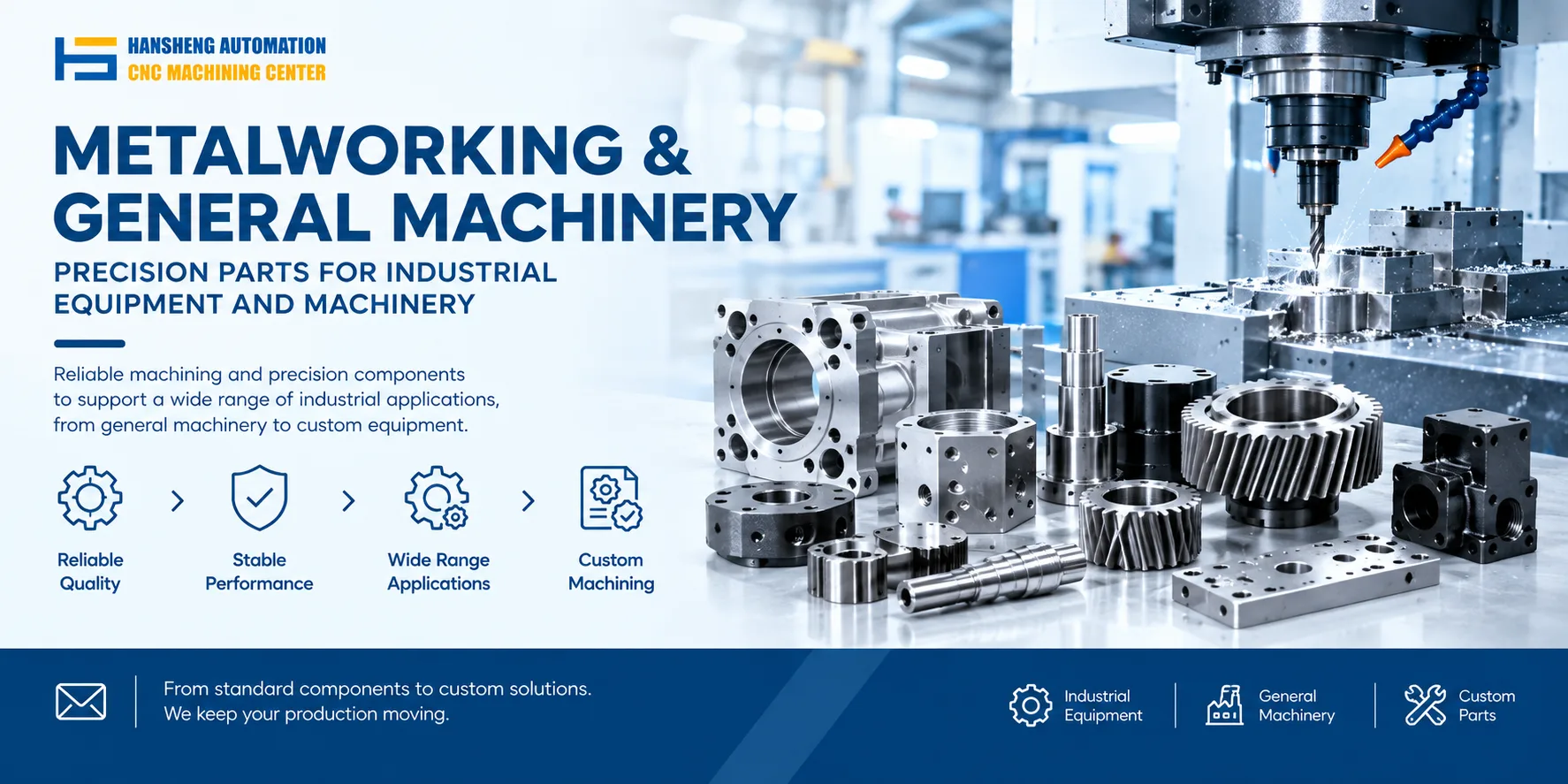
We can machine custom nozzles, fixtures, protective lens holders, and other precision parts for laser welding machines from customer drawings, for single-piece or low-volume production.
Our custom precision component machining capability is not limited to laser welding equipment. Beyond welding nozzles, fixtures, and protective lens holders, we also machine yacht precision components, RC car structural parts, medical device parts, and non-standard parts for food machinery, textile machinery, and printing machinery. Hansheng Automation works from customer drawings and production quantities to deliver single-piece or low-volume precision machining.