Laser welding machines and conventional welding machines differ mainly in welding method, materials, accuracy and flexibility, multi-beam processing, and automation and digital control.
Welding method
Laser welding machines use non-contact welding. No pressure is applied during the process, and welding is fast and efficient.
Conventional welding machines usually use contact welding and may need a certain pressure to complete the weld.
Welding materials
Laser welding machines can weld refractory materials such as high-melting-point metals. They can also weld non-metals such as ceramics and acrylic, and give good results on irregular materials.
Conventional welding machines have a more limited material range. They may not handle some high-melting-point or non-metal materials.
We can machine custom nozzles, fixtures, protective lens holders, and other precision parts for laser welding machines from customer drawings, for single-piece or low-volume production.
Welding accuracy and flexibility
The laser beam in a laser welding machine focuses to a very small spot. It is not affected by magnetic fields and can position precisely. It suits micro welding and automated high-volume welding of micro and small workpieces.
Conventional welding machines may be less accurate and flexible than laser welding machines, especially when handling tiny or complex-shaped workpieces.
Multi-beam processing capability
Laser welding machines can easily split the beam in time and space. A switching device can send the laser beam to multiple workstations for simultaneous multi-beam and multi-station processing.
Conventional welding machines usually do not have multi-beam processing capability, and their efficiency is relatively low.
Automation and digital control
Laser welding machines are easy to automate for high-speed welding. They can be controlled digitally or by computer, improving welding accuracy and stability.
Conventional welding machines can also achieve a certain degree of automation, but their digital control and accuracy may be lower than laser welding machines.
Overall, laser welding machines outperform conventional welding machines in welding method, materials, accuracy and flexibility, multi-beam processing, and automation and digital control.
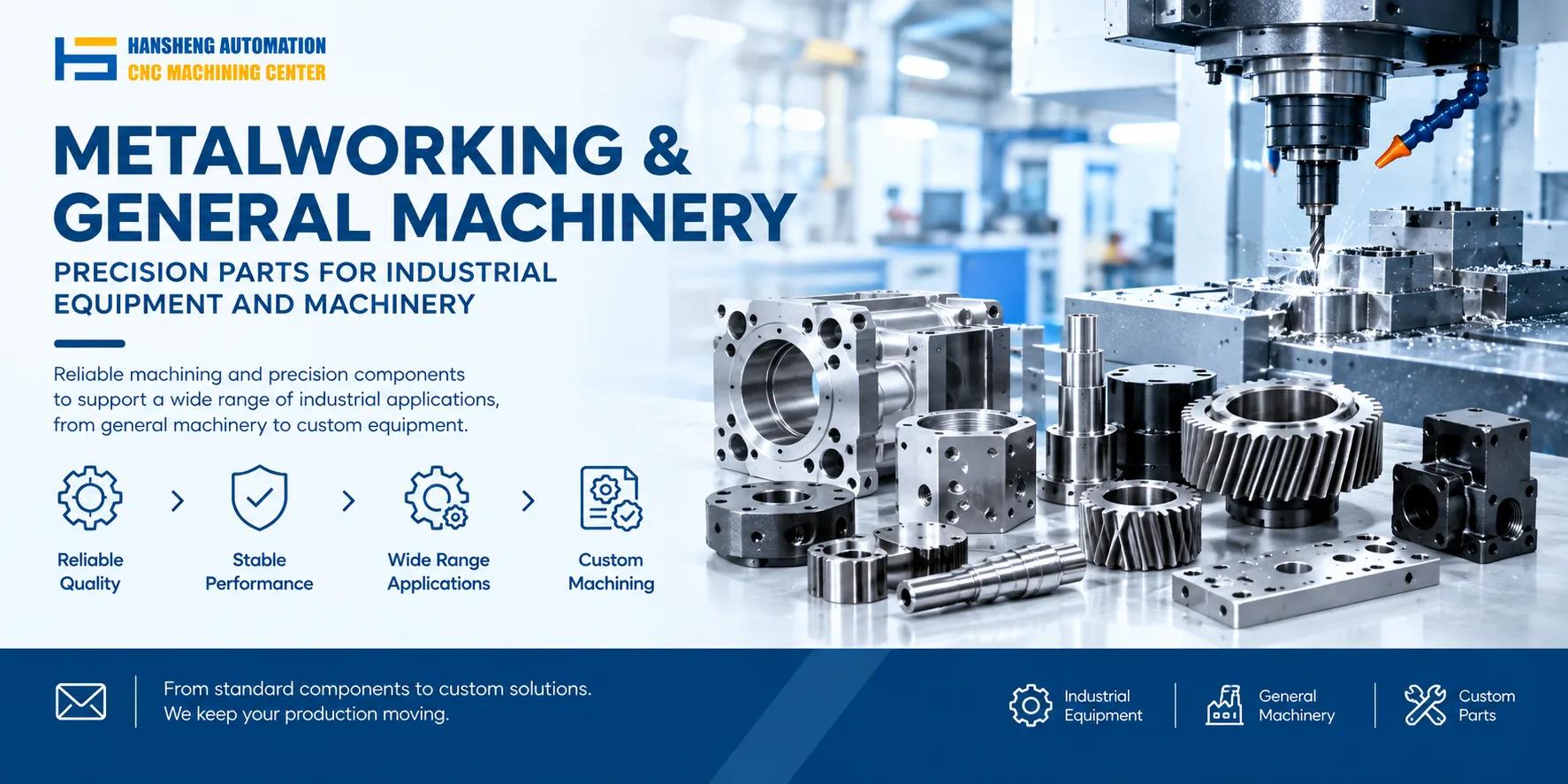
Our custom precision component machining capability is not limited to laser welding equipment. Beyond welding nozzles, fixtures, and protective lens holders, we also machine yacht components, RC car structural parts, medical device parts, and non-standard parts for food machinery and printing machinery. Hansheng Automation works from customer drawings and production quantities to deliver single-piece or low-volume precision machining.