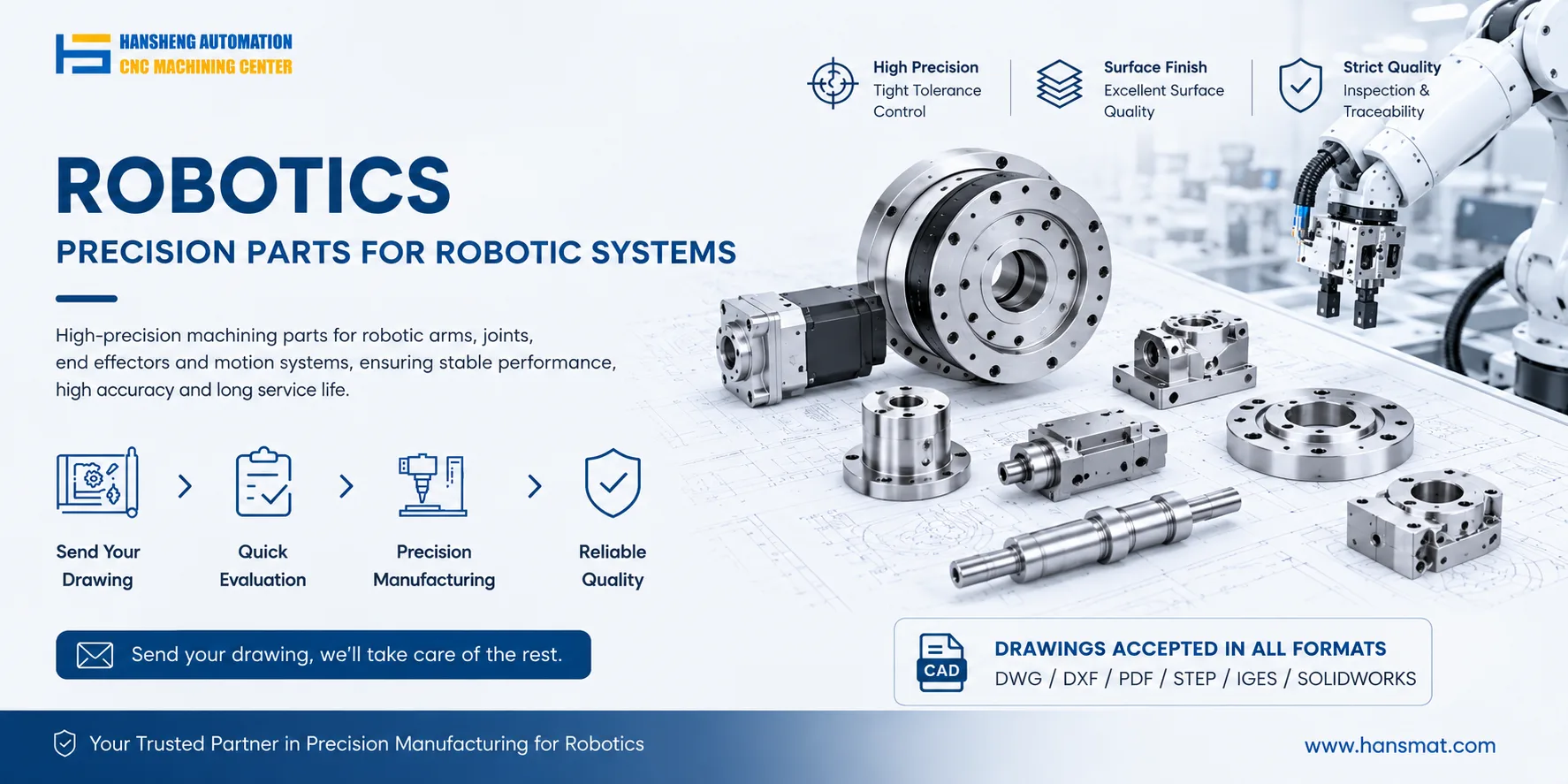
The core functions of industrial robots can be systematically categorized into four dimensions: basic execution, environmental perception and adaptation, system coordination and interconnection, and autonomous optimization and maintenance. Together, these capabilities support the automated, flexible, and intelligent operational requirements of modern smart manufacturing.
I. Basic Execution Capabilities
In terms of positioning and motion, industrial robots generally achieve repeat positioning accuracy of ±0.02 to ±0.1 mm (in compliance with GB/T 12642-2013), enabling stable performance in spot welding, precision assembly, and high‑accuracy handling. With six or more axes of coordinated motion, they can flexibly handle complex spatial trajectories such as curved surface grinding and assembly of irregular workpieces. Payload capacities range from 3 kg for standard models up to 1,300 kg, while heavy‑duty versions can handle dozens of tons, meeting the needs of both small light parts and large structural components. In cycle‑time performance, continuous high‑speed operation can exceed 1,200 cycles per hour, well suited for fast‑paced production lines. To match specific workpiece characteristics, we can customize end‑effectors and fixtures according to customer process requirements, fully leveraging the robot's execution potential.
II. Environmental Perception and Adaptation
Integrated 2D/3D vision systems identify workpiece positioning deviations and surface defects, enabling random bin picking and precise alignment. Force sensors provide real‑time contact force monitoring for compliant assembly, preventing over‑pressure damage to delicate parts. Robots can also detect temporary obstacles and automatically adjust paths to ensure safe operation. With an operating temperature range from -40°C to +55°C and IP65 or higher protection ratings, they are adaptable to dusty, humid, and other harsh workshop environments.
III. System Coordination and Interconnection
Industrial robots support mainstream fieldbus protocols such as PROFINET and EtherCAT, allowing seamless integration with PLCs, AGVs, and MES for data exchange. Some models are compatible with industrial internet platforms, enabling cloud upload of operational data. In terms of collaboration, they feature safe cooperative modes with force sensing and light curtains, allowing human‑robot collaboration without physical barriers (in compliance with GB/T 30027-2013). Multi‑robot coordination can handle large‑workpiece assembly and line‑sharing tasks, significantly improving overall efficiency.
IV. Autonomous Optimization and Maintenance
Leveraging AI algorithms, robots can learn from historical operation data to optimize motion paths, reduce idle travel and energy consumption, and dynamically adjust parameters such as assembly pressure and grinding force to accommodate batch variations. For condition monitoring, built‑in vibration and temperature sensors continuously track joint and motor status, in line with GB/T 37412-2019. This enables early fault prediction and proactive maintenance alerts, effectively minimizing unplanned downtime and enhancing overall line productivity.