Common problems in the coating industry fall into four categories: equipment operation and maintenance, process defects, quality control, and safety and environmental protection. Troubleshooting should combine on-site parameters and standard specifications.
Equipment operation and maintenance problems
(1) Spraying equipment abnormalities
Frequent sparking of electrostatic spray guns: usually caused by excessive powder buildup on the gun head, poor equipment grounding, or abnormal workpiece conductivity. Stop the machine, clean powder from the nozzle, check equipment grounding resistance, which must be ≤4Ω, and sand and clean the oxide layer on conductive contacts of workpiece hangers.
Clogged screens in powder recovery systems: shows as reduced recovery air volume and lower powder transfer efficiency. Clean the screen every 8 hours. Use polyester screens matching powder particle size, typically 80 to 120 mesh for standard powders. Replace damaged screens regularly.
Temperature fluctuation in hot air circulation ovens: check whether heating elements are coked and whether temperature sensors have drifted. Calibrate temperature sensor error to ≤±5℃, and clean dust from heating tube surfaces.
(2) Pretreatment equipment failures
Sudden increase in sludge in phosphating baths: often due to high total acid and imbalanced free acid ratio. Adjust total acid according to bath ratio. For room-temperature phosphating, control total acid at 15 to 25 points, and free acid to total acid ratio at 1:8 to 1:10. Regularly discharge sludge from the tank bottom.
Clogged nozzles in spray pretreatment: common when hard water causes calcium and magnesium scale. Install a pre-softening water unit. Dismantle nozzles weekly and soak them in 5% dilute hydrochloric acid.
Process defect problems
(1) Powder coating defects
Coating pinholes: main causes are uneven single-pass thickness, damp powder, or too-fast oven heating. Control single-pass thickness at 60 to 80 μm, powder storage humidity at ≤60%, and oven heating rate at 8 to 12℃/min.
Poor coating adhesion: often due to incomplete degreasing in pretreatment or too-thin phosphating film. Strengthen degreasing bath free alkali control at 8 to 12 points, and ensure phosphating film thickness at 1 to 3 μm.
(2) Liquid coating defects
Coating sagging: caused by too-low paint viscosity, excessive spray thickness, or spray gun too close to the workpiece. Adjust paint viscosity to 18 to 25 s on a No. 4 Ford cup, control single-pass thickness at 20 to 30 μm, and keep spray gun 15 to 20 cm from the workpiece.
Coating gloss loss: often due to insufficient curing temperature or expired paint. Strictly adjust curing parameters per paint manufacturer requirements, such as polyurethane paint at 120℃ for 30 min. Check paint shelf life and remove expired materials.
Quality control problems
Uneven coating thickness: often due to poor hanger design causing workpiece shadowing. Optimize hanger contact point positions, reduce shadowed areas, and use rotating hangers to ensure full spray coverage.
Finished product color difference out of spec: caused by paint batch differences, spray film thickness deviation, or curing temperature fluctuation. Unify paint purchase batches, strictly control film thickness tolerance within ±5 μm, and control curing temperature deviation within ±3℃.
Safety and environmental protection problems
VOCs emissions exceeding standard: equip with activated carbon adsorption plus catalytic combustion treatment. Replace activated carbon regularly, with saturation cycle ≤3 months, and ensure catalytic combustion unit inlet temperature ≥300℃.
Dust explosion risk: in powder coating workshops, control dust concentration at ≤10 g/m³. Install explosion-proof ventilation. Test workshop dust concentration every 2 hours. Strictly prohibit open flames in the coating area.
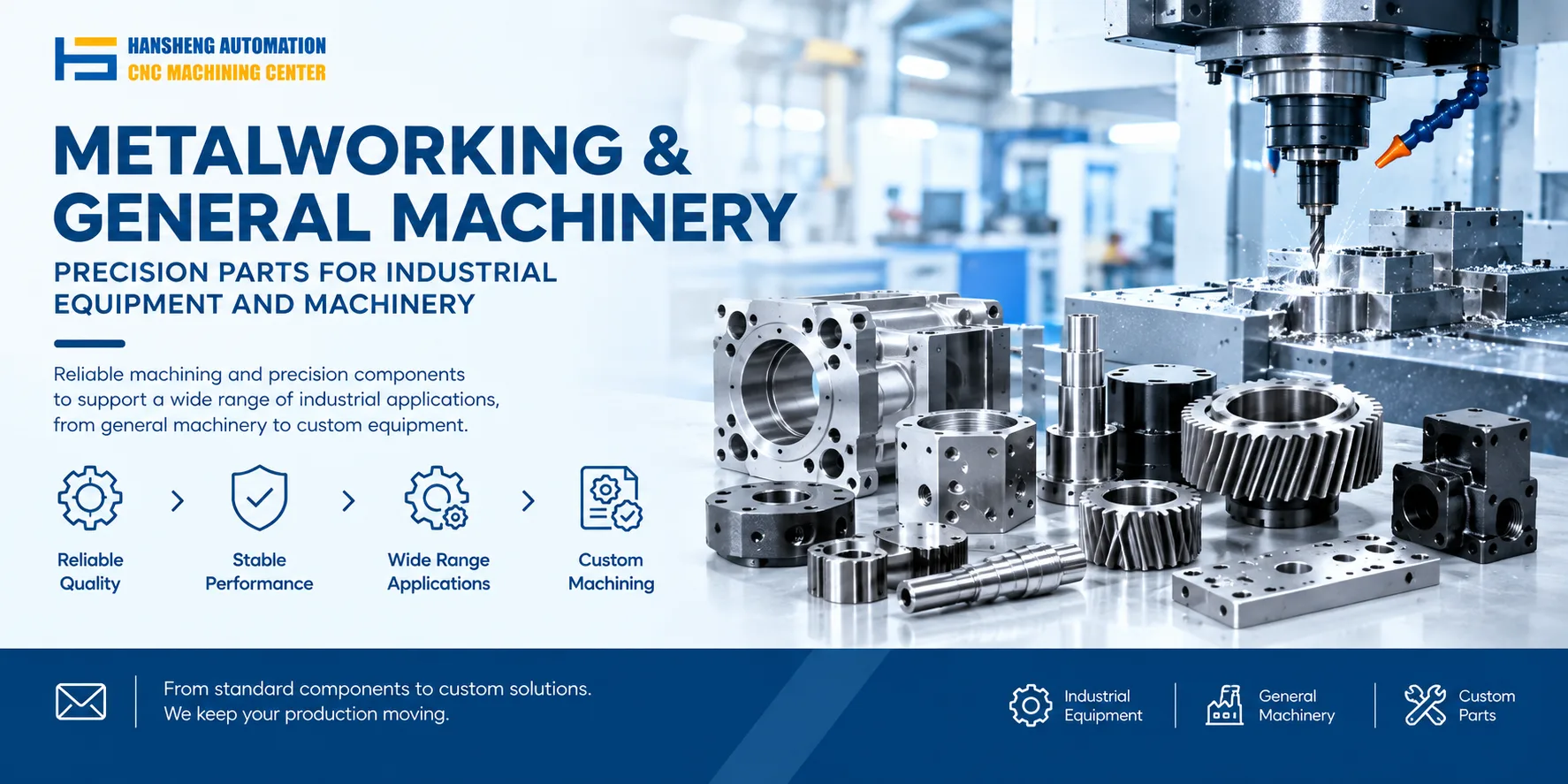
We can machine custom nozzles, screens, hangers, and other precision parts for coating equipment from customer drawings, for single-piece or low-volume production.
Our custom precision component machining capability is not limited to coating equipment. Beyond nozzles, screens, hangers, and conductive contacts, we also machine medical device parts, food machinery parts, yacht precision components, RC car structural parts, and non-standard parts for textile machinery and printing machinery. Hansheng Automation works from customer drawings and production quantities to deliver single-piece or low-volume precision machining.