CNC shearing machines can develop cutting defects or mechanical and hydraulic faults during operation. Recognizing the symptoms helps operators identify possible causes and determine when maintenance is required. When selecting a hydraulic shearing machine, buyers should also evaluate its operating performance, blade clearance adjustment, manufacturer reliability, and after-sales support.
Common CNC Shearing Machine Faults
Crescent-shaped bending in cut strips
A crescent-shaped bow, also referred to as camber, can appear when shearing sheet metal into narrow strips. The distortion may become more pronounced as the material thickness increases or the strip width decreases.
This problem is associated with the cutting process, material properties, and workpiece support. Depending on the machine design, suitable measures may include using a blade configuration intended for the application or supporting the sheet as the cut sections separate. Circular blade arrangements are only applicable to machines designed for that configuration.
Inspect the blade condition and clearance, and confirm that the sheet is positioned and supported correctly. The appropriate corrective measure depends on the machine structure, material, and dimensions of the strip.
The upper blade fails to return and abnormal noise occurs
If the upper blade does not return after the foot switch is pressed and the machine produces unusual noise, material may be trapped between the upper and lower blades. Other mechanical, hydraulic, or control faults may cause similar symptoms.
Stop the machine immediately and isolate the power supply before inspecting the cutting area. Do not repeatedly press the foot switch or force the blade to move. A jammed mechanism can overload the drive system and potentially damage the motor or other components.
After the machine has been secured according to the manufacturer's procedure, qualified maintenance personnel should check for trapped material, blade damage, mechanical binding, and hydraulic or control system faults. Do not resume operation until the cause has been identified and corrected.
How to Evaluate the Quality of a Hydraulic Shearing Machine
Operating performance
Check the machine's operation during startup, cutting, and shutdown. Movement should follow the intended operating sequence, without abnormal noise, excessive vibration, or unexpected stops.
Cutting performance also matters. Test the machine using suitable material within its rated capacity and inspect the cut edge, dimensional consistency, and repeatability.
Manufacturer and purchase cost
Evaluate the manufacturer's technical capability, quality control procedures, product specifications, and service record. A well-established manufacturer may offer stronger technical support and more consistent quality, but brand reputation alone does not establish that a particular machine meets production requirements.
Purchase price should be considered alongside rated cutting capacity, accuracy, maintenance requirements, spare parts availability, and expected operating costs.
Blade clearance adjustment
On a hydraulic swing-beam shearing machine, the ability to adjust the clearance between the upper and lower blades is an important feature. The appropriate clearance depends on material thickness, strength, blade condition, and machine specifications.
A suitable adjustment mechanism allows operators to configure the machine for different cutting conditions. After adjustment, the clearance should be checked according to the manufacturer's procedure to maintain cutting quality and avoid excessive blade wear.
The exact adjustment method varies by machine model. Buyers should confirm how the clearance is adjusted and verified before purchasing the equipment.
After-sales service and technical support
After-sales support affects maintenance efficiency and equipment availability. Before purchasing a hydraulic shearing machine, confirm the availability of technical assistance, replacement blades and other spare parts, maintenance guidance, and troubleshooting support.
Clear maintenance instructions and access to qualified service personnel can help reduce downtime and avoid unnecessary repair costs.
Selecting and Operating a Hydraulic Shearing Machine
Machine selection should be based on the material, thickness, cutting length, required edge quality, and expected production volume. During operation, follow the manufacturer's instructions for blade clearance, workpiece positioning, and maintenance.
If cutting defects persist or the machine develops abnormal noise, vibration, or movement, stop operation and identify the cause before restarting. Correct setup and timely maintenance help maintain cutting quality and protect the machine from avoidable damage.
Custom Precision Machining for Industrial Applications
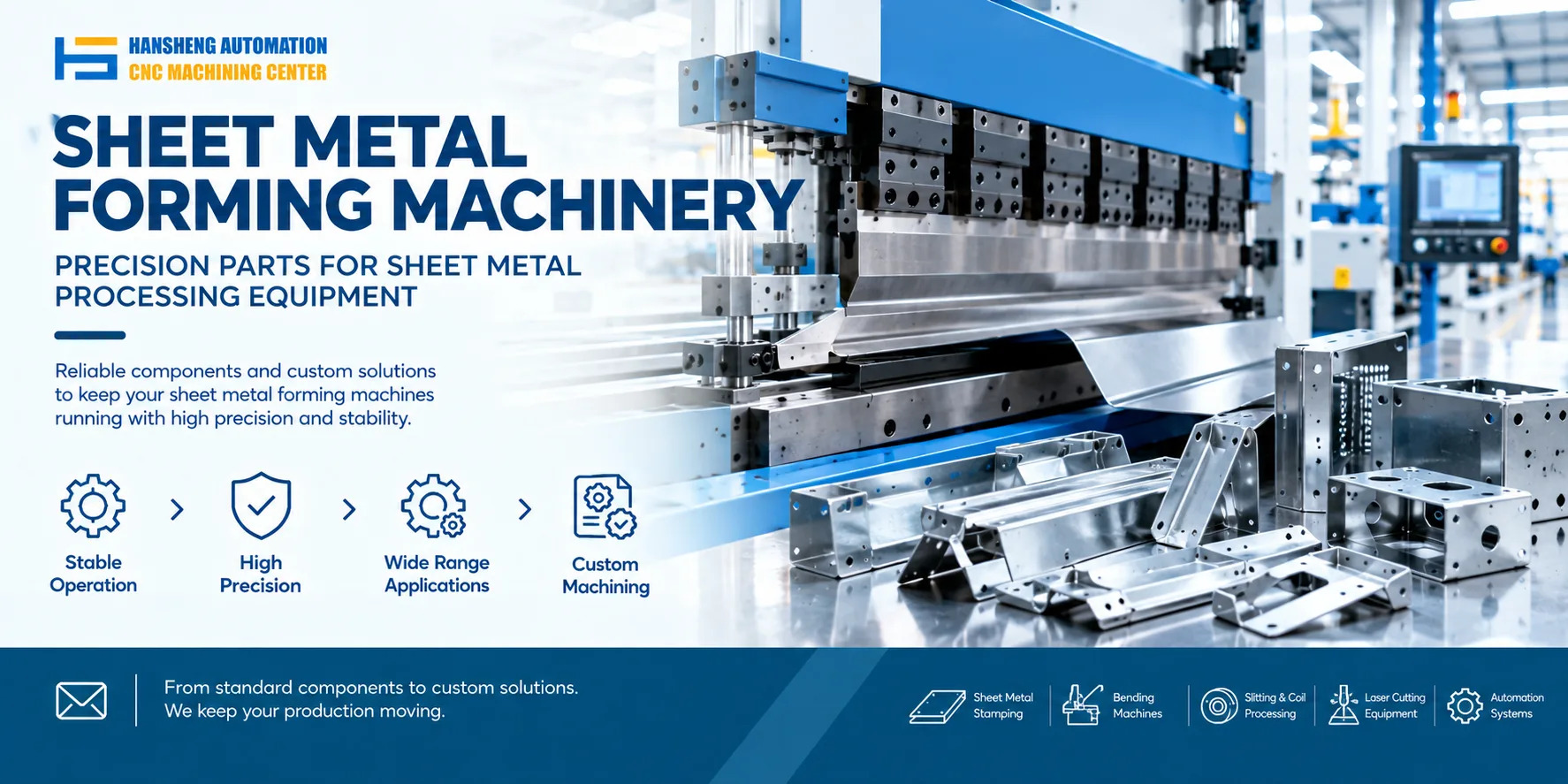
Hansheng Automation provides custom precision machining based on customer drawings for a range of industrial applications. Our work includes precision components for yacht equipment and RC racing cars, as well as nonstandard parts for tobacco packaging machinery and filling machinery. Each component is manufactured according to the supplied drawings and the specific dimensional and structural requirements.