Overcurrent faults in Borunte six-axis robots are typically caused by abnormalities in the electrical circuit, mechanical overload, or improper controller parameter settings. Troubleshooting should proceed from simple to complex, first ruling out false alarms before locating hardware problems.
1. Electrical Circuit Faults and Solutions
1.1 Power and signal line abnormalities
Damaged power cables or encoder cables, loose connectors, or oxidized terminals can increase contact resistance and cause abnormal current rise, triggering overcurrent protection. The solution is to disconnect power, use a multimeter to check cable insulation, tighten all terminals, and clean oxidized contacts with fine sandpaper before reconnecting.
If the servo drive input voltage fluctuates beyond ±10% of the rated value, output current may increase abnormally. A voltage stabilizer should be installed, and both no-load and load voltages of the supply circuit should be checked to ensure they meet the robot's rated parameters.
A mismatched braking resistor can also cause overcurrent. If the original braking resistor does not meet the required power or resistance specifications, regenerative energy cannot be discharged properly during stopping. The solution is to replace it with the same model and specification according to the original BOM.
If the servo motor winding has a short circuit to ground or between phases, current will rise sharply. Use a megohmmeter to check winding insulation resistance and replace the damaged servo motor.
2. Mechanical Load Faults and Solutions
2.1 Excessive axis load
If the end effector grips a workpiece exceeding the rated load or encounters foreign objects during operation, joint motor torque will overload. Check the rated load of the robot model, remove excess load, and clear any jammed workpieces or surrounding interference.
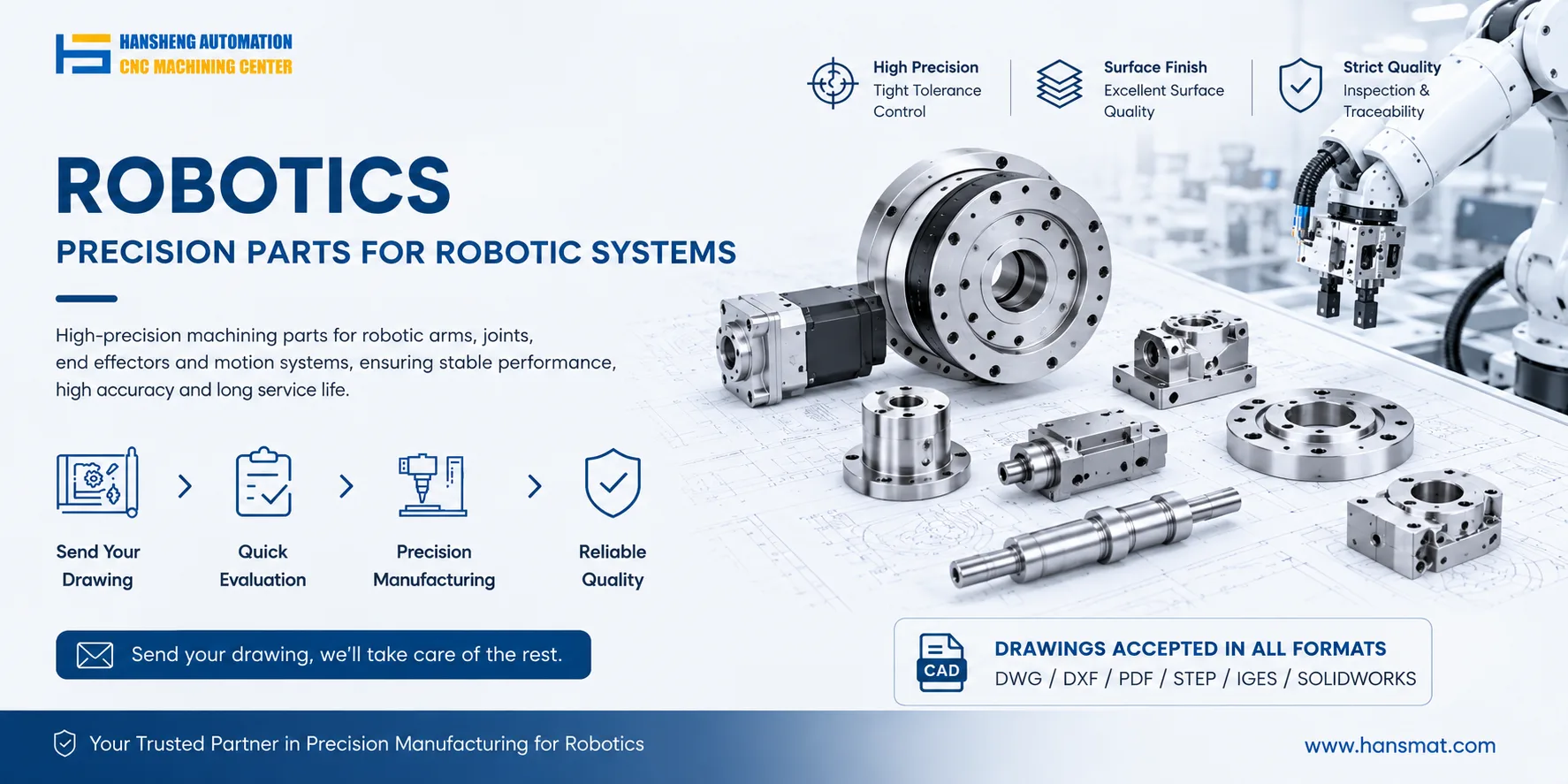
A faulty joint reducer can also increase rotational resistance and cause motor current to exceed the limit. After stopping the robot, manually rotate each axis to check for uniform resistance. Replace worn reducer lubricant, and if the reducer is severely worn, replace the entire unit. For non-standard reducer flanges, mounting plates, or adapter parts needed during repair, Hansheng Automation can provide custom machining based on customer drawings.
Motion interference occurs when the robot's working path collides with surrounding fixtures, cables, or other equipment. Re-teach the operation path, organize the robot cables, and install cable carriers to prevent dragging interference.
3. Controller and Parameter Faults and Solutions
3.1 Parameter settings and software abnormalities
If the servo current loop gain is set too high, the motor responds too quickly and may easily trigger the overcurrent protection threshold. Enter the servo parameter debugging interface of the Borunte controller, gradually reduce the current loop gain, and adjust it to a reasonable range based on the operating current curve.
Encoder feedback abnormalities caused by electromagnetic interference or counting errors can also lead to false overcurrent detection. Check whether the encoder cable shielding layer is reliably grounded, remove nearby high-power electromagnetic interference sources, and recalibrate the encoder zero point.
Outdated firmware may contain program bugs that cause false overcurrent protection. Upgrade to the latest stable firmware version released by the original manufacturer, and back up robot programs and parameters before upgrading.
All troubleshooting operations must be performed only after disconnecting the robot's main power, pressing the emergency stop button and locking it out, and must be carried out by personnel with industrial robot operation and maintenance qualifications to avoid electric shock or mechanical collision risks.