During long-term operation, filter plates in a plate-and-frame filter press may develop cracks, deformation, edge wear, or localized damage. These problems can affect chamber sealing and solid-liquid separation. In severe cases, they may cause slurry leakage, interrupt filtration, or damage adjacent plates and the equipment frame.
Filter plate damage is commonly associated with abnormal feed pressure, uneven chamber filling, blocked flow passages, inadequate plate cleaning, and abnormal structural loading. Maintenance personnel should identify the location and extent of the damage before inspecting the feed system, plate arrangement, and operating pressure. Replacing a damaged plate without correcting the underlying cause may result in repeated failures.
Common Causes of Filter Plate Damage
Inadequate Filter Plate Cleaning
If the sealing surfaces, feed ports, and drainage channels are not cleaned properly after each filtration cycle, residual sludge and solid particles may interfere with the next cycle.
Solid particles trapped between adjacent sealing surfaces can prevent the plates from making full contact and cause localized leakage. When slurry containing abrasive particles repeatedly passes through these gaps, it may erode the plate edges and gradually form grooves, further reducing sealing performance.
As the wear progresses, leakage may increase, making filtration pressure difficult to maintain and preventing proper cake formation.
Corrective actions:
After each cake discharge, use a nylon scraper or another tool that will not damage the plate surface to remove residual material from the sealing surfaces, feed ports, and plate edges.
Inspect the edges for grooves, cracks, and localized wear. Surface deposits should be removed promptly. If the sealing surface is damaged, the manufacturer or qualified technical personnel should assess whether repair is acceptable.
For deep grooves, structural cracks, or severe deformation, do not rely on ordinary repair compounds and continue operating the plate under pressure. Replace the plate when required by the inspection results.
Blocked Filtrate Outlets or Incorrect Valve Operation
Filtrate outlets discharge the liquid that passes through the filter cloth during filtration. If the drainage ports, internal grooves, or external discharge pipes become blocked by solid particles, filtrate cannot flow out normally. This may create abnormal pressure distribution within the filter chambers.
If the feed valve or filtrate outlet valve is not in the specified operating position when the feed pump starts, the feed pressure may rise abnormally. Continued operation under excessive pressure increases the load on the filter plates and may cause deformation or breakage.
Corrective actions:
Inspect the plate drainage ports, drainage grooves, and external outlet piping regularly. Remove accumulated sludge and other deposits.
Before starting the equipment, confirm that the feed and filtrate outlet valves are in the correct positions and that the filtrate has an unobstructed discharge path.
If feed pressure rises abnormally during filtration, stop feeding, identify the blockage, and release pressure according to the equipment procedure. Do not increase hydraulic closing pressure or change chamber volume arbitrarily as a substitute for clearing the drainage passages.
Insufficient Feed or Unsuitable Solid Particles
Incorrect feed conditions can also expose filter plates to abnormal loading.
Insufficient feed:
When the amount of sludge in a batch is too low or the filtration cycle is too short, some chambers may remain partially filled. Differences in cake thickness and formation between adjacent chambers can create pressure imbalance and increase localized loading on the plates.
Unsuitable solid particles:
Large particles, sand, or other hard impurities in the feed may block feed ports, interfere with chamber filling, or become trapped between plate sealing surfaces.
Materials containing abrasive particles may also increase wear in certain filtration passages and related components during prolonged operation.
Corrective actions:
Check the feed pump flow rate, pressure, and supply stability. Confirm that sufficient material is available for each filtration cycle and establish a suitable feeding time according to the sludge properties.
For feed materials containing excessive solid impurities, consider installing suitable screening or pretreatment equipment to remove large foreign particles that could block the feed channels.
If small batches cannot fill the available chambers, a manufacturer-approved dummy plate or spacer arrangement may be used to reduce the effective chamber volume, provided that the equipment design allows it. Do not remove filter plates arbitrarily.
Blocked Feed Ports and Internal Channels
Highly concentrated or viscous sludge, as well as residual material that settles and dries during equipment shutdowns, can block the feed ports and piping.
When the feed channel to one or more chambers becomes blocked, slurry cannot enter normally. Some chambers may remain empty or partially filled while others continue to receive feed. This can create a substantial pressure difference and increase the risk of plate deformation or breakage.
Corrective actions:
Clean the feed ports, internal plate channels, and associated piping after each filtration cycle to prevent residual sludge from drying and accumulating.
For high-viscosity sludge that tends to settle, use suitable line flushing and pretreatment methods according to the process requirements.
If feeding has been interrupted during an extended shutdown, inspect the center feed ports and piping before restarting. Begin at low pressure and increase it gradually according to the manufacturer's instructions.
Unsuitable Filter Plate Design, Material, or Structural Support
Filter plates are exposed to hydraulic closing forces and filtration pressure during operation. If the plate material is incompatible with the feed material or its structural strength is insufficient for the operating conditions, the plates may deteriorate, deform, or crack over time.
The condition of the main beams, supporting structure, and foundation also affects plate loading.
If the beams bend, the guide structure becomes deformed, or the plates are incorrectly arranged, the plate pack may not close evenly. Some plates may then be subjected to abnormal loads.
Corrective actions:
Check whether the filter plate material is suitable for the actual filtration pressure, feed temperature, and chemical composition.
Inspect the plates for cracks, deformation, and other structural damage. Confirm that the plate models and installation sequence match the equipment drawings.
Also inspect the main beams, supports, guide rails, and foundation. If frame deformation is found, qualified technical personnel should assess and repair the structure. Adjusting hydraulic pressure alone will not correct a structural problem.
Preventive Maintenance to Reduce Filter Plate Damage
Follow Correct Operating Procedures
Follow the equipment manual when starting, feeding, filtering, and discharging the press.
Before starting the feed pump, confirm that the feed and filtrate outlet valves are in the correct positions. Monitor pressure during feeding and avoid sudden pressure increases or prolonged operation above the rated limit.
After an unplanned shutdown, check the feed ports and filtration passages for blockages before restarting. Restore the feed pressure gradually according to the manufacturer's instructions.
Inspect Filter Plates and Sealing Surfaces Regularly
After each cake discharge, inspect the plate sealing surfaces, feed ports, and drainage areas. Remove attached sludge and solid particles.
Check the plate edges for erosion grooves, cracks, and deformation. Plates that no longer provide adequate sealing or structural strength should be repaired or replaced as appropriate.
Dimensional tolerances, flatness requirements, and rejection criteria should follow the technical documentation and inspection requirements provided by the filter plate manufacturer.
Maintain the Hydraulic System and Frame
Check the hydraulic oil level and condition, pump, cylinder seals, and piping connections regularly to ensure that the closing system operates correctly.
Inspect the main beams, connecting bolts, filter plate supports, and foundation for looseness, bending, or abnormal deformation.
Set the hydraulic closing force according to the equipment specifications. Do not increase the pressure arbitrarily to compensate for leakage.
Control Feed Material Properties
For sludge containing excessive sand, fibers, or other foreign material, introduce suitable screening or pretreatment based on the feed characteristics.
For high-viscosity or poorly filterable materials, use sludge conditioning tests to optimize the flocculant type and dosage. This can improve feed uniformity and filter cake formation.
Sludge moisture content, solids content, and particle composition should be controlled according to the actual process requirements. A single moisture content range should not be applied to every application.
What Should Be Considered When Repairing Damaged Filter Plates?
If a filter plate develops cracks, significant deformation, or structural damage, stop the equipment immediately. Stop feeding and release the filtration and hydraulic closing pressures according to the safety procedure.
When replacing a plate, select a component that matches the original equipment model, dimensions, material, and operating pressure. Inspect adjacent plates, filter cloths, sealing surfaces, and the frame to identify any related damage.
For plates with minor surface wear, the manufacturer can assess whether an approved repair is acceptable. Plates with structural damage should generally be replaced. Do not continue pressure operation using unverified repair methods.
Correct feeding procedures, clear filtration passages, regular inspection of the plates and frame, and proper control of feed conditions help reduce abnormal plate loading, equipment damage, and unplanned downtime.
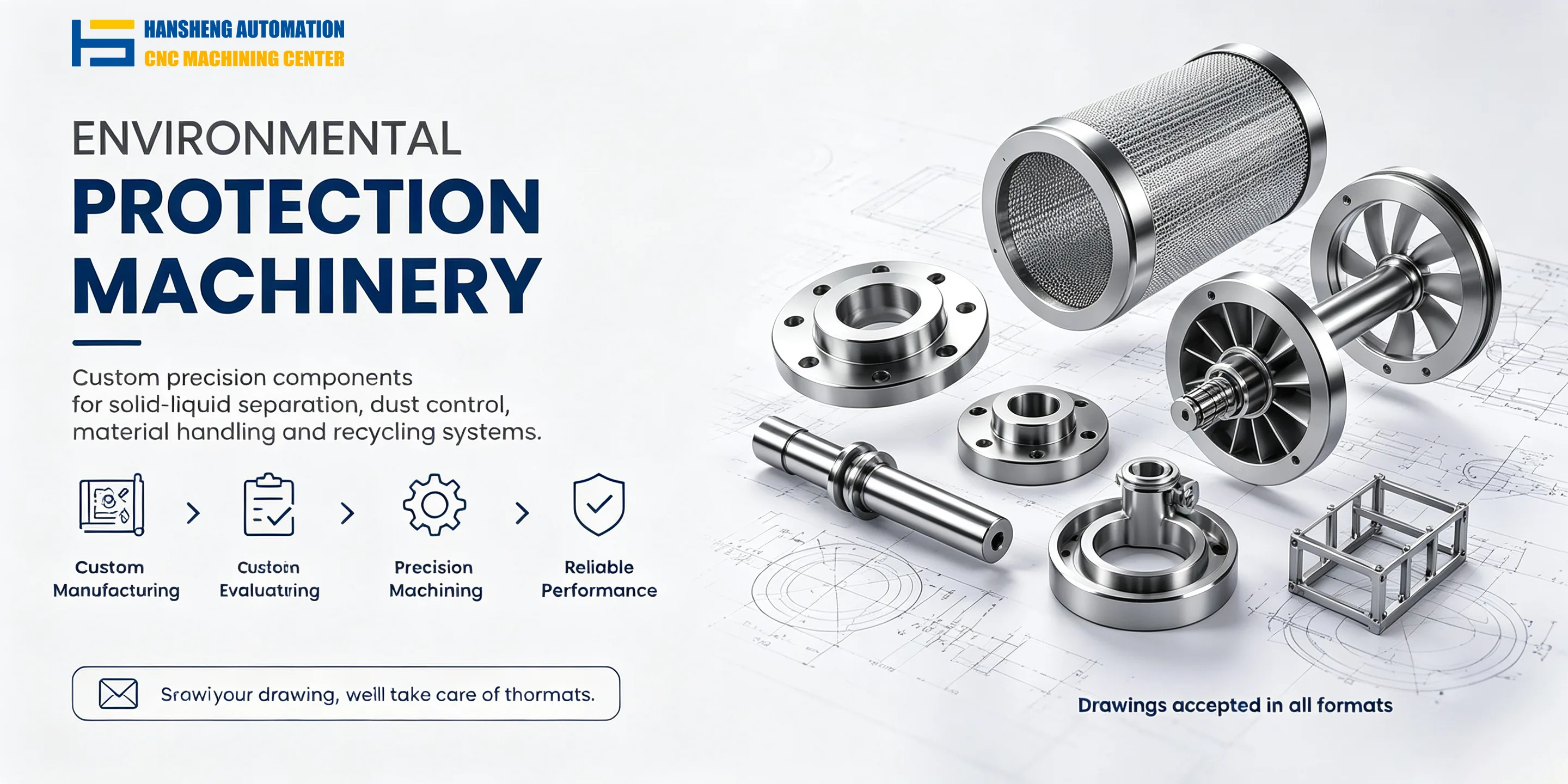
Beyond mechanical components for plate-and-frame filter presses, our precision machining services cover several manufacturing industries. Hansheng Automation manufactures custom functional components for tobacco packaging and filling machinery, as well as precision parts for yacht equipment and structural components for remote-control racing cars, according to customer-supplied drawings. Both single-piece and small-batch precision machining are supported.