The structure of a cam vibration table is not complex. It has three core parts: the cam, the follower, and the frame. It is a higher pair mechanism.
Main parts
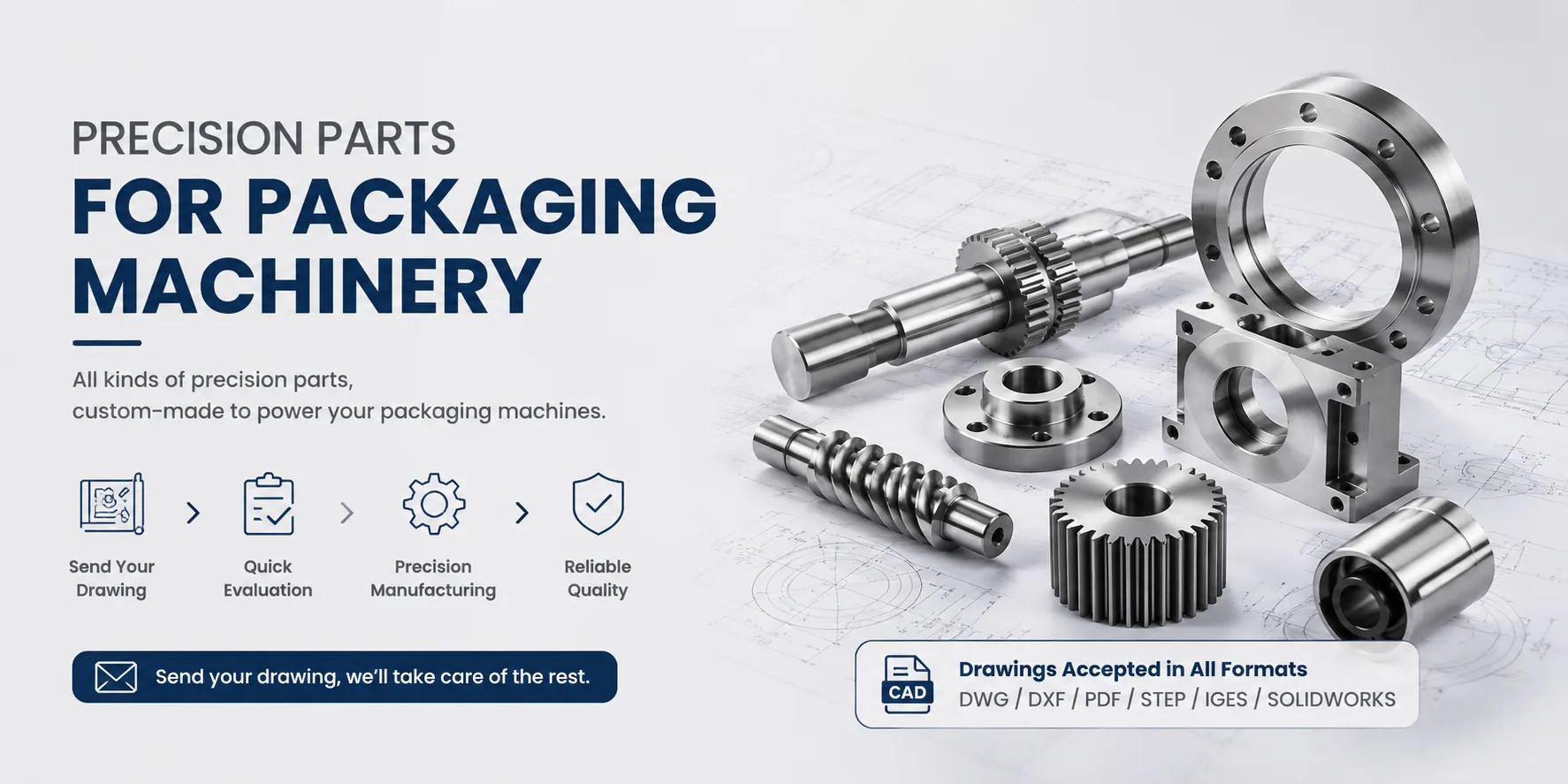
The cam, follower, and frame make up the whole unit, which makes assembly and maintenance convenient. We can machine cams, followers, frames, and other parts to customer drawings, for single pieces or small batches.
Higher pair mechanism
The cam and follower contact at a point or along a line. This contact form lets the table meet relatively complex motion requirements, but the contact area wears easily, so machining accuracy must be high.
Motion profile
A properly designed cam profile curve can make the follower produce any desired motion law. This type of mechanism is widely used in automatic and semi-automatic machinery.
Stroke characteristics
Because the cam and follower contact at a point or along a line, follower stroke is limited. If the stroke is too large, the cam becomes bulky in size and weight.
Beyond cam vibration table parts, our precision component machining capability also covers non-standard parts for tobacco packaging machinery, filling machinery, and printing machinery, as well as precision structural parts for yachts and RC race cars. Hansheng Automation machines single pieces or small batches to customer drawings, with material, tolerance, and surface finish specified by the drawing.