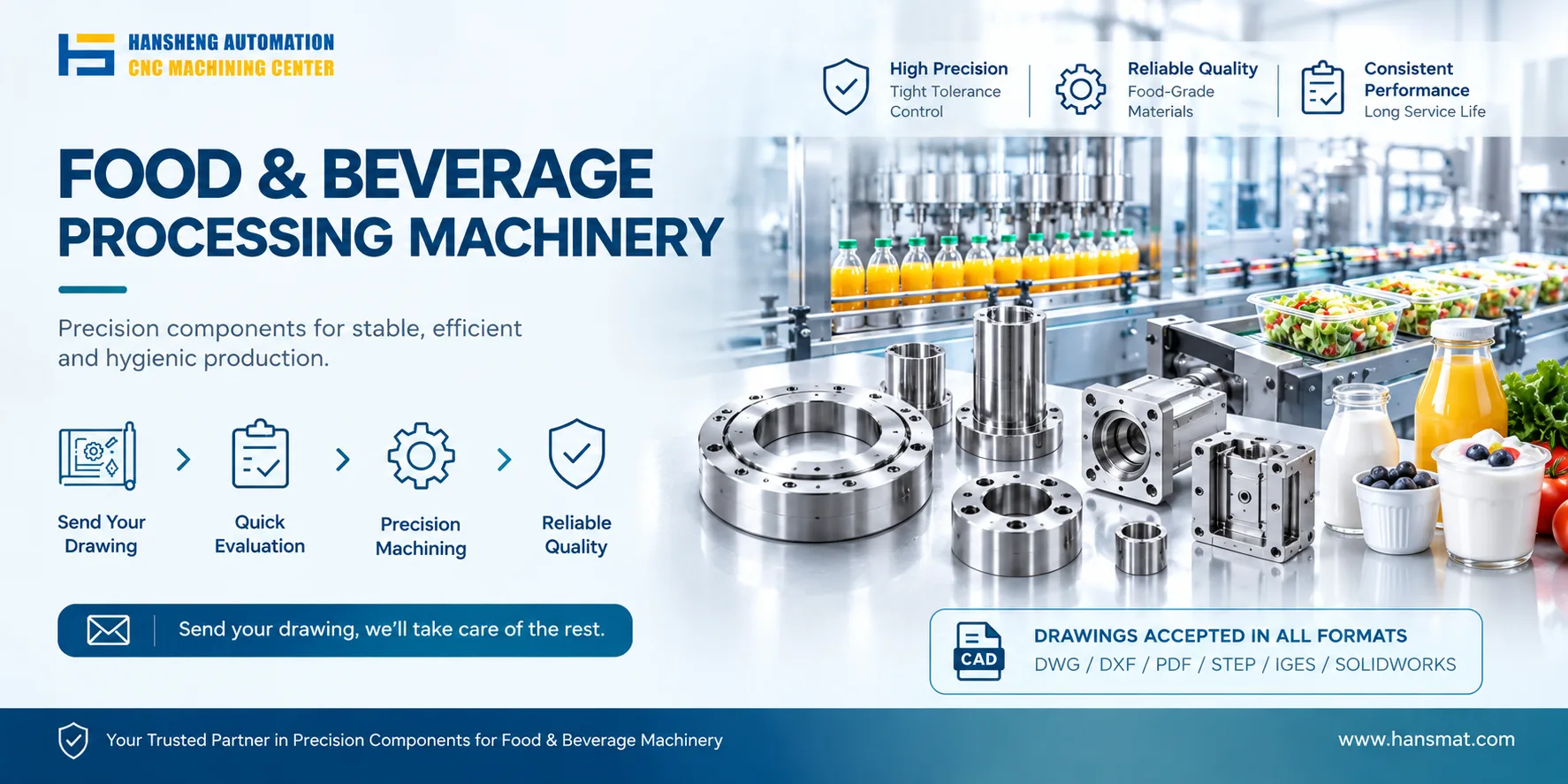
A bowl chopper cuts meat and vegetables at high speed. It is widely used for products such as thousand-layer tofu, meatballs, and sausages. The machine combines a rotating bowl, high-speed knives, and a drive system. Each component affects cutting quality, hygiene, and service life. Hansheng Automation can machine replacement knives, bowls, and shaft parts to customer drawings when original components wear or need modification.
Core Structural Components
Frame
The frame carries the weight of the machine and offsets the centrifugal force from the high-speed knife. A heavier frame keeps the machine stable during operation. It is usually made of high-strength metal such as cast iron or stainless steel. The frame needs shock resistance and durability to handle continuous production.
Bowl
The bowl is cast to food-grade standards, using 304 stainless steel or a material that meets GB 4806.9. It is machined on a lathe, and the surface finish must meet food processing equipment requirements so residue does not stick and bacteria do not grow. The bowl is usually hemispherical or U-shaped. This shape keeps ingredients concentrated for cutting and reduces splashing.
Chopper Knives
A machine usually has 3 to 6 knives. The arrangement angle can be adjusted, for example crosswise or parallel, depending on the product. Knife material affects performance. Carbon steel knives are hard and cut efficiently, but they can rust from the acid in vegetables, so they suit pure meat processing. Stainless steel knives resist corrosion, but they are slightly less sharp than carbon steel and need regular sharpening. They suit mixed vegetable and meat processing. Blade thickness is usually 1 to 2 mm. The front angle, around 15 to 20 degrees, affects cutting efficiency. The back angle, around 5 to 10 degrees, reduces friction. When replacement knives are needed, we can machine them to drawing so the edge geometry matches the application.
Auxiliary Components
Motor
The motor drives the high-speed knife. Power usually ranges from 5.5 kW to 22 kW, and speed can reach 2,000 to 4,000 rpm. A frequency converter is needed to adjust speed for different ingredients, whether the target is a fine paste or a coarse particle.
Reducer
The reducer connects the motor to the knife shaft. Gear transmission lowers speed and increases torque, which keeps cutting force stable. The reducer material must resist wear. Cast iron or alloy steel is common. Lubrication is usually oil bath.
Electrical Control System
The control system includes start and stop buttons, an emergency brake, and a speed display. Advanced models may use a PLC system for automatic programs such as timed chopping and temperature monitoring. A clear control layout helps operators respond quickly if something goes wrong.
Enclosure and Safety Guards
The outer enclosure is usually stainless steel or powder-coated steel. It resists corrosion and is easy to clean. Safety devices include a door lock that stops the machine when the bowl cover is opened, an overload protector that cuts power when current exceeds the limit to prevent motor burnout, and a grounding device to reduce electric shock risk.
Models and Specifications
Common Models
Bowl choppers are classified by bowl capacity. A 20 L model uses about 5.5 kW and suits small workshops or laboratories. A 40 L model uses 7.5 to 11 kW and suits medium food plants. An 80 L model uses 15 to 18.5 kW and can meet large production line needs. A 125 L model uses 22 kW and is used for high-output processing.
Selection Guidance
For meat processing, choose a carbon steel knife model for higher efficiency. For vegetable processing, choose stainless steel knives to avoid rust contamination. Large companies may consider automated models, such as combination equipment with weighing and filling functions.
Maintenance and Care
Daily Cleaning
After each use, remove the knives and bowl. Clean with a neutral detergent. Avoid acidic or alkaline solvents that corrode metal.
Lubrication
Change the reducer gear oil every three months. Add grease to the motor bearings once a year.
Knife Replacement
When blade wear reduces cutting efficiency, such as when meat sticks or smears, replace or sharpen the knife in time.
Safety Checks
Check the grounding wire, emergency brake, and guard door lock every month. Confirm they respond correctly.
Our precision custom machining capability is not limited to bowl choppers. Hansheng Automation also produces parts for filling machinery, tobacco packaging machinery, and medical devices, along with precision components for yachts and RC cars. From single parts to small batch runs, we machine to customer drawings and deliver parts for assembly.