Aluminum tube filling and sealing machines are used in pharmaceuticals, food, cosmetics, and daily chemicals to fill paste, cream, and viscous fluids into aluminum tubes, then fold-seal them and print batch numbers and production dates.
Control and structure
The machine uses a touchscreen and PLC control system with non-contact operation for reliable running. The structure is compact, and the transmission section is fully enclosed. An automatic tube feeding and loading device is included. Tubes are arranged and inserted automatically into the locating die, with orientation controlled by photoelectric sensing and a servo motor to ensure accurate sealing position. Tube supply, loading, filling, sealing, and discharge are all automatic. There is a no-tube-no-fill design.
Process
The automatic control system completes tube supply, tube cleaning, mark recognition, filling, fold sealing, coding, and discharge. Tube supply and cleaning are pneumatic, giving accurate and reliable action. Registration is done automatically by photoelectric sensing. Temperature control and cooling are intelligent, and adjustment and disassembly are convenient. The filling metering adjuster is digital and mounted at the lower outside of the machine for easy access.
Filling details
During filling, the nozzle extends to the bottom of the tube and withdraws as it fills, so the material does not form voids or overflow from air entrapment. For highly viscous materials prone to stringing, an air blow-off shear device is available to protect the seal. Multiple seal styles are offered, and customers can select according to their needs.
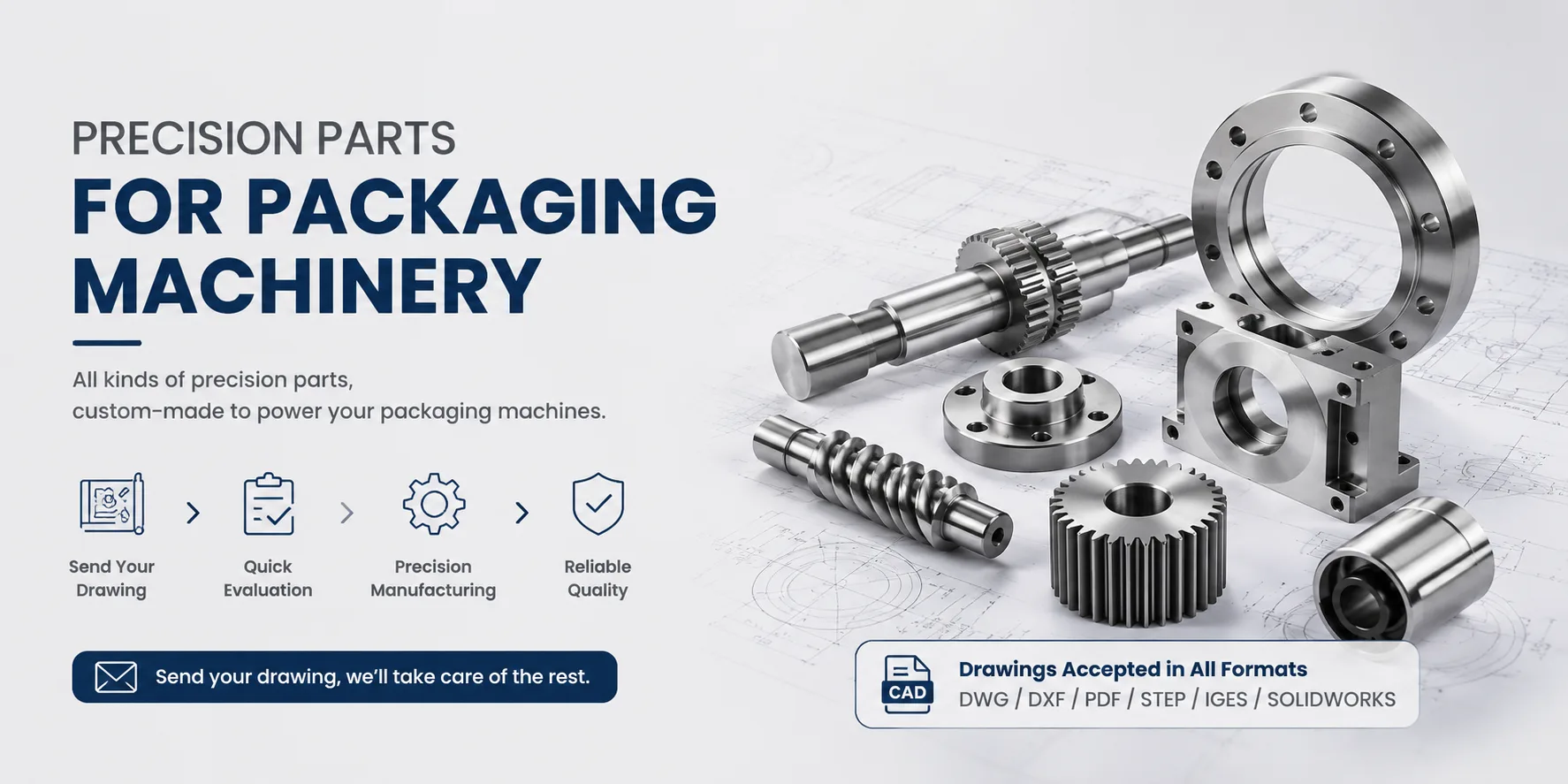
For filling nozzles, sealing jaws, locating dies, and tube feed tracks, we can machine to customer drawings, for single pieces or small batches, in 316L stainless steel or carbide, with contact surfaces polished to drawing.
Relationship between stirring and filling parameters
A filling and sealing machine involves multiple parameters, and no single parameter describes the whole machine. Shaft power (P), impeller discharge rate (Q), head (H), impeller diameter (D), and speed (N) are the five basic parameters.
Impeller discharge rate is proportional to the impeller flow number, the first power of speed, and the third power of impeller diameter. Shaft power is proportional to fluid specific gravity, the impeller power number, the third power of speed, and the fifth power of impeller diameter.
With power and impeller form fixed, discharge rate and head can be adjusted by matching impeller diameter and speed. A large-diameter impeller at low speed produces higher flow action and lower head. A small-diameter impeller at high speed produces higher head and lower flow action.
For micro-units in the tank to collide, sufficient shear rate must be provided. It is the existence of fluid velocity differences that causes layers to mix. Shear stress is the real cause of bubble dispersion and droplet breakup in filling applications. It should be noted that the shear rate is not uniform at every point in the stirring tank.
Operation and maintenance
Stop the machine immediately if an unexpected condition occurs. The machine requires periodic maintenance, focused on transmission parts, pneumatic circuit sealing, and filling metering accuracy. The seal quality of tube packaging directly affects downstream stages. Filling and sealing is only one step; upstream production and downstream storage and transport also need control.
Beyond filling and sealing machine parts, our precision component machining capability also covers non-standard parts for pharmaceutical packaging machinery, food packaging machinery, and daily chemical filling equipment, as well as precision structural parts for yachts and RC race cars. Hansheng Automation machines single pieces or small batches to customer drawings, with material, tolerance, and surface finish specified by the drawing.