

As a technology company that promotes innovation, Siemens has always been at the forefront of technology, actively exploring the integration of digitalization and low-carbon. At the first Shanghai International Carbon Neutrality Expo held recently, Siemens fully showcased its digital and low-carbon innovation achievements, demonstrating its technological leadership in empowering sustainable development in various industries.
Lin Bin, Executive Vice President of Siemens (China) Co., Ltd. and General Manager of Siemens Greater China Intelligent Infrastructure Group, gave a detailed introduction to how Siemens' digital solutions can effectively promote green and low-carbon transformation during the expo in an interview with media such as Gongkong. Through Lin Bin's sharing, we deeply feel that Siemens is not only a leader in digital and low-carbon transformation, but also a true "low-carbon practitioner". With innovation as the sail and hard work as the oar, Siemens is sowing sustainable seeds in the fertile soil of industrial upgrading and helping it thrive.

The combination of digital technology and low-carbon transformation has become a core force in promoting sustainable development, injecting impetus into low-carbon practices through practical and feasible digital technologies. Digital technology cleverly connects the virtual world with the real world, which not only provides us with new perspectives and tools, but also contributes effectively to achieving low-carbon goals. Especially in the context of building a new type of power system, the support of electrification and digital technology is particularly important.
The business of Siemens Intelligent Infrastructure Group is highly aligned with this demand, and its software and hardware technologies in the four stages of source, network, load, and storage form a closed-loop system, providing practical and feasible solutions for the transformation and upgrading of the power system.
"Source" refers to the power generation end, and Siemens software can be efficiently integrated into hardware devices to improve energy utilization efficiency. "Grid" refers to the distribution end, and Siemens uses advanced microgrid technology and simulation software to achieve complementarity and intelligent distribution of clean energy. These technologies can automatically adjust the energy ratio according to the needs of different scenarios. In addition, Siemens' electrified hardware, such as medium and low voltage switchgear, protection equipment, and automation systems, are closely integrated with software to ensure the efficient and stable operation of the distribution network. Siemens provides intelligent building control equipment for managing heating, ventilation, lighting, fire protection, and security within the building, which refers to the power consumption end. "Storage" refers to the energy storage end, and Siemens' integrated software platform provides a comprehensive solution for the energy storage needs of distributed energy.
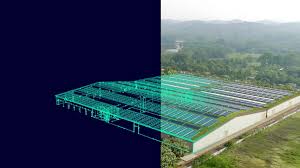
"We need to fully leverage the digital and low-carbon technology advantages of Siemens Intelligent Infrastructure Group in covering important links of source, network, load, and storage, and empower customers to accelerate carbon reduction throughout the entire energy chain," said Lin Bin. The Smart ECX, a smart carbon management platform launched by Siemens, is an important innovation in its low-carbon practices. This is an innovative product independently developed by Siemens for the Chinese market. It relies on new generation digital technologies such as cloud computing, big data, and artificial intelligence to collect and store enterprise energy and carbon emission data, combined with embedded energy system energy consumption models and business applications, to achieve functions such as carbon data visualization and analysis, carbon emission inventory, and carbon emission reduction planning, helping enterprises achieve low-carbon transformation.
The true value of the Smart ECX platform lies not only in its advanced technological applications, but also in providing enterprises with a practical and feasible low-carbon transformation path. Lin Bin said, "Although many companies can achieve a certain degree of energy data transparency through traditional means, the unique feature of the Smart ECX platform is that it not only reveals energy usage, but also provides targeted solutions." For example, if high compressor energy consumption is detected, Siemens' Distributed Microgrid Solution (MGMS) can simulate and optimize based on existing data, effectively reducing energy consumption. Similarly, for energy-efficient HVAC equipment or office building lighting systems, Siemens achieves significant energy reduction through intelligent control. This comprehensive service capability that integrates data monitoring, problem diagnosis, and solutions is precisely the key to distinguishing the Smart ECX platform from traditional energy management solutions.
Joining hands with ecological partners to jointly promote low-carbon development
On the path of low-carbon development, Siemens not only leads the industry with innovative technology, but also promotes practice with practical cooperation spirit and ecological partners. The widespread application of Siemens digital solutions is a reflection of its role as a "low-carbon practitioner".
For example, in the MOBO Collaborative Innovation Industrial Park of Changshu High tech Zone, Siemens Smart Park Management Platform SCX integrates five smart park management systems: smart security, smart fire protection, energy and carbon monitoring, building automation, and one card system, allowing managers to intuitively understand the overall operation of the park and achieve comprehensive integrated smart park information management. The Smart ECX carbon management platform helps industrial parks achieve real-time monitoring of energy consumption data, clarification of carbon emission footprints, effective control of energy waste points, and continuous optimization of energy consumption control systems. After applying Siemens Smart Park Management Platform SCX and various energy control systems, the expected energy consumption and carbon emissions of the park have been reduced by about 45%, and the emergency response speed has been increased by about 35% while reducing the allocation of property and security personnel in the park.
In Lianmin Village, Pudong, Shanghai, Siemens has implemented advanced simulation and planning for complex energy environments, utilizing Spectrum Power microgrid management system and EnergyIP DEOP cloud platform to achieve complementary thermal and electrical multiple energy and unified management of power load. "Although the case of Lianmin Village is relatively niche, it is of great significance for achieving the national strategic needs of 'beautiful countryside', 'rural revitalization', and environmental quality improvement. At the same time, it also meets the needs of rural areas for energy security, quality, and efficiency, promoting the achievement of sustainable development and governance goals in rural areas." Lin Bin said.
Moreover, Siemens' digital solutions have been widely applied in projects such as the Taicang Zhihui Valley and the Beijing Global Power Supply Service Center's "Light Storage Direct Flexible" business hall. It is worth mentioning that Siemens not only vigorously promotes its low-carbon technology in external projects, but also actively practices it in its own operations. This approach of both internal and external cultivation fully reflects Siemens' firm determination and practical spirit in its commitment to energy conservation and emission reduction.
In order to further improve the efficiency of carbon verification, Siemens is actively promoting the application of online carbon verification functions. Through this feature, Suzhou Siemens Electrical Co., Ltd. and Beijing Siemens Xibeles Electronics Co., Ltd. have efficiently and accurately completed the verification of organizational carbon emissions and product carbon footprint. Compared to traditional offline verification, it can save 50% of verification time and reduce costs. The verification results are traceable and reusable. At the exhibition site, DEKRA Certification Group issued the "2023 Organizational Carbon Emission Verification Statement" and Desigo Essentials to two factories, respectively ® ELC.E14 Controller Carbon Footprint Verification Statement.

Siemens also spares no effort in training empowerment. The establishment of Changshu Digital Empowerment Center and Taicang Aerospace Low Carbon Digital Empowerment Center has further promoted the digital and green low-carbon transformation of local industries, providing valuable technical support for related industries and helping them achieve sustainable development.
Collaborate with like-minded ecological partners to promote low-carbon practices through practical and feasible digital technologies. This cooperation model of Siemens not only reflects the spirit of practicality, but also demonstrates its open and inclusive attitude. Lin Bin also introduced that for enterprises committed to low-carbon transformation, even if not all of their internal equipment comes from Siemens, Siemens can seamlessly integrate the data of these devices into the Smart ECX platform through efficient data processing and protocol conversion. At present, the platform has been successfully launched on the Siemens Xcelerator open digital business platform and has achieved practical application of SaaS modularization. For example, Siemens has partnered with its partner, New Core Cloud, to successfully promote the deployment of Smart ECX, a smart energy carbon management platform, in SaaS mode. This deployment will help Hongqi Instrument Co., Ltd. achieve fully digital management of energy assets, refined management of energy measurement, as well as workshop level energy data visualization, energy analysis and benchmarking, and energy cost statistics and analysis.
It can be seen that Siemens is committed to achieving sustainable development goals. Driven by Siemens, low-carbon is moving from concept to reality and from theory to practice. When the wings of technology are set on green sails, Gongkong looks forward to Siemens continuing to use its outstanding innovation ability and firm practical spirit to allow the seeds of sustainable development to take root, sprout, and grow vigorously in the fertile soil of practice, thereby providing strong support and continuous power to achieve the goal of green and sustainable development.