Surgical robots achieve high precision through mechanical structure, accurate positioning, real-time feedback, and motion control.
The joints, transmission parts, and other core components in the arm can reach sub-millimeter or even micron-level positioning accuracy. This supports precise control of very small movements.
Preoperative imaging such as CT and MRI is fused with intraoperative vision and force feedback. The system corrects path deviation in real time and compensates for tissue displacement.
Motion control algorithms filter out natural hand tremor, which is about 0.1 to 0.5 mm. They translate the surgeon's intended motion into mechanical action and reduce human error.
The arm usually has 4 to 7 degrees of freedom. This lets it reach deep, narrow spaces in the body. Precise control of the end effector improves operating accuracy.
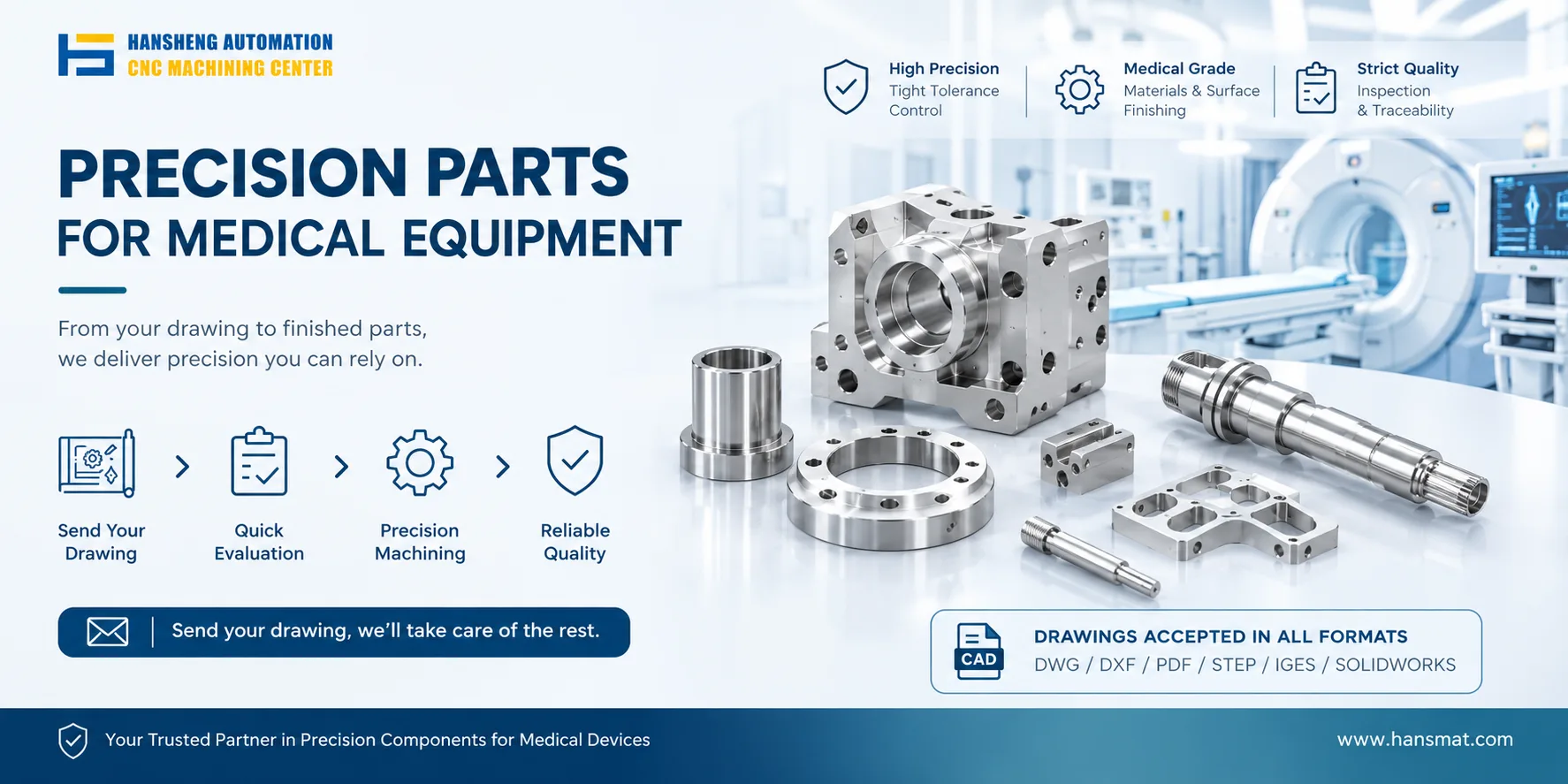
For surgical robot developers, Hansheng Automation machines joint components, transmission parts, and end effector parts from customer drawings. Single-piece and small-batch orders are supported.