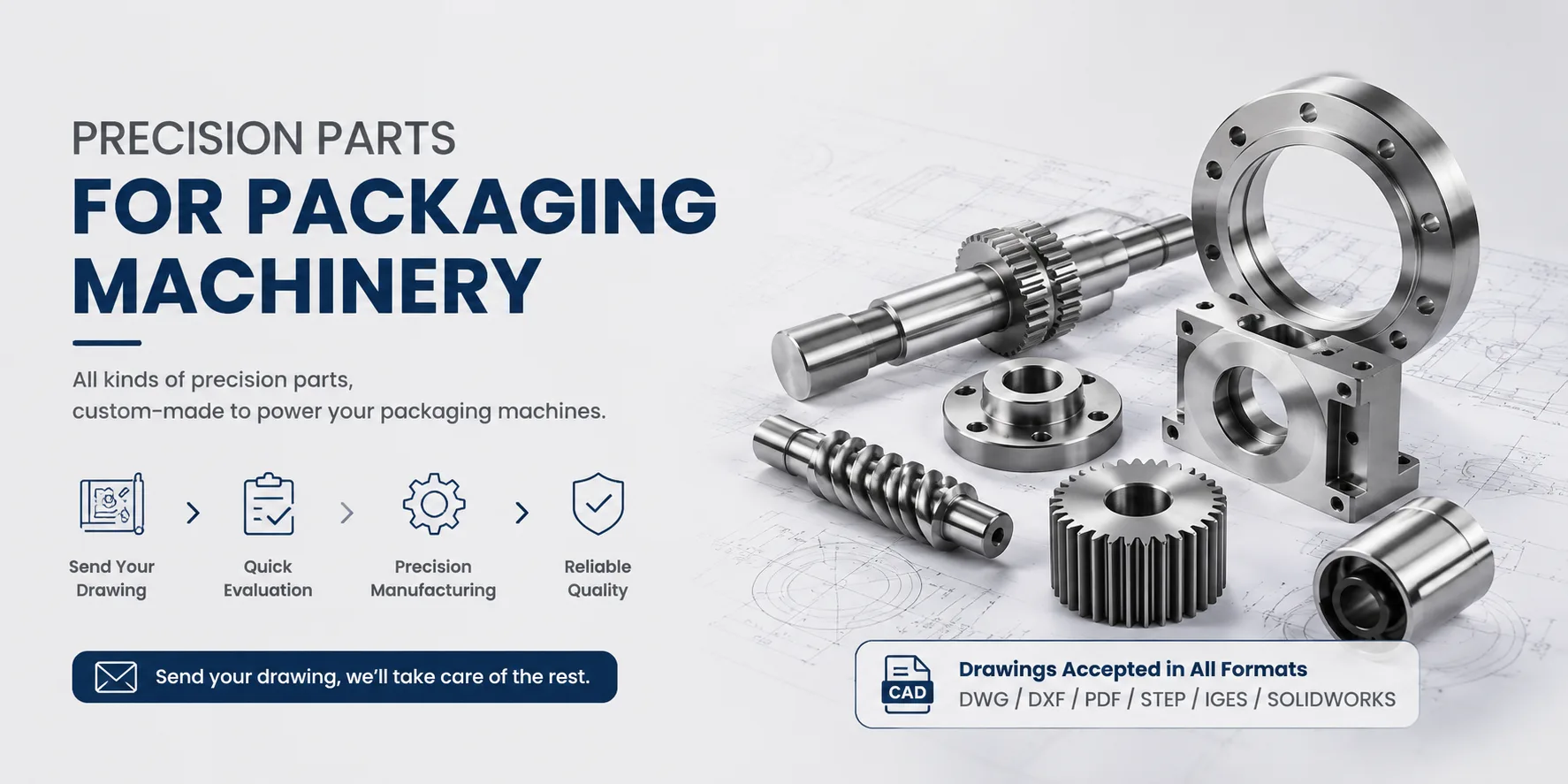
A fully automatic brick machine production line connects raw material handling, batching and mixing, forming, curing, conveying, palletizing, and packaging into one automatic process. The palletizing equipment used on a cement brick production line is usually a palletizing robot or a palletizer. It stacks finished bricks in a set pattern and quantity for storage and transport. If the gripper mounting base, connectors, or conveyor brackets on a palletizer are worn or need to be modified for the site, we can custom machine them according to customer drawings. Hansheng Automation supports single-piece and small-batch delivery.
Raw material handling system
Raw material storage: the raw material storage area holds cement, fly ash, slag, furnace slag, construction waste, and other brickmaking raw materials. The materials need to meet requirements for particle size, moisture content, and other properties.
Raw material crushing: larger materials are crushed first to reach the particle size needed for brickmaking. Large construction waste, ore, and similar materials are usually crushed into smaller particles by a crusher.
Raw material conveying: processed materials are sent to the batching and mixing system by belt conveyors, screw conveyors, and other equipment.
Batching and mixing system
Automatic batching: the system accurately controls the amount of aggregate, cement, fly ash, water, admixtures, and other materials according to the set formula.
Mixing: operators put the batched materials into a mixer and mix them thoroughly to form a brick blank material with certain flowability and plasticity. Mixing time and speed are adjusted according to the raw materials and brick type.
Forming system
Brick machine forming: this is the core part of the production line. The mixed material is pressed and formed by a forming machine into brick blanks of various shapes and sizes. Common methods include hydraulic forming and vibration forming. A hydraulic forming machine presses the material into brick blanks with high pressure. A vibration forming machine uses vibration to make the material fill the mold tightly.
Mold change: operators need different molds to produce different brick types. The forming system should allow quick mold changes to improve production efficiency and equipment versatility.
Curing system
Natural curing: bricks that do not need special curing conditions, such as ordinary cement bricks, can be cured in a natural environment. This lets cement and other binding materials hydrate fully and improves brick strength and durability.
Autoclave curing: bricks with higher strength and performance requirements, such as aerated concrete blocks and autoclaved sand-lime bricks, need high-temperature and high-pressure curing in an autoclave. During curing, temperature, pressure, and curing time are strictly controlled to ensure brick quality.
Conveying system
Wet blank conveying: newly formed wet brick blanks are conveyed to the curing area or the next station. The conveying process must keep the blanks intact and avoid damage.
Dry blank conveying: cured dry brick blanks are conveyed to the palletizing system or packaging system. The conveying equipment should run smoothly and reliably.
Palletizing system
Automatic palletizing: the palletizing system uses a palletizing robot or palletizer to stack finished bricks in a set pattern and quantity for storage and transport. The palletizing system should position accurately and grip reliably so the bricks are stacked neatly.
Pallet conveying: loaded pallets are conveyed to the designated position to wait for packaging or shipment.
Packaging system (on some production lines)
For bricks that need packaging, such as export bricks or high-end bricks, the production line is equipped with a packaging system. The packaging system usually includes an automatic packaging machine, a strapping machine, a film wrapping machine, and other equipment. It packages, straps, and wraps the bricks to improve appearance and protection.
Central control system
The central control system controls and manages the equipment on the production line. Through the control system, touch screen, and other devices, operators can start and stop equipment, adjust operating parameters, and receive fault alarms. This keeps the production line running stably and efficiently.
Different brick machine production lines may differ in equipment configuration and process parameters, but they generally follow the basic composition and workflow above. Our custom precision parts machining capability is not limited to cement brick production lines. In addition to parts for cement product machinery, building materials machinery, and ceramic machinery, Hansheng Automation can machine tobacco packaging machinery parts, filling machinery parts, yacht precision parts, and RC car precision parts according to drawings. We also machine non-standard parts for printing machinery, food machinery, and medical devices. We support drawing-based customization and small-batch delivery.