

At a continuous run rate of 800 packs per minute, a tobacco packaging machine isn't just assembling boxes. In these high-speed applications, driven by precision cam indexers and servo motors, even a microscopic structural resonance can compound into severe wear, misalignment, and catastrophic downtime.
Choosing the right industrial castings for tobacco machinery isn't just about pouring metal into a mold. It requires materials specifically engineered for vibration damping, wear resistance, and the ability to hold extremely tight tolerances after machining. Whether you are sourcing heavy-duty cast iron frames to anchor the machine (often requiring specified tolerances down to ±0.03mm over large spans), or looking into precision brass casting services for intricate, wear-resistant fittings, the material dictates the machine's lifespan.
In this article, we will explore the most commonly used materials for metal castings in tobacco processing machines, why they are chosen to handle high-speed indexing impacts.
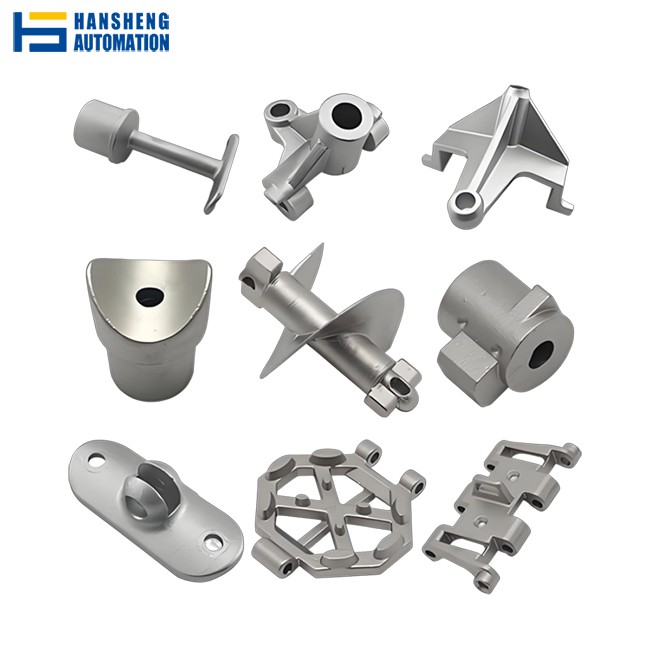
Why Material Choice Matters for Industrial Castings for Tobacco Machinery
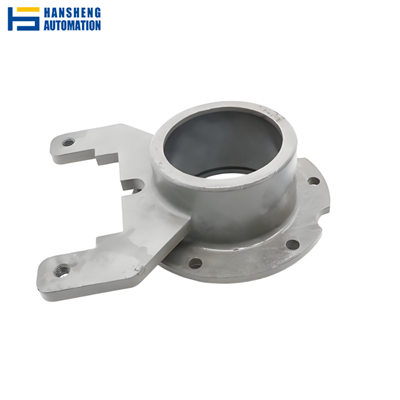
In tobacco packaging lines operating at 300–1,000 packs per minute, cast metal components face constant challenges: relentless vibration, tobacco dust, humidity fluctuations, and high mechanical loads. The wrong material leads to fatigue cracks, misalignment, or excessive wear.
Proper material selection delivers:
Superior vibration damping to keep rollers, sealers, and conveyors perfectly aligned.
Excellent wear resistance against abrasive tobacco particles.
Thermal stability and corrosion resistance in humid production environments.
Cost-effective machinability for tight tolerances (±0.03 mm) and smooth surface finishes.
The Most Commonly Used Materials in Metal Castings for Tobacco Processing Machines
Gray Cast Iron (HT250 / HT300)
Gray cast iron is the most frequently specified material for machine bases and large structural frames. Its flake graphite microstructure provides exceptional damping capacity, absorbing the high-frequency vibrations generated by high-speed packaging lines. Furthermore, its excellent machinability allows foundries to maintain strict specified tolerances (down to ±0.03 mm) even on massive machine beds up to 3,800 mm in length, ensuring a perfectly flat foundation for subsequent assembly.
Ductile Iron (QT500-7)
Also known as nodular iron, ductile iron offers significantly higher tensile strength and impact resistance compared to gray iron. It is the preferred choice for dynamic supports, conveyor frames, and load-bearing brackets. In tobacco processing machines, ductile iron components can withstand mechanical shocks and continuous flexing without fracturing, ensuring structural stability under 24/7 operation.
Brass and Bronze Alloys
Precision brass castings (often utilizing phosphor or aluminum bronze) are critical for sliding contact areas, bushings, and guide elements. In the abrasive, dust-heavy environment of tobacco processing, these self-lubricating alloys prevent seizing where standard steel would fail.
Aluminum Alloys (A356.2)
Aluminum provides an excellent strength-to-weight ratio and natural corrosion resistance. It is primarily used for protective covers, mounting brackets, and high-speed moving parts where reducing inertia directly improves the energy efficiency of the equipment.
Manufacturing Processes
To achieve near-net-shape accuracy before final machining, these materials are typically processed using sand casting, lost foam casting, or gravity casting. The raw castings are then subjected to high-precision CNC milling and turning to meet the exact geometric requirements of modern tobacco machinery.
Engineering Advantages of Optimized Casting Materials
Selecting the right casting material goes beyond basic tensile strength; it is about matching metallurgical properties to the kinetic demands of high-speed tobacco packaging.
In dynamic applications, gray cast iron exhibits a specific damping capacity exponentially higher than that of standard carbon steel. This natural ability to absorb and dissipate kinetic energy prevents harmonic vibrations from traveling through the machine frame, ensuring that high-speed rotary mechanisms remain perfectly synchronized.
Ultimately, specifying the correct industrial casting materials does not just solve isolated mechanical issues.
Why Hansheng Automation Excels in Tobacco Machinery Castings
As a fully integrated manufacturer, Hansheng Automation specializes in producing industrial castings for tobacco machinery, managing everything from raw pouring to final precision machining under one roof.
Large-Scale Casting with Strict Tolerances
Utilizing sand casting, lost foam, and gravity casting processes, we produce heavy-duty machine bases and structural frames up to 3,800 mm in length. Even at this massive scale, our foundry strictly maintains specified casting tolerances of ±0.03 mm for gray iron, ductile iron, and aluminum components. We also provide specialized brass casting services for critical wear-resistant fittings.
Ultra-Precision CNC Machining
What truly sets Hansheng apart is our in-house machining capability. Raw castings are processed using advanced horizontal and vertical CNC machining centers. We routinely achieve precision milling and turning tolerances of ±0.005 mm, and can deliver super mirror finishes down to ±0.002 mm for critical contact surfaces.
Backed by comprehensive inspection equipment and precision wire EDM (Electric Discharge Machining), we ensure that every cast metal component is delivered ready for flawless assembly. By partnering with Hansheng, tobacco machinery builders can eliminate vibration-induced errors, extend equipment lifespan, and guarantee 24/7 production reliability.
FAQ
Q: What is the most commonly used material for tobacco packaging machinery castings?
A: Gray cast iron (such as HT250 or HT300) is the industry standard for machine bases and structural frames due to its superior vibration-damping properties. Ductile iron is also frequently used for structural parts requiring higher tensile strength.
Q: Is ductile iron or gray iron better for cast components in tobacco equipment?
A: Gray iron is ideal for static components that need to absorb high-frequency vibrations, while ductile iron is chosen for dynamic, load-bearing parts that must withstand mechanical shocks without fracturing.
Q: How do precision brass castings improve tobacco machinery reliability?
A: Brass and bronze alloys provide self-lubricating, wear-resistant surfaces. In dusty tobacco processing environments, these precision-machined fittings prevent mechanical seizing and significantly extend the service life of sliding contact areas compared to standard steel.
Q: Can aluminum be used alongside heavier cast metals in tobacco equipment?
A: Yes. Aluminum alloys (like A356.2) are frequently used for lightweight covers, mounting brackets, and high-speed moving parts. They reduce inertia and improve energy efficiency while perfectly complementing the heavier iron framework.
Q: What practical benefits can I expect from optimizing industrial castings for tobacco machinery?
A: By matching the right casting alloy with high-precision machining, manufacturers can drastically reduce vibration-induced misalignment, prevent premature wear on sensitive transmission components (such as gearboxes and indexers), and ensure stable, high-speed 24/7 operation with minimal maintenance.
Q: How does Hansheng ensure the quality of its metal castings for tobacco processing machines?
A: Hansheng ensures quality through a fully integrated manufacturing process. We maintain strict casting tolerances of ±0.03 mm for large structural parts up to 3,800 mm. These raw castings are then processed in-house using advanced CNC machining to achieve precision tolerances down to ±0.005 mm, ensuring every component is delivered ready for flawless assembly.