A dough mixer and a dough stirrer are often confused. The stirrer is actually a subcategory of the mixer, not a completely separate machine type. The main differences come down to function, structure, application, and capacity.
Functional Positioning
Dough Mixer
A dough mixer is a general-purpose dough handling machine. Its core function is to complete the full process from flour plus water to a formed, evenly kneaded dough. It makes base dough for steamed buns, baozi, bread, and many other flour products. Some high-end models also press and proof the dough.
Dough Stirrer
A dough stirrer focuses on specialized mixing. It usually only mixes flour with water, oil, and additives. Its kneading force and dough formation are weaker than a dedicated dough mixer. It suits small-batch, light mixing work.
Structural Design
Dough Mixer
Most dough mixers use a two-speed, dual-action design. The hook speed and planetary speed can be adjusted. This simulates the pulling and folding action of hand kneading. The bowl often has an insulation layer, and some models support timed mixing.
Dough Stirrer
The structure is simpler. Most units use single-speed mixing. The hook mainly revolves, and rotation speed is fixed. The bowl has no insulation layer. Overall size is usually smaller than a home dough mixer.
Application Scenarios
Dough Mixer
A dough mixer covers home, small catering, and central kitchen use. It handles dough with different water content, from low-water dumpling wrapper dough to high-water bread dough.
Dough Stirrer
A dough stirrer is often used in bakery shops for cream whipping or filling mixing. It is also used in small noodle workshops for basic mixing. It is not suitable for hard dough that needs full kneading.
Power and Capacity
Dough Mixer
Home models usually run from 300 to 1,000 W and handle 2 to 8 jin of flour, about 1 to 4 kg. Commercial models can exceed 2,000 W and process 20 to 50 jin, about 10 to 25 kg, per batch.
Dough Stirrer
Home models usually run from 200 to 500 W and handle no more than 5 jin, about 2.5 kg. Commercial models usually run from 500 to 1,500 W and process 5 to 15 jin, about 2.5 to 7.5 kg, per batch.
How to Choose
Choose a dough mixer when the product needs full gluten development, whether the dough is for bread, steamed buns, or dumpling wrappers. Choose a dough stirrer when the job is light mixing, cream whipping, or filling preparation, and when the dough does not need heavy kneading. Matching the machine to the dough type gives better texture and more efficient production.
Maintenance and Replacement Parts
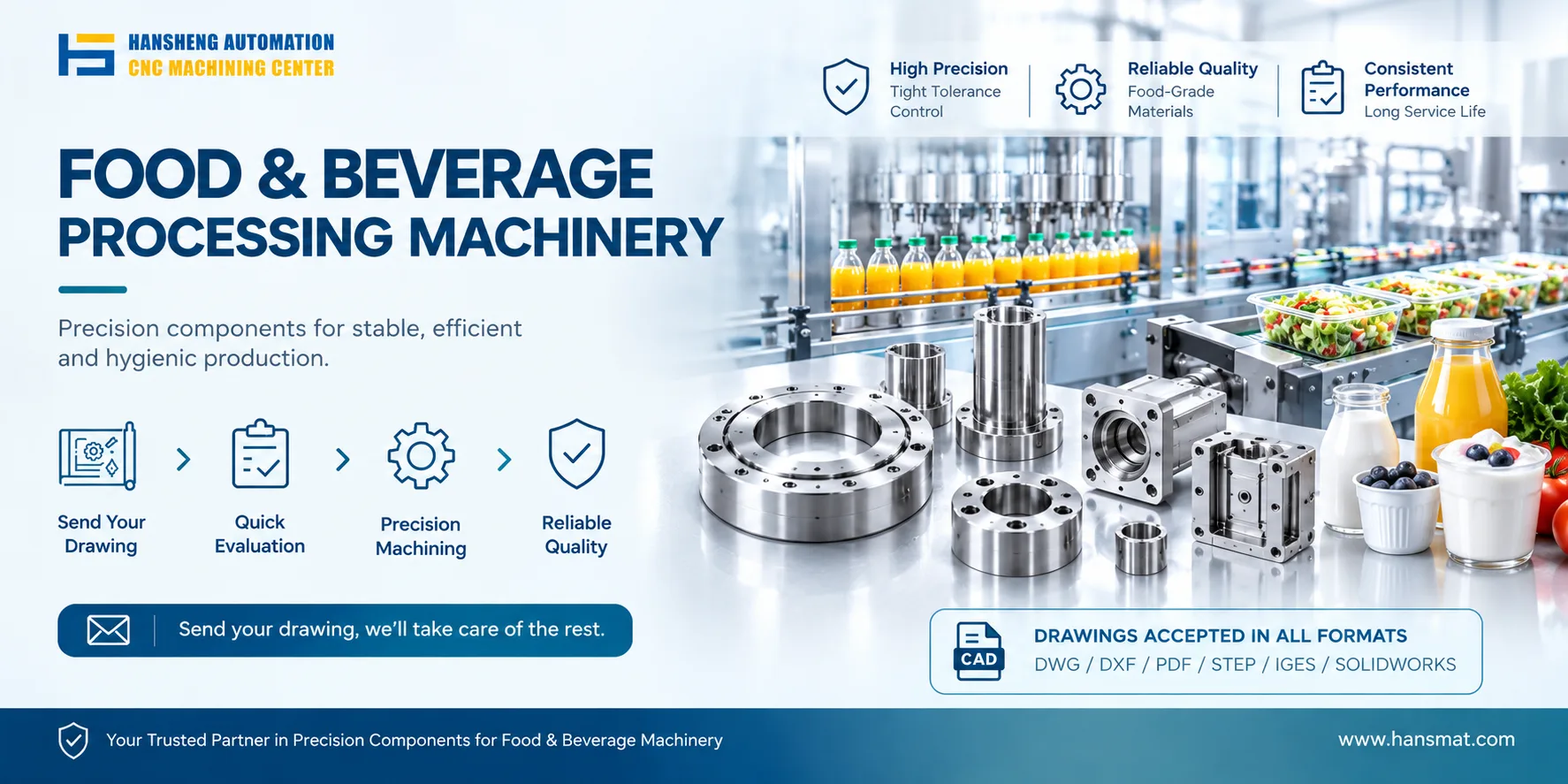
Regular maintenance should cover the mixing hook, bowl surface, shaft seals, and drive components. Worn hooks affect gluten development and mixing consistency. A damaged bowl surface can hold residue and affect hygiene. When replacement parts are needed, Hansheng Automation can machine mixing hooks, bowls, shafts, and sealing parts to customer drawings so the fit and performance match the original design.
Our precision custom machining capability is not limited to dough mixers and stirrers. Hansheng Automation also produces parts for food processing equipment, filling machinery, and medical devices, along with precision components for yachts and RC cars. From single parts to small batch runs, we machine to customer drawings and deliver parts for assembly.