

Stainless steel butterfly valve housings are the foundation of a valve's strength, durability, and reliability. This core component needs to withstand the pressure of the entire system, resist external corrosion, and ensure the valve's tightness. This article takes you deeper into the subtle differences in stainless steel butterfly valve bodies, from materials to selection and manufacturing processes.
What is a Stainless Steel Butterfly Valve?
Also known as a stainless steel flap valve, it is a pipeline control device that employs a triple-eccentric, multi-layered metal hard-seal structure. It is mainly used in industrial fields such as metallurgy, power, petrochemicals, water supply and drainage, and municipal construction where the medium temperature is ≤425℃. It features strong corrosion resistance and a long service life.
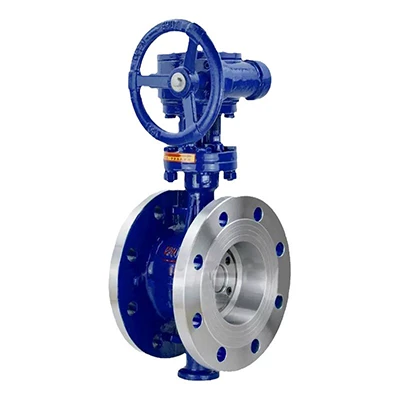
Why is stainless steel the preferred material for valve bodies?
While cast iron and carbon steel are also widely used in some fields, stainless steel has become the standard for most industrial environments. The reasons are as follows:
Strong Corrosion Resistance: The chromium in stainless steel allows it to form a dense, self-healing passivating oxide film on its surface, providing excellent protection against rust and chemical corrosion.
High Strength and Durability: Stainless steel possesses high tensile strength and toughness, effectively withstanding high pressure and physical impacts without deformation.
Wide Temperature Adaptability: Certain grades of stainless steel maintain stable performance in environments ranging from cryogenic to hundreds of degrees Celsius.
High Surface Finish: Its smooth, non-porous surface does not easily harbor bacteria and is easy to clean and disinfect. This makes it the optimal choice for industries such as food and beverage and biopharmaceuticals.
If you would like to learn more about stainless steel, please read -- What is stainless steel metal
CF8 (304) vs. CF8M (316)
You might see letters like CF8M on the valve body. What do they mean? Actually, these letters refer to casting grades, which correspond to the forged or rolled stainless steel grades that we are more familiar with.
| Characteristics | CF8 (Equivalent to 304 Stainless Steel) | CF8M (Equivalent to 316 Stainless Steel) |
|---|---|---|
| Key Alloy Elements | Chromium, Nickel | Chromium, Nickel, Molybdenum |
| Core Advantages | Excellent general corrosion resistance with high cost-effectiveness. | Superior corrosion resistance, especially resistance to chloride corrosion. |
| Typical Applications | Water treatment, food processing, general chemical industry (non-chloride environment). | Marine environment, chemical industry, wastewater treatment, paper industry. |
| Selection | The first choice for most standard application scenarios. | A must for brine, seawater, or corrosive chemical environments. |
Comparison of Main Design Types
The structural design of the valve body determines its installation method in the pipeline. Hansheng Automation compares the wafer type and the lug type below.
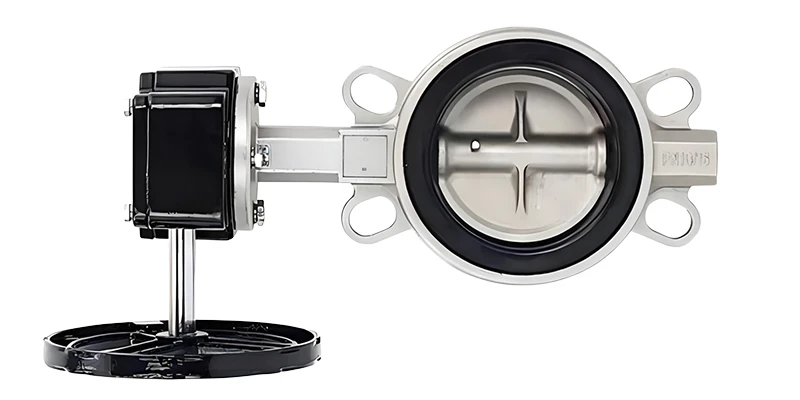
Wafer Type
The valve body resembles a thin, compact ring, "clipped" between two pipe flanges and secured with long bolts running from one flange to the other. Advantages include light weight, compact structure, and cost-effectiveness.
Lug Type
This design features a series of threaded holes ("lugs") on the outer edge of the valve body. During installation, bolts directly secure each pipe flange to the lugs on the valve body. Advantages include "end-of-line" installation, meaning that during maintenance, one side of the pipeline can be removed while the valve remains fixed to the other side and maintains a seal.
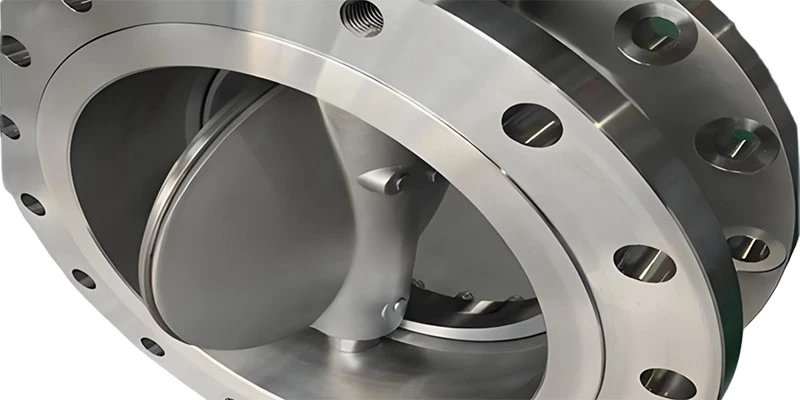
How to Choose the Right Stainless Steel Butterfly Valve Body?
Consider the following steps:
1. Choose the material based on the medium and environment: 304 (CF8) stainless steel is generally sufficient. For seawater, chloride, chemical, or coastal environments, 316 (CF8M) stainless steel is recommended.
2. Determine the manufacturing process based on structural and performance requirements: For complex internal structures, lost foam casting is recommended. For large or general-purpose valve bodies, sand casting is preferable.
3. Determine the machining precision based on the operating conditions: Ensure your supplier can achieve the desired machining precision and provide different surface treatments tailored to your operating conditions.
| Application Scenario | Recommended Material | Recommended Process | Key Consideration |
|---|---|---|---|
| Water Treatment/General Industry | 304 (CF8) | Sand Casting | Cost-Effectiveness |
| Chemical/Ocean Platform | 316 (CF8M) | Sand Casting/Lost Foam Casting | Chloride Ion Corrosion Resistance |
| Pharmaceutical/Biotech | 316L (CF3M) | Lost Foam Casting | High Purity, Easy to Clean, No Dead Angles |
| Food & Beverage | 316 (CF8M) | Lost Foam Casting | Electropolished Surface, Sanitary Grade |
| Large Industrial Valves | Select by Medium | Sand Casting | Structural Strength, Large-Scale Capability |
Precision Casting Process
Valve Body Casting
The initial shape of the valve body is achieved through casting. Sand casting and lost foam casting are used to produce the casting blank, which should possess characteristics such as freedom from porosity, dimensional stability, and correct metallographic structure.
Precision Machining
The process of transforming the casting blank into the final product through precision machining. In a CNC machining center, the valve seat bore, valve stem bore, and flange sealing surface must reach specified precision and tolerances to achieve optimal performance.
At Hansheng Automation, we apply our deep expertise, derived from manufacturing high-precision gear transmission systems, to every valve body we produce. We firmly believe that the robustness of a valve depends on its foundation. Want to learn how our advanced casting processes and ultra-precision machining techniques create exceptional valve bodies capable of handling the most demanding applications? Click here to explore our Stainless Steel Butterfly Valve Housings.