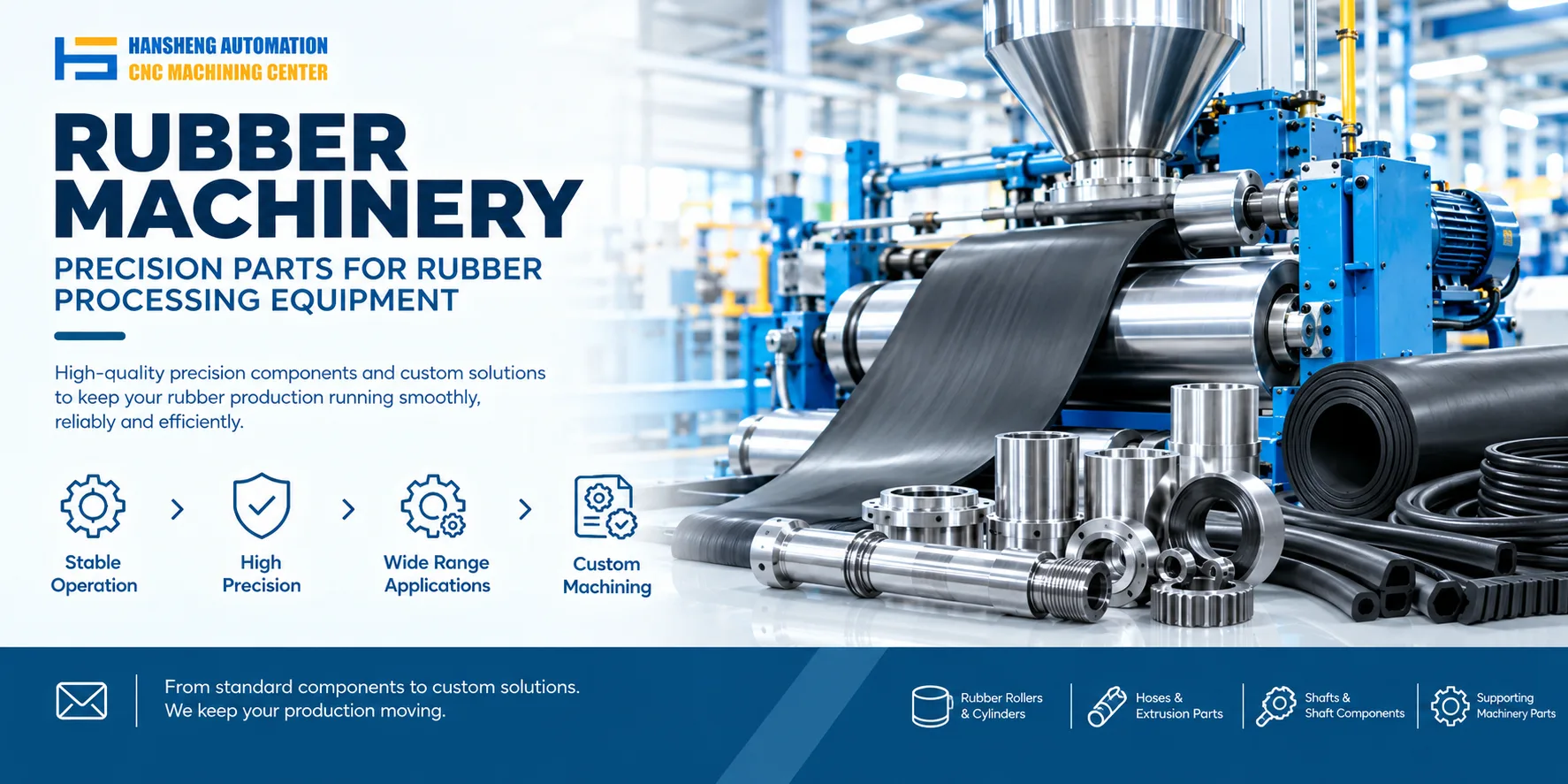
A hydraulic extruder uses hydraulic pressure to push material through a die and form it into a specified shape. It is used in various industries, including plastics, rubber, food processing, pharmaceuticals, and building materials. The equipment configuration depends on the material, forming requirements, and production process.
1. How a hydraulic extruder works
A hydraulic extruder uses a high pressure hydraulic system to drive a piston or plunger, applying force to the material and pushing it through a die with a predefined shape.
The hydraulic system provides controlled force during forming. By adjusting the pressure and extrusion speed, operators can manage the forming process for materials that require substantial forming force, including high viscosity compounds.
2. Applications of hydraulic extrusion equipment
2.1 Plastic processing
Hydraulic extrusion equipment can be used in certain plastic forming applications, including PVC pipe and polyethylene film production.
After plastic granules are heated and melted, the material passes through a suitably shaped die to form a pipe or film. The extruded product is then cooled and cut to the required dimensions.
2.2 Rubber manufacturing
In rubber processing, extrusion equipment is used to produce tire treads, rubber sealing products, and other profiled components.
The prepared rubber compound passes through a die, such as a T-shaped die, to form the required cross section. Controlling the extrusion conditions helps maintain dimensional consistency and supports the sealing performance and durability of rubber components.
2.3 Food processing
Extrusion equipment is used to form products such as pasta and expanded snacks. Dough or grain based mixtures pass through a shaped die, after which further processing, such as drying or frying, establishes the final product structure.
The die design and operating conditions determine the shape and dimensions of the extruded food.
2.4 Pharmaceutical manufacturing
Certain pharmaceutical forming processes use extrusion to shape material into products such as suppositories or sustained release rods.
Low temperature processing may be suitable for formulations containing heat sensitive ingredients. In specialized systems, die geometry and process parameters can affect product dimensions and drug release characteristics.
2.5 Building materials
Extrusion equipment can be used to form building products such as decorative gypsum profiles and cement boards. Mixed material is shaped through a die, and the die surface can be designed to produce decorative patterns resembling wood grain or stone texture.
The forming process can reduce the need for additional surface processing, depending on the product design.
3. Advantages of hydraulic extrusion equipment
Compared with conventional mechanically driven extrusion equipment, hydraulic systems offer several potential advantages, depending on the machine design.
Wide pressure adjustment range
The reference material gives a hydraulic pressure range of 50 to 300 MPa. This range should be treated as equipment dependent, since the actual pressure capability varies with the hydraulic system and extrusion application.
Adjustable extrusion speed
Hydraulic actuation allows extrusion speed to be adjusted to suit the forming process. This can be useful for applications that require controlled or intermittent extrusion.
Stable force transmission
A properly designed hydraulic system provides controlled force transmission during forming. The source gives a potential product dimensional tolerance of ±0.1 mm. The achievable tolerance depends on the equipment, die design, material behavior, and process control.
4. Custom machining for industrial equipment components
Hydraulic extrusion equipment may require precision metal components manufactured to specific dimensions and fitting requirements. Hansheng Automation can assess custom machining based on customer drawings, material specifications, and dimensional tolerances.
Our precision machining services also cover non-standard parts for rubber processing, packaging, and tobacco machinery. We can assess components for filling equipment, yacht equipment, and RC racing cars according to the supplied drawings and machining requirements.