Soap box stamping usually involves four groups of equipment: stamping presses, feeding and discharge support equipment, tooling and fixtures, and safety and post-processing support equipment. The exact setup depends on production volume, sheet thickness, soap box shape, and precision requirements.
Stamping presses
Ordinary open-back inclinable presses are available in manual, foot-operated, and motor-driven models. They are suitable for metal or plastic sheets from 0.5 mm to 2 mm thick, with tonnage often from 10T to 60T. They are simple to operate and low in cost, making them suitable for small-batch trial production or regular production. High-speed precision presses are used for large-volume continuous stamping. With a progressive die, they can complete blanking, forming, and punching. Production rates can reach 30 to 80 strokes per minute. Hydraulic presses provide stable and controllable pressure. They are suitable for soap boxes with flanges, snap fits, and other complex shapes, and can control forming depth. Stamping dies are the core tooling. They include blanking dies, forming dies, and punching dies. They can be combined into compound dies or progressive dies for multi-process integrated machining.
Feeding and discharge support equipment
Coil uncoilers and levelers are used for coil materials such as galvanized steel sheet and PET sheet. They unwind and level the coil and feed flat sheet into the stamping station. Automatic feeders include air feeders and roller feeders. They work with high-speed presses for accurate and continuous feeding. For small-batch manual production, they can be omitted and manual feeding can be used. Finished product collection equipment such as belt conveyors and parts bins collects finished soap boxes and reduces manual sorting.
Tooling and fixtures
Positioning fixtures are installed on the press table to hold sheets and dies, ensure stamping position accuracy, and reduce waste from offset. Die accessories include guide posts and bushings, stripper plates, stripper springs, and other parts that maintain die accuracy and stability.
Safety and post-processing support equipment
Photoelectric safety guards are installed in the stamping area. They stop the press when a hand enters the area, reducing the risk of mechanical injury. Waste collection devices such as negative pressure suction units and sealed waste bins collect scrap and prevent accumulation from affecting the production environment. Edge trimming and grinding equipment includes hand-held angle grinders and automatic trimmers that remove burrs from stamped part edges. Cleaning and blowing devices use compressed air guns to remove oil, dirt, and metal chips from dies and parts.
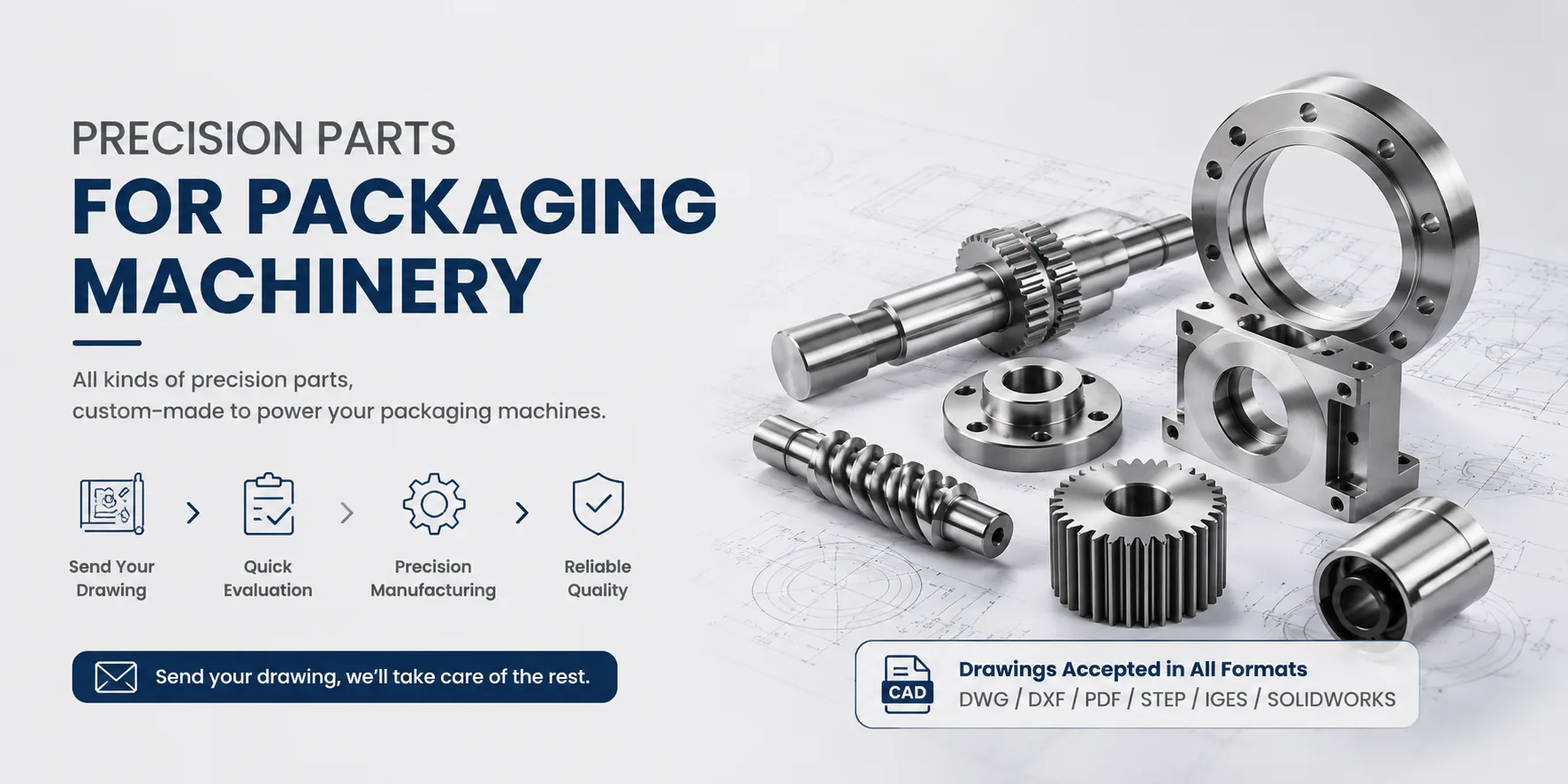
These machines use many wear parts and non-standard components, such as stamping dies, positioning fixtures, guide posts and bushings, stripper plates, feed rollers, and trimming tools. Hansheng Automation can precision-machine these parts in single pieces or small batches according to customer drawings. We can use stainless steel, aluminum alloy, carbon steel, or engineering plastics, control tolerances to drawing requirements, and provide surface treatments such as anodizing, blackening, nickel plating, or powder coating.
Our custom precision machining capability is not limited to soap box stamping equipment. In addition to tobacco packaging machinery parts and filling machinery parts, we can machine yacht fittings, RC car structural parts, printing machinery parts, food machinery parts, and medical device parts according to drawings. After customers provide design drawings, Hansheng Automation can support prototyping and batch production for non-standard parts.