Bubbles in calendered sheets can result from moisture or contamination in the raw materials, incorrect roll temperature, insufficient calendering pressure, poor venting, or improper feeding and mixing. Identifying the cause requires checking the material condition, equipment operation, and processing parameters.
Material-related causes
Excessive moisture
Moisture in raw materials can evaporate during calendering and generate steam, leaving bubbles in the finished sheet. Rubber compounds stored in high humidity conditions may absorb moisture, increasing the risk of this defect. The material's storage conditions and moisture content should be checked when bubbles appear during production.
Contamination
Foreign particles or incompatible materials can disrupt material uniformity and interfere with gas removal. For example, small foreign particles mixed into plastic raw materials may create local inconsistencies that contribute to surface defects and trapped gas.
Equipment-related causes
Incorrect roll temperature
Roll temperature that is too high can cause material decomposition and gas generation. If the temperature is too low, the material may not flow adequately through the roll gap, making it harder for trapped gas to escape. Improper roll temperature control during PVC film calendering is one example of how this problem can occur.
Insufficient calendering pressure
If the pressure adjustment mechanism is faulty or the applied pressure is insufficient, the material may not be compacted adequately. Trapped gas can then remain in the sheet instead of being expelled during calendering. Checking the pressure adjustment mechanism and the actual operating conditions can help identify the source of the problem.
Poor venting
An improperly designed or blocked venting system can prevent gas from escaping in time. If bubbles persist despite stable feeding and suitable roll temperature, the venting arrangement should be inspected for restrictions or design limitations.
Process-related causes
Excessive feeding speed
Feeding material too quickly can introduce or trap excess air. If the air cannot escape before the material passes through the rolls, bubbles may form in the finished sheet. This can happen when a large amount of material is added to the hopper at once. Adjusting the feeding rate to suit the machine's processing capacity can help reduce air entrapment.
Uneven mixing
If the material is not mixed thoroughly before calendering, local voids or residual gas may remain in the compound. These defects can become visible as bubbles when the material passes through the calender. When the raw materials and equipment are in suitable condition, the mixing process should also be reviewed.
Custom machining for calendering equipment
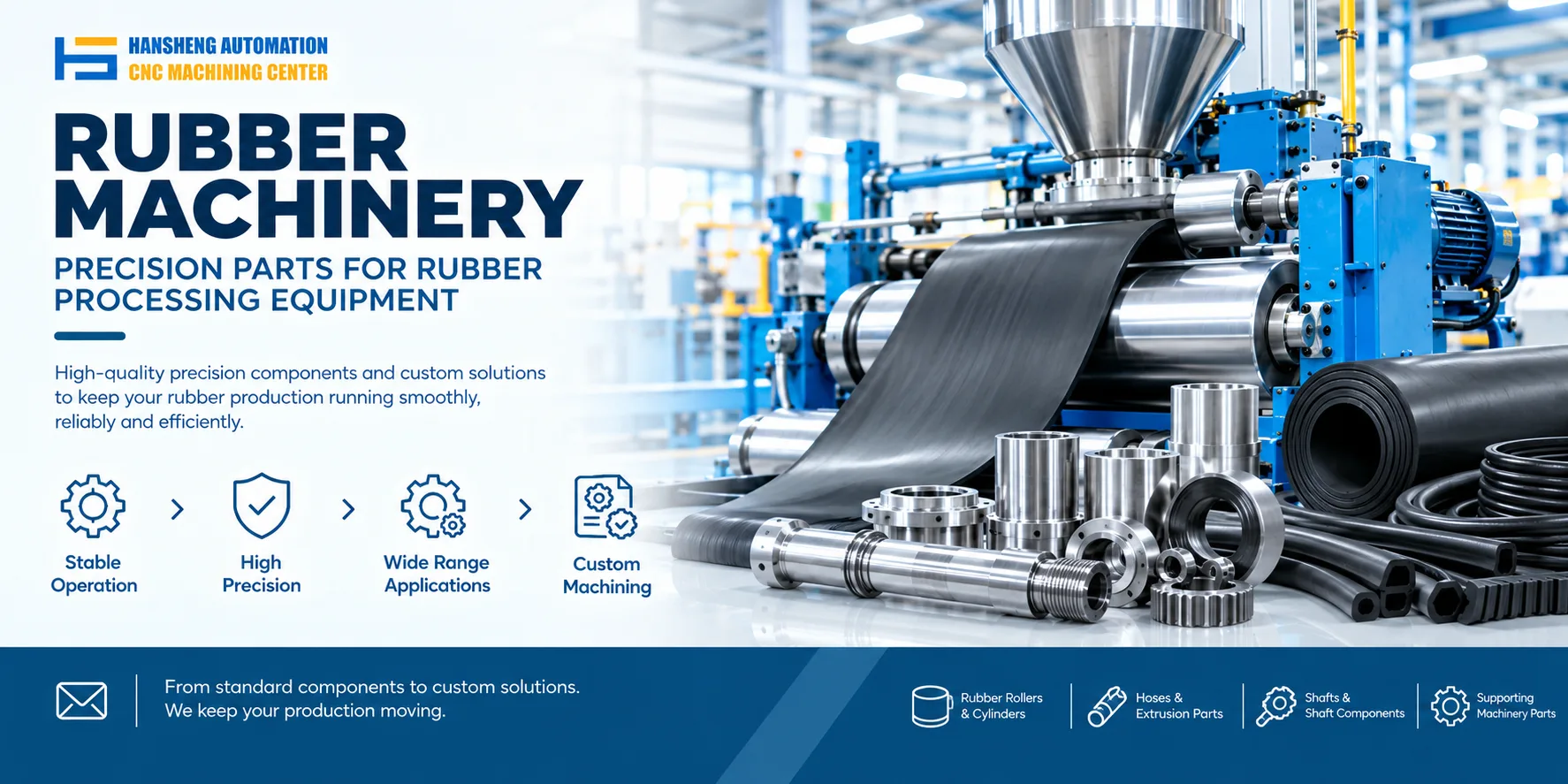
When recurring calendering defects require equipment maintenance or component replacement, we provide custom precision machining based on customer supplied drawings. Hansheng Automation manufactures nonstandard mechanical components according to the specified dimensions and structural requirements, supporting maintenance and component replacement for calendering and rubber processing equipment.
Our precision machining services also cover components for filling machinery and tobacco packaging equipment, as well as custom parts for yachts and remote control racing cars. We manufacture these components according to customer drawings and specific part requirements.