The main components of a can seaming machine include the transmission system, seaming head, conveying device, can body positioning device, control components, and seaming knives.
1. Transmission System
This system consists of a motor, belts, chains, and gears. The motor provides power, while the other components transmit motion to ensure coordinated operation of all machine sections.
2. Seaming Head
As a key component, the seaming head contains rollers and a pressure head. The rollers curl and press the edges of the can body and lid together, while the pressure head keeps the lid tightly fitted against the can body during the seaming process to achieve a reliable seal.
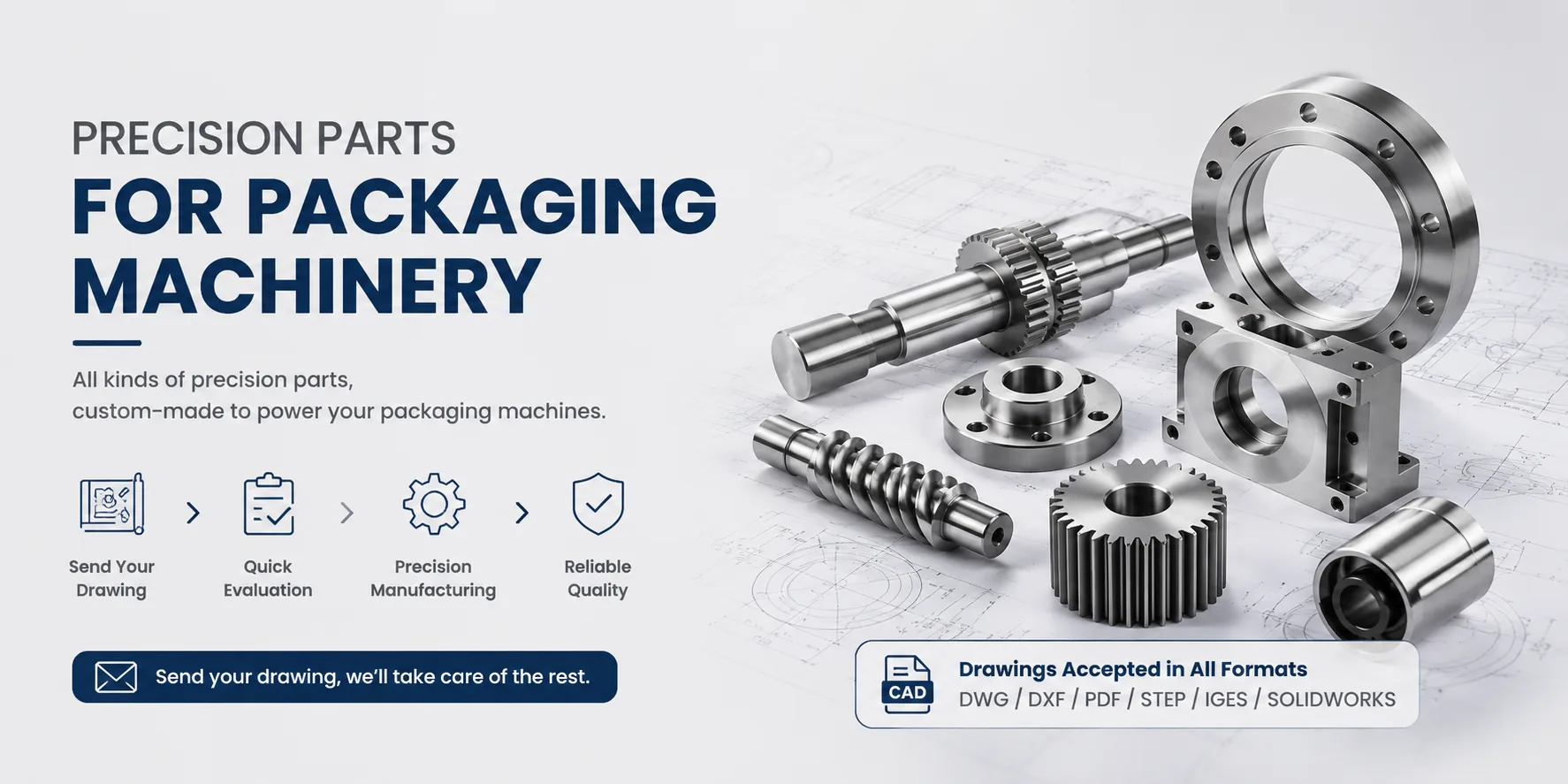
Seaming rollers and pressure heads are high-wear parts that must maintain precise geometry and surface hardness under continuous operation. Hansheng Automation provides custom machining of these components according to customer drawings or samples.
3. Conveying Device
This typically includes conveyor belts, sprockets, and chains. Its function is to accurately transport cans to the seaming position and then move finished cans out after seaming is completed.
4. Can Body Positioning Device
Components such as positioning plates and positioning clamps ensure that the can body remains in the correct position during seaming, thereby maintaining consistent seaming quality.
5. Control Components
These include a PLC controller, sensors, and buttons. Sensors detect can position and seaming status, the PLC controller uses this information to control machine operation, and operators interact with the machine through the buttons.
6. Seaming Knives
Seaming knives are used to cut and trim the lid edge so that the lid and can body can be joined more effectively and sealed properly.