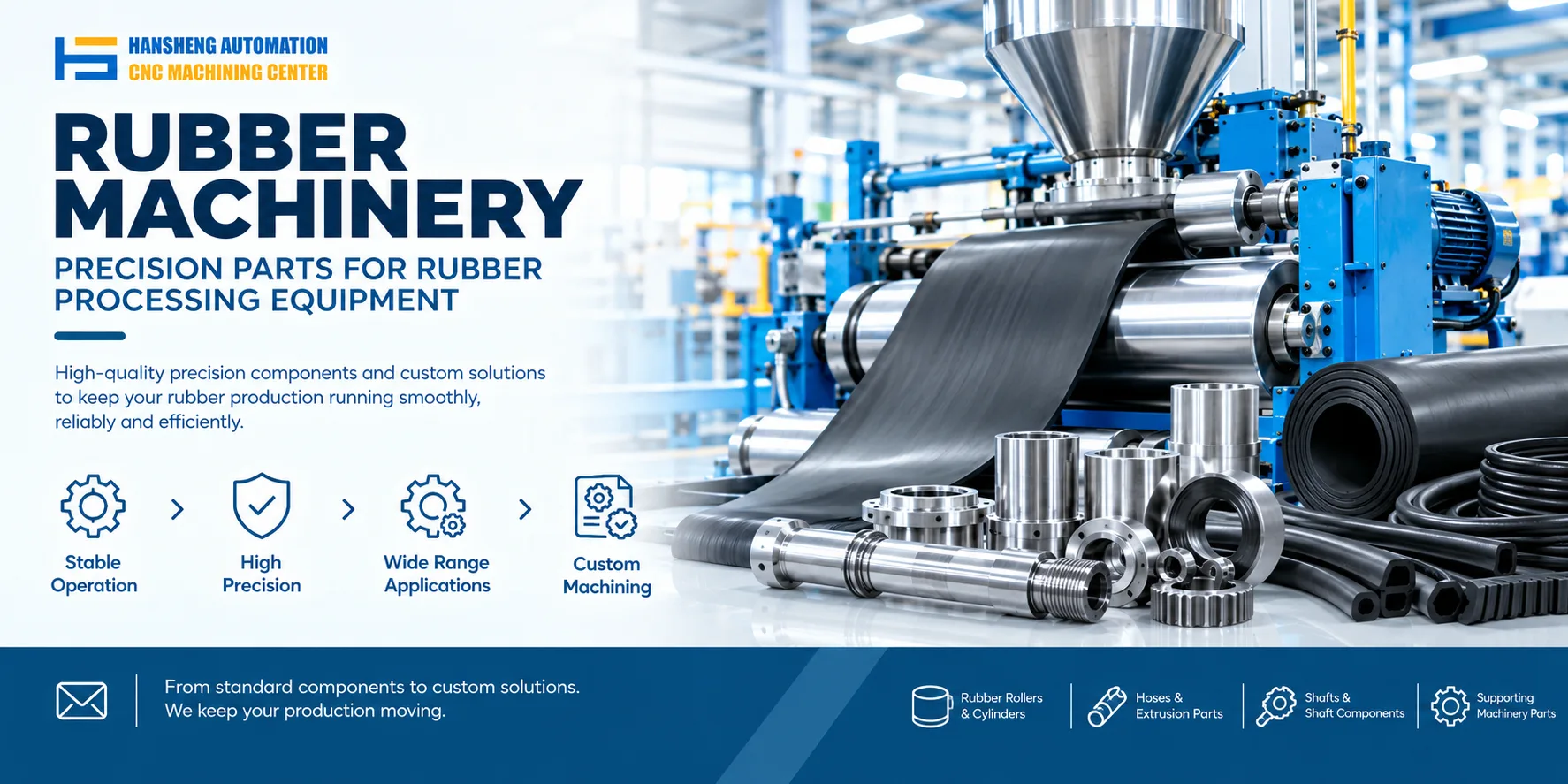
Automotive sealing strips and ribbed profiles are produced using several types of equipment arranged along the manufacturing process. The main categories are extrusion equipment, curing and shaping equipment, post-processing machines, and auxiliary inspection systems. Together, these machines handle production from raw material preparation to finished product inspection and packaging.
1. Extrusion equipment
Extrusion equipment forms the initial profile by forcing the prepared rubber or thermoplastic material through a die with a specified cross section.
1.1 Single screw extruder
Single screw extruders are commonly used to process materials such as thermoplastic elastomers (TPE) and ethylene propylene diene monomer (EPDM) rubber. The screw length to diameter ratio is typically 20:1 to 30:1, depending on the machine design.
A custom extrusion head can produce sealing strips and ribbed profiles with circular, rectangular, or other cross sections.
1.2 Twin screw extruder
A twin screw extruder can combine compounding and extrusion in one processing system. It is suitable for complex formulations containing high filler loadings or multiple components, where consistent material mixing is required.
This configuration is used for certain high specification and customized sealing strip products.
1.3 Multilayer co-extrusion line
A multilayer co-extrusion line uses two to five independent extruder units or extrusion heads to produce profiles with multiple material layers in one operation.
Applications include composite sealing strips that combine a sponge rubber layer with a wear resistant or decorative surface layer. The material combination depends on the required sealing, appearance, and durability properties.
2. Curing and shaping equipment
After extrusion, the profile must be cured or cooled to maintain its intended cross section and dimensions. The required equipment depends mainly on whether the material is vulcanized rubber or a thermoplastic elastomer.
2.1 Microwave vulcanization oven
A microwave vulcanization oven heats rubber rapidly and supports continuous curing. The source reference gives a production speed of 30 to 60 m/min for a single line.
This equipment is commonly used for continuous vulcanization of EPDM automotive sealing strips. Actual line speed depends on the profile dimensions, rubber formulation, and required curing conditions.
2.2 Salt bath vulcanization tank
A salt bath vulcanization tank transfers heat through molten salt, providing consistent heating during curing. It can be used for complex rubber profiles that incorporate internal metal reinforcement.
This process may be considered for small batch or customized production. Material compatibility, operating safety, and the requirements of the specific rubber compound must be evaluated before selecting the process.
2.3 Hot air vulcanization oven
A hot air vulcanization oven uses circulating heated air to cure rubber profiles. It is suitable for continuous or batch production of long sealing strips, including large door frame seals and sunroof perimeter seals.
The oven temperature and residence time must be matched to the rubber formulation and profile dimensions to achieve consistent curing.
2.4 Cooling water tank
TPE sealing strips can be cooled and calibrated in a circulating water tank after extrusion. Unlike vulcanized rubber, TPE does not require a vulcanization stage, which can simplify the production line and reduce energy consumption.
The cooling conditions should maintain dimensional stability without causing distortion or surface defects.
2.5 Rib forming and sizing rolls
Rib forming rolls are used to create raised rib structures on extruded profiles. The rolls have predefined grooves or patterns that shape the material as it passes through the forming section.
This equipment is particularly relevant to plastic ribbed profiles. It can form the ribs and provide initial dimensional control in the same operation.
3. Post-processing equipment
Post-processing machines convert the shaped or cured profiles into finished components that meet vehicle assembly requirements.
3.1 Haul-off and cutting machine
A haul-off and cutting machine operates in synchronization with the extrusion line. It pulls the profile through the downstream equipment and cuts it to the specified length.
The source reference gives a cutting length accuracy of ±0.5 mm. Actual accuracy depends on the machine configuration, material behavior, and cutting method.
3.2 Punching and corner cutting machine
This equipment automatically punches mounting holes and cuts the ends of sealing strips to the required shape.
Typical operations include punching clip mounting holes in door seals and trimming the corners of door frame seals for assembly.
3.3 Offline rib forming machine
An offline rib forming machine creates continuous or intermittent ribs on profiles that have already passed through the main shaping process. It uses multiple forming rolls to produce the required surface geometry.
This equipment is useful when ribbed features must be added during a separate processing stage or when customized rib patterns are required.
3.4 Flocking and surface coating equipment
Flocking equipment applies fibers to the sealing strip surface, while coating equipment applies functional or protective layers.
These treatments can improve sliding behavior, reduce noise, increase wear resistance, or provide a decorative finish. Flocking is commonly used on automotive sealing components that contact moving glass or adjacent trim surfaces.
3.5 End bonding machine
An end bonding machine joins the ends of a sealing strip to form a closed loop. Depending on the material, the joining method may involve heat welding or a suitable adhesive.
This process is commonly used to assemble continuous door frame seals. The joining method must provide adequate bond strength and maintain the required profile geometry.
4. Auxiliary equipment and inspection systems
Auxiliary equipment supports material preparation, reinforcement assembly, quality inspection, and internal material handling.
4.1 Rubber mixing equipment
Internal mixers and open mixing mills prepare rubber compounds by combining raw rubber with curing agents, fillers, and other additives.
These machines are used upstream of extrusion to achieve the compound consistency required for subsequent forming and vulcanization.
4.2 Metal reinforcement insertion equipment
Some automotive sealing strips incorporate steel cores, mounting clips, or other metal reinforcement. Specialized insertion equipment positions these components inside the sealing profile to improve installation strength and structural stability.
The insertion process must keep the reinforcement aligned and securely positioned within the profile.
4.3 Online and offline inspection equipment
Inspection equipment checks profile dimensions, mechanical performance, and resistance to environmental exposure. Common examples include:
Cross section profile measuring instruments: Verify the shape and dimensional accuracy of the sealing strip.
Thickness gauges: Measure thickness at specified locations.
Tensile testing machines: Evaluate tensile strength and related mechanical properties.
Aging test chambers: Assess changes in material performance after exposure to specified aging conditions.
The inspection plan should reflect the product drawing, customer requirements, and applicable testing procedures.
4.4 Material handling equipment
Conveyor belts, turnover racks, and finished product storage racks support the movement and temporary storage of semi-finished profiles and completed parts within the workshop.
Suitable handling equipment helps prevent deformation, surface damage, and unnecessary handling during production.
5. Custom machining for automotive sealing strip production equipment
The equipment used to manufacture automotive sealing strips and ribbed profiles may require custom metal components with specific dimensions, tolerances, and assembly requirements. Hansheng Automation can assess precision machining based on customer drawings, material specifications, and dimensional requirements.
Our machining services also extend beyond automotive production lines. We can assess non-standard metal components for packaging machinery, tobacco machinery, and filling equipment, as well as precision structural parts for yacht equipment and RC racing cars. Each project is evaluated according to the supplied drawings and machining requirements.